How to drive the unpaved road from Atacocha to Cerro de Pasco?
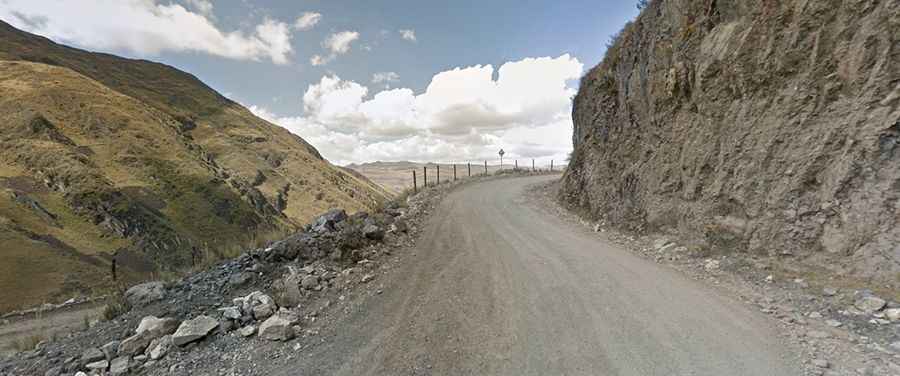
The Carretera Atacocha - Cerro de Pasco is a high-altitude mountain road located in the Pasco Province of central Peru. The unpaved route connects the mining settlement of Atacocha with the regional capital of Cerro de Pasco through the high ridges of the Andes.
| Road facts: Carretera Atacocha - Cerro de Pasco | |
|---|---|
| Location | Pasco Province, Central Peru |
| Max Elevation | 4,349 m (14,268 ft) |
| Length | 26.2 km (16.2 miles) |
| Surface | Unpaved / Loose Gravel & Dirt |
What is the route profile from Atacocha to Cerro de Pasco?
The unpaved road spans 26.2 km (16.2 miles) in length, originating at a junction with the paved Route 3N near Atacocha. The alignment climbs immediately through the Andean slopes until it reaches its highest mountain pass summit at 4,349 meters altitude, before descending toward the urban mining basin of Cerro de Pasco. The entire 26.2-kilometer path maintains an elevation strictly above 3,500 meters sea level.
What is the road surface from Atacocha to Cerro de Pasco?
The track is completely unpaved, consisting of a single-lane layout made of coarse gravel, loose stone layers, and compacted dirt. The alignment runs along the edge of a deep precipice with 21 sharp hairpin switchbacks on the main ascent. The dirt shoulders are narrow, unstable, and lack concrete walls, steel safety guardrails, or any protection to stop a car from falling.
How does weather affect driving conditions on the Atacocha road?
Precipitation quickly compromises tire traction on the unpaved surface, turning the dirt base into thick mud and causing heavy vehicles to slip on the steep incline segments. High-altitude rainfall triggers sudden rockfalls from the exposed mountain cuts, depositing debris across the narrow lane. Fog layers frequently drop over the pass summit at 4,349 meters, reducing horizontal visibility to less than ten meters.
What are the mechanical requirements for the Atacocha - Cerro de Pasco track?
Due to the steep gradients and loose stone layers, vehicles require high undercarriage clearance and a four-wheel-drive system to avoid getting stuck or spinning wheels on the switchbacks. At elevations reaching 4,349 meters, internal combustion engines lose power and torque due to the thin air. Drivers must check the tires and the state of the brakes before starting the long descent to avoid overheating the pads.