Puente San José: The wooden bridge over the Inambari River
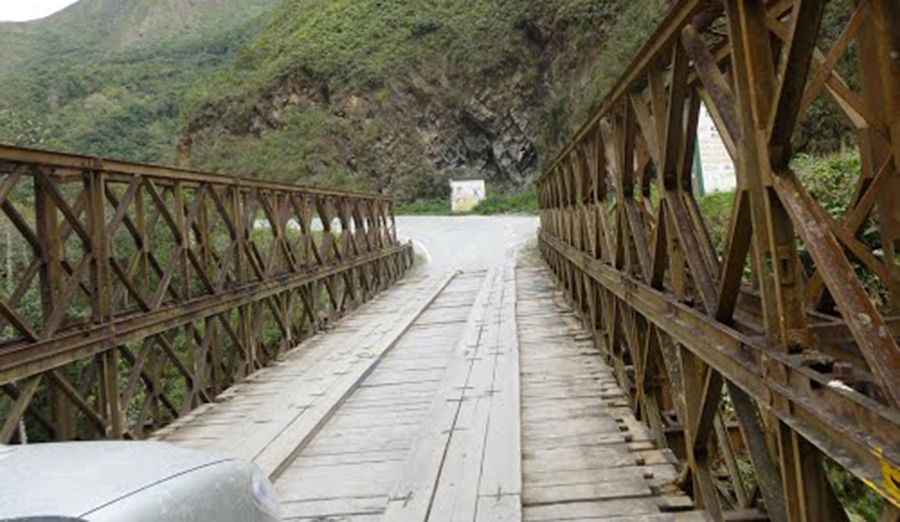
Puente San José is a high-risk mountain crossing located within the Bahuaja Sonene National Park, in the Sandia Province of Peru. Situated near the Bolivian border, this structure is a critical link on the unpaved Carretera 34H that connects San Juan del Oro and Sandia, and is included on the list of the most spectacular bridges in the world.
| Road facts: Puente San José | |
|---|---|
| Location | Sandia Province (Peru) |
| Length | 39.62 m (130 ft) |
| Surface | Wooden planks on iron frame |
| Road Name | Carretera 34H |
How is the infrastructure of Puente San José over the Inambari River?
The bridge consists of a 39.62-meter span built with an old iron frame and a driving deck made of longitudinal wooden boards. Many of these timber planks are loose, worn, or rotted due to intense humidity. The structure vibrates and shifts under the weight of passing vehicles, running directly above a vertical drop over the Inambari River bed without any lateral safety barriers or steel guardrails.
Can heavy trucks cross the Puente San José bridge?
The width of the wooden platform is limited to a single vehicle lane, blocking any simultaneous two-way transit. The bridge structure cannot support heavy machinery or overloaded commercial freight. Meeting local delivery vans or trucks requires one vehicle to stop and pull over at the unpaved riverbanks, as the single track offers no intermediate passing turnouts or backup space.
What are the terrain hazards on the Carretera 34H near the bridge?
The unpaved approaches of the Carretera 34H consist of rough dirt and loose gravel. Regular tropical downpours and landslides from the mountain cuts cover the track with mud and stone debris. Rain turns the wooden deck into a slick surface where tires easily lose traction. Broken or missing planks on the platform force drivers to stop on the narrow dirt ledges to check the floor before crossing.
Where is the nearest mechanical support in the Sandia Province?
The bridge stands in an isolated Andean-Amazonian sector completely devoid of cellular mobile coverage or emergency services. The closest fuel supplies and basic mechanical workshops are located exclusively at the distant towns of San Juan del Oro and Sandia. The surrounding unpaved tracks feature sharp rock fragments that cause frequent tire punctures and suspension stress along the river canyon cliffs.
Pic: luis miguel mamani corimayhua