Cerro Llacsacocha: Driving to the 4,980m mine peak in the Peruvian Andes
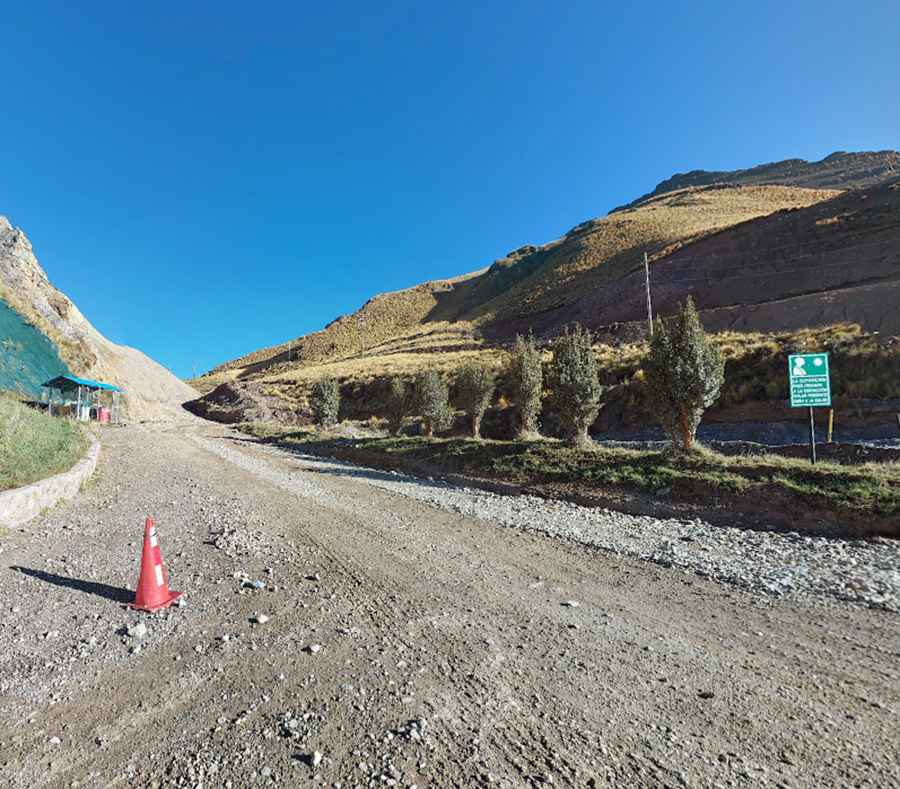
If you want to feel what it’s like to drive on the roof of the world, Cerro Llacsacocha is the place. At 4,980m (16,338ft) above sea level, this isn't a mountain for tourists; it’s an active mining peak in the Yauli Province of central Peru. The air is so thin that both you and your engine will struggle to breathe. It’s a landscape of grey rock, massive excavation pits, and some of the highest dirt tracks you’ll ever find in the Junín Region.
| Road facts: Cerro Llacsacocha | |
|---|---|
| Location | Yauli Province, Junín (Peru) |
| Elevation | 4,980m (16,338ft) |
| Length | 17.3 km (10.74 miles) |
| Surface | Unpaved / Mining Road / 4x4 Only |
How long is the road to Cerro Llacsacocha?
The climb starts in the mining hub of Morococha, just north of the famous Abra Anticona (Ticlio Pass). From there, you have 17.3 km of relentless climbing. This is a working road, built for heavy machinery, which means it’s wide but extremely steep. In less than 20 kilometers, you rise nearly 500 meters in altitude, hitting gradients that will force you into low-range gears. Your engine will lose a massive chunk of its power at this height, so don't expect to rush. It’s a slow, grinding ascent through a world of mineral dust and heavy gear ratios.
Is the road to Cerro Llacsacocha unpaved?
The entire route is unpaved, made of packed dirt and loose rocks that change every day due to constant mining activity. Because it’s an active industrial site, the road surface is often chewed up by the massive tires of mining trucks. One of the biggest hazards is the dust; when it’s dry, the "furgonetas" and trucks kick up a cloud that kills visibility. When it rains or snows—which can happen even in summer at 5,000 meters—the track becomes a slippery mess of mineral mud. You need a real 4x4 with high clearance just to clear the ruts left by the big rigs.
What are the hazards when driving to Cerro Llacsacocha?
The main danger isn't just the drops; it's the traffic. You are sharing a narrow mountain track with trucks that are three times the size of your car. These drivers have the right of way and they won't stop for you, so be ready to pull over to the very edge of the road. Another silent killer is the soroche (altitude sickness). At almost 5,000m, a simple flat tire becomes a life-threatening task because you can't breathe properly. Before you head up, make sure you are acclimated, your cooling system is perfect, and your brakes are ready for the long, steep descent back to Morococha.
Can you drive to the summit of Cerro Llacsacocha?
While the road leads to the very top of the peak, access can be restricted without warning. Mining companies in the Yauli Province often close roads for blasting or safety reasons. If the gate is open, the view from the summit is like looking at another planet—a desert of high-altitude rock and mining pits that stretch for miles. There are no services, no gas, and no help if you break down. It’s a place where you must be 100% self-sufficient. If your vehicle isn't in top shape, the Andes will find its weakness very quickly.
Driving to Cerro Llacsacocha is a raw experience that shows the industrial side of the Andes. It’s not about the scenery; it’s about the machine and the mountain. Respect the mining trucks, watch your oxygen levels, and focus on the road. Peru doesn't give many second chances at this altitude. Check your fuel, take it slow, and stay sharp. It’s a long way down if you make a mistake.
Pic: frank pucuhuaranga leon