How difficult is the high-altitude road to Cerro Pabellón in Chile?
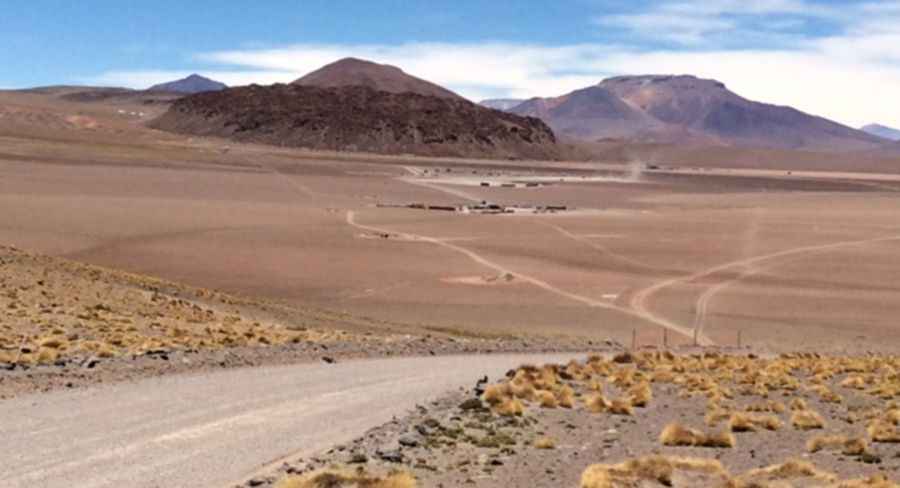
Cerro Pabellón is an extreme high-mountain pass reaching an elevation of 4,647m (15,246ft) above sea level in the heart of the Atacama Desert. Located in the Ollagüe district of the Antofagasta region, the road was carved out specifically to provide access to the world’s highest geothermal power plant. This is a journey into the thin air of the Andean Highlands, where the mechanical limit of your vehicle and your own resistance to altitude sickness are tested on every kilometer of this dusty, sun-scorched track.
| Road facts: Cerro Pabellón | |
|---|---|
| Location | Antofagasta Region, Chile (Atacama) |
| Elevation | 4,647 m (15,246 ft) |
| Length | 26.5 km (16.4 miles) from Ruta 21CH |
| Average Gradient | 3.71% (with much steeper ramps) |
| Surface | Gravel / Loose Silt / Corrugated |
How long is the 26.5 km climb to Cerro Pabellón?
The drive begins near Ascotán, leaving the paved Ruta 21CH to start a 26.5 km (16.4 miles) ascent into the void. Over this distance, you gain nearly 1,000 vertical meters. While the average gradient of 3.71% might seem gentle on paper, the reality of the Atacama is far more brutal. The climb is irregular, featuring long, flat "calamina" (washboard) sections followed by sudden, brutally steep ramps where your tires will struggle for traction on the loose volcanic soil. As you approach the 4,647m summit, the lack of oxygen makes the engine feel incredibly sluggish, and maintaining a steady crawl is the only way to avoid stalling in the middle of a desert wasteland.
What are the road conditions on the Cerro Pabellón geothermal track?
The road was built for heavy industrial machinery to service the geothermal units at the top, which means the surface is frequently pulverized by truck traffic. Expect deep silt and "fesh-fesh" that can hide jagged rocks capable of shredding a tire in seconds. The high-altitude environment of Antofagasta means the ground is bone-dry and unstable; if you lose your line on the steeper curves, the loose gravel acts like ball bearings under your wheels. A high-clearance 4x4 is mandatory, not just for the terrain, but to handle the heavy vibration that can rattle standard suspension systems to pieces before you even reach the halfway point.
Why is the altitude a major hazard on Cerro Pabellón?
Driving to over 4,600 meters is a survival challenge. Most people start feeling the effects of altitude sickness as low as 2,500 meters, but the final push to Cerro Pabellón is in the "danger zone" for anyone not acclimatized. Mechanically, your car’s cooling system is under extreme stress; the lower boiling point of water at high altitudes combined with the thin air means your radiator can boil over even in the cold Andean wind. You must carry extra fuel, as the engine's efficiency drops drastically, and a mechanical failure at this height leaves you in a remote area with zero cell service and temperatures that plummet below freezing the moment the sun sets.
What gear do you need to drive to Cerro Pabellón safely?
Self-sufficiency is the only rule in the Ollagüe district. Before leaving the pavement at Ascotán, you must ensure you have a full recovery kit, at least one full-size spare tire, and extra water. The road to the geothermal plant is a dead end for most, meaning there is very little "passing" traffic if you break down. The long descent back to the valley is equally hazardous; the loose surface requires heavy engine braking to avoid overheating your brakes on the dusty ramps. It’s a road of mechanical respect: if you don't treat the incline and the altitude with caution, the desert will claim your vehicle long before you see the steam from the geothermal units.
Pic: http://www.pes-srl.net/en/blog/2016/06/09/mega-commessa-acquisita-pes/