Driving the paved A-23 road to Abra Chapoco in northern Chile
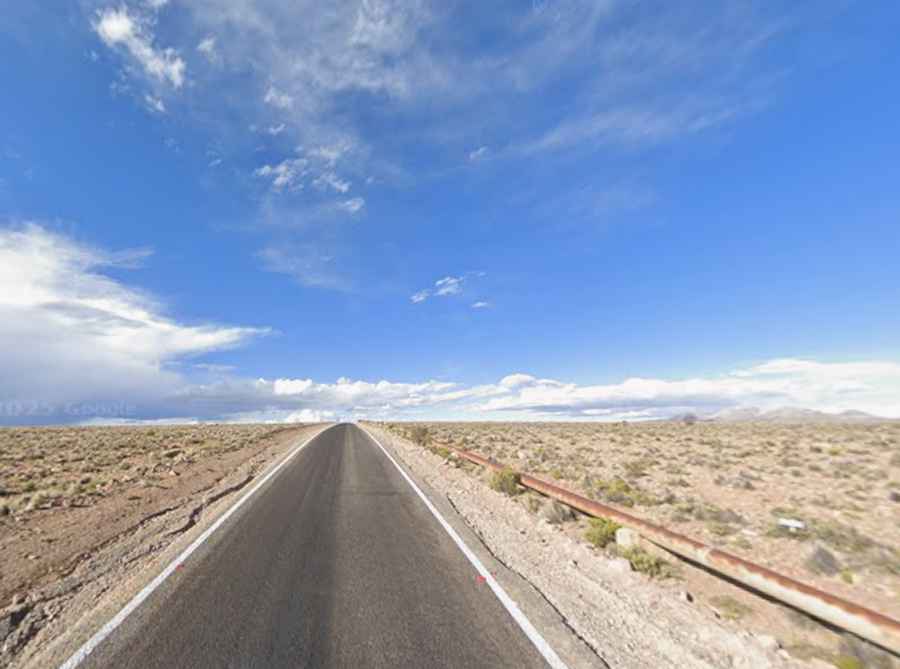
Abra Chapoco is a high-altitude mountain pass reaching 4,400 meters in the Parinacota Province, at the northernmost tip of Chile. Sitting just a stone's throw from the Peruvian border, the road through the pass—the A-23—is a remarkable piece of infrastructure that was fully paved during the 2010s. This is a journey through the silent Altiplano, a route where the asphalt cuts a straight line through a barren, mineral landscape, dominated by the silhouette of the Volcán Tacora and the thin, biting air of the high Andes.
| Road facts: Abra Chapoco (A-23) | |
|---|---|
| Location | Parinacota Province, Chile |
| Elevation | 4,400m (14,435ft) |
| Road Name | A-23 |
| Length | 31 km (19.2 miles) |
How is the drive on the A-23 toward Visviri?
The 31-kilometer stretch of the A-23 running between Chislluma and Visviri is a surreal driving experience. Unlike many Andean passes, this road is now fully asphalted and stays in surprisingly good condition despite the extreme thermal shifts of the Altiplano. As seen on the ground, the road is characterized by long, straight sections that follow the natural contours of the high plateau, often accompanied by large industrial pipelines. It is a route virtually free of traffic, where the biggest challenge isn't the surface, but the psychological effect of the absolute isolation and the vast, empty horizons toward the Chile-Peru border.
What are the main hazards of driving at 4,400 meters?
Even with the benefit of modern pavement, Abra Chapoco is a high-risk environment due to its extreme altitude. At 4,400 meters, your engine will lose approximately 40% of its power, making the "extremely steep sections" of the A-23 feel much more punishing than they look. If you are not in the right gear, your vehicle will struggle to maintain momentum on the ramps. The weather here is also a primary hazard; the Puna winds can be fierce enough to buffets high-sided vehicles, and nighttime temperatures often drop well below freezing, creating patches of black ice even on the sunniest days. This is a border zone where self-sufficiency is the only rule; help is hours away in either direction.
What mechanical prep is needed for the Abra Chapoco crossing?
Before leaving the more populated areas of the Arica and Parinacota Region, ensure your vehicle is mechanically perfect. The most critical factor is your battery and cooling system; the thin air makes cooling less efficient, and the freezing Altiplano nights will kill any weak battery. Check your tire pressures, as the extreme altitude causes the air inside to expand significantly. On the descent toward Visviri, stay in a lower gear to let engine braking control your speed, even if the road looks like a straight line; relying on brakes at 4,400 meters can lead to rapid overheating. Carry extra fuel and plenty of water, as the high-altitude fuel consumption will spike, and the dry air will dehydrate you long before you realize it.