Serra da Rocinha: Driving the steep concrete hairpins of BR-285
Serra da Rocinha is a mountain pass at an elevation of 1,236 meters (4,055 ft) above sea level, located on the border between the states of Santa Catarina and Rio Grande do Sul in southern Brazil. Crossing the Serra Geral mountain range, the pass forms part of the BR-285 federal highway.
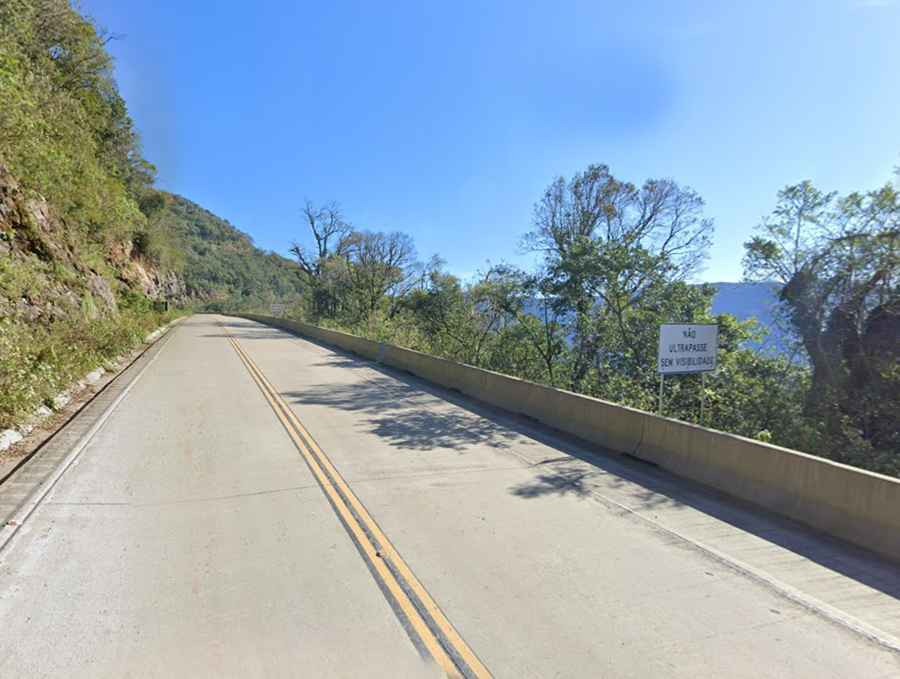
| Road facts: Serra da Rocinha (BR-285) | |
|---|---|
| Location | Timbé do Sul (SC) to São José dos Ausentes (RS), Brazil |
| Elevation | 1,236 m (4,055 ft) |
| Length | 57.5 km (35.7 miles) |
| Road Number | BR-285 |
| Surface | Paved (Concrete on steep ramps) |
Is the road to Serra da Rocinha paved?
Yes, the original unpaved track of the BR-285 has been fully paved. Rigid concrete was laid on the steepest ramps instead of standard asphalt to withstand heavy truck traffic and heavy rainfall. The climb connects Timbé do Sul in Santa Catarina to the high plateau of São José dos Ausentes in Rio Grande do Sul.
How steep are the hairpins on Serra da Rocinha?
The main ascent from the coastal plain to the plateau features 14 sharp hairpin turns cut directly into the mountain face. The switchbacks are wide enough for heavy trailers, but long trucks frequently use the full width of the lane on the inner curves. Concrete retaining walls and steel mesh line the rock faces along the climb.
What are the main hazards on the BR-285 pass?
Dense mountain fog, known locally as "viração," frequently hits the Serra Geral ridge, dropping visibility down to a few meters without warning. Heavy rains cause mud and loose rocks to wash onto the concrete lanes from the upper slopes. On the long descent down the escarpment, low gears are required to avoid overheating the brakes.
Is Serra da Rocinha open year-round?
The road is open year-round, though temporary closures occur during severe rainstorms or slope maintenance work managed by the National Department of Transport Infrastructure (DNIT). Check local road reports before starting the drive, as maintenance work can cause daytime delays on the narrow mountain sections.
Road suggested by: jorge manuel gómez sánchez