How to drive the unpaved road to San Antonio de Lípez, a haunted ghost town?
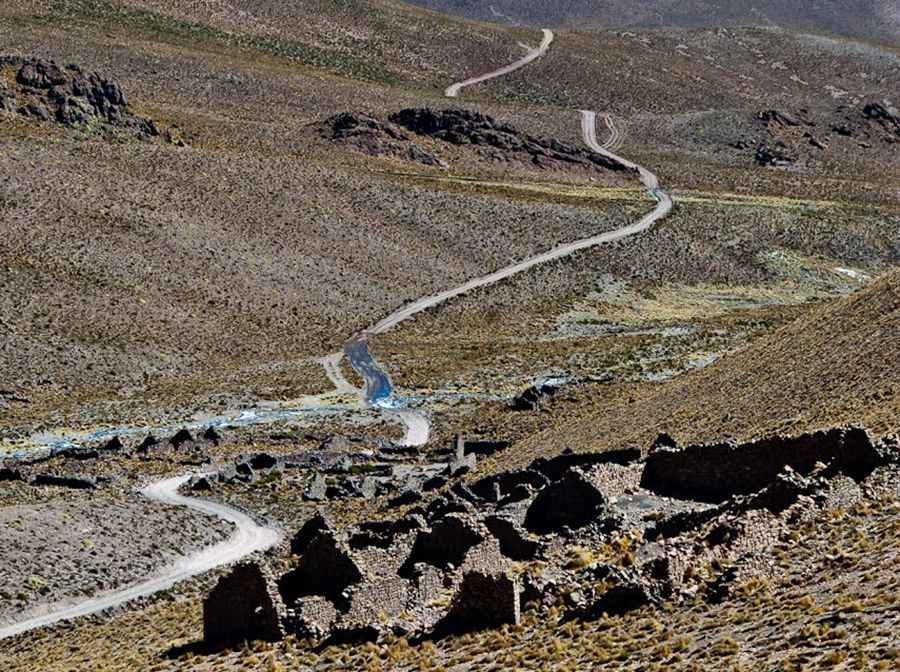
San Antonio de Lípez is a ghost town at an elevation of 4,758 m (15,610 ft) above sea level, located in the Potosí Department of Bolivia. The town is said to be haunted, and the route leading to it is one of the highest roads in the country.
Where is San Antonio de Lípez?
The abandoned town—also known as Viejo San Antonio or San Antonio de Nuevo Mundo—is located in the Sud Lípez Province, in the southwestern part of the country.
When was San Antonio de Lípez built?
Founded by the Spanish in the 16th century to exploit the silver veins in the surrounding mountains, it grew into a prosperous settlement featuring a colonial church, workshops, and stone and adobe houses. Beyond the legend of a pact with the devil, its abandonment was driven by the exhaustion of the most profitable veins, harsh weather conditions, and epidemics that devastated the miners at nearly 4,800 metres above sea level. Some treasure hunters still search for silver among the collapsed walls, as miners were rumoured to have hidden their wealth inside the walls of their homes.
Why is San Antonio de Lípez said to be haunted?
Legend has it that the miners made a pact with the devil, who promised them immense wealth from the silver mines. When the workers failed to keep their end of the bargain, the devil killed everyone working underground. Shortly afterward, the remaining inhabitants began witnessing apparitions and unexplained phenomena, which triggered the complete abandonment of the town.
Is the road to San Antonio de Lípez unpaved?
The road to the town is entirely unpaved. It features hundreds of bends, narrow parts, and very steep sections, making a 4x4 vehicle mandatory. Starting from Quetena Chico, the road to the abandoned town is 77.2 km long.
Is the climate a hazard on the road to San Antonio de Lípez?
Located in the Cordillera de Lípez of the Andes, the weather at this elevation is extreme and unforgiving. There are no trees or shrubs to block the constant, freezing afternoon winds that whip dust and sand across the bare rock. Because the air is so thin, temperatures plunge well below zero the moment the sun drops or clouds move in, even during the southern summer. Snowstorms frequently bury the dirt tracks and cut off access completely, while the lack of oxygen reduces a naturally aspirated engine's power by up to 40% and quickly leaves drivers with headaches and fatigue.
Pic: Alexander Naumov