Driving to Laguna Blanca and Laguna Verde in the Dalí Desert
The drive to Laguna Blanca and Laguna Verde is a high-altitude unpaved mountain route located in the Potosí Department of southwestern Bolivia. Situated within the Eduardo Avaroa National Reserve at the foot of the Licancabur volcano, these two salt lakes are connected by a narrow natural strip of land surrounded by rugged Altiplano terrain.
| Road facts: Laguna Blanca & Laguna Verde | |
|---|---|
| Location | Potosí Department (Bolivia) |
| Max Elevation | 4,350 m (14,270 ft) |
| Distance | 71.4 km (44.3 miles) |
| Surface | Sand / Corrugated dirt |
What is the road surface like to Laguna Blanca and Laguna Verde?
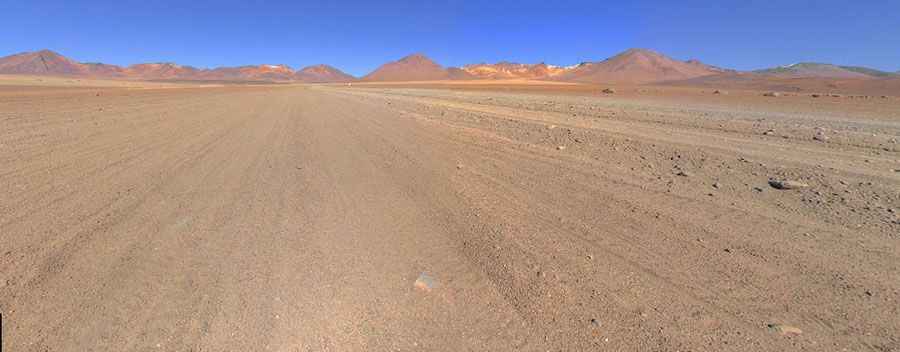
The route crossing the Salvador Dalí Desert consists entirely of unpaved, natural sand tracks and corrugated dirt lanes. Strong desert winds constantly shift the surface sand, often erasing the tracks and leaving only the deep wheel ruts of heavy transport vehicles as a reference. The terrain features severe washboard sections and loose sandy patches that require high-clearance four-wheel-drive vehicles.
How challenging is the drive from Sol de la Mañana?
Starting from the high-altitude geyser field of Sol de la Mañana, the unpaved track runs south for a distance of 71.4 kilometers (44.3 miles) toward the Chilean border. The entire journey takes place above an elevation of 4,300 meters, peaking at 4,350 meters above sea level. The dirt track bed is scattered with sharp, volcanic rock fragments partially covered by loose sand layers that present a constant hazard for tire treads.
What are the weather hazards on the road to these Altiplano lakes?
The high-altitude desert environment faces extreme sub-zero freezing temperatures during the winter months, accompanied by intense gales that blow sand and dust, reducing driving visibility down to zero. Sudden alpine snowfalls completely cover the desert tracks, turning the soil margins directly surrounding the salt lakes into soft mud traps. The isolated route lacks mechanical workshops or fuel stations, with commercial tourist furgonetes constituting the only regular traffic along the corridor.
Pic: Arroz Marisco