Driving the treacherous Cuesta de Sama pass in Tarija
Cuesta de Sama is a high-altitude mountain pass reaching 3,889 meters in the Tarija Department of southern Bolivia. Linking the towns of Iscayachi and San Lorenzo, this 40.6-kilometer stretch of gravel is one of the most high-conflict routes in the region. It is a world of vertical drops, deep ripio, and a constant flow of heavy trucks and buses that share a track often too narrow for two vehicles. Here, the mountain doesn't just test your engine; it tests your ability to stay calm when you are forced to reverse along a cliff edge in zero visibility.
| Road facts: Cuesta de Sama | |
|---|---|
| Location | Tarija Department, Bolivia |
| Elevation | 3,889m (12,759ft) |
| Length | 40.6 km (25.2 miles) |
| Surface | Loose gravel / Mud when wet |
How dangerous is the drive through Cuesta de Sama?
The 40-kilometer climb is a technical nightmare due to the combination of its narrowness and the volume of heavy traffic. In many sections, the road is simply too tight for two vehicles to pass. If you encounter a "flota" (interprovincial bus) or a large truck coming the other way, someone will have to reverse—sometimes for hundreds of meters—on a winding, unprotected track. This is no place for beginners; you must be an expert at reversing on loose surfaces with hundreds of meters of vertical drops just centimeters away from your tires. The high number of fatalities on this route is a direct result of the unstable ground and the lack of passing space.
What are the hazards of fog and mud on the pass?
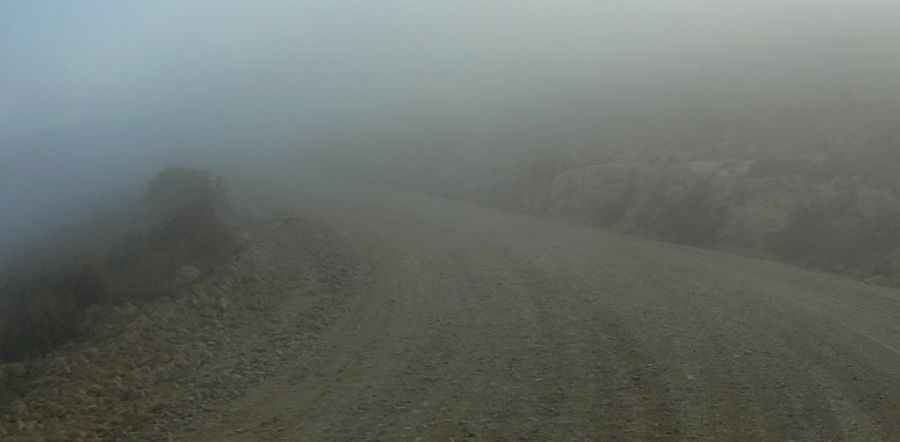
Weather is the biggest enemy on the Cuesta de Sama. Thick, mountain fog is a permanent resident on these slopes, often reducing visibility to less than five meters. You have to drive almost by memory, feeling the edge of the ripio with your steering. After any rainfall, the surface turns into a slick, soapy mud that robs you of all traction. During a storm, the road can become a swamp of Andean clay that can ground even the most prepared 4x4. The combination of deep ruts, mud, and heavy trucks sliding across the lanes makes the pass a high-risk zone where momentum and tire placement are the only things keeping you from the ravine.
What mechanical prep is needed for the 3,889m summit?
Crossing at nearly 3,900 meters means your engine will be struggling for oxygen, losing about 40% of its power. This loss of torque is critical when you need to pull away on a muddy incline or reverse uphill to let a bus through. Before starting the trip from San Lorenzo, verify your cooling system and your clutch; the constant shifting and the high-load climbs will cook a weak transmission in minutes. On the long descent, your brakes are at constant risk of overheating. You must stay in a low-range gear and let engine braking control your speed. Relying on the pedal alone on these loose, technical slopes is a guaranteed way to glaze your pads and lose control before you reach the bottom of the valley.
Road suggested by: Hugh Wilson
Pic: D@ANIEL JOSE