Driving the high altitude road to Zongo and Milluni lakes in Bolivia
The road through the Zongo Valley, in the heart of the Bolivian Cordillera Real, is a high-altitude gauntlet that connects a series of four stunning glacial lakes. From the industrial remnants near Laguna Milluni and Milluni Chico to the staggering heights of Lago Zongo and the remote Jankho Khota, this 30-kilometer gravel track is a masterclass in Andean survival. Climbing to elevations well above 4,700 meters, the route is a raw, unpaved ribbon of earth that cuts through a barren landscape of rock and ice, where the thin air and the treacherous terrain push both man and machine to their absolute breaking point.
| Road facts: Zongo Valley Lakes | |
|---|---|
| Location | La Paz Department, Bolivia |
| Max Elevation | 4,776m (Lago Zongo) |
| Distance | 30 km (18.6 miles) |
| Key Lakes | Milluni, Milluni Chico, Jankho Khota, Zongo |
How challenging is the drive through the Zongo Valley?
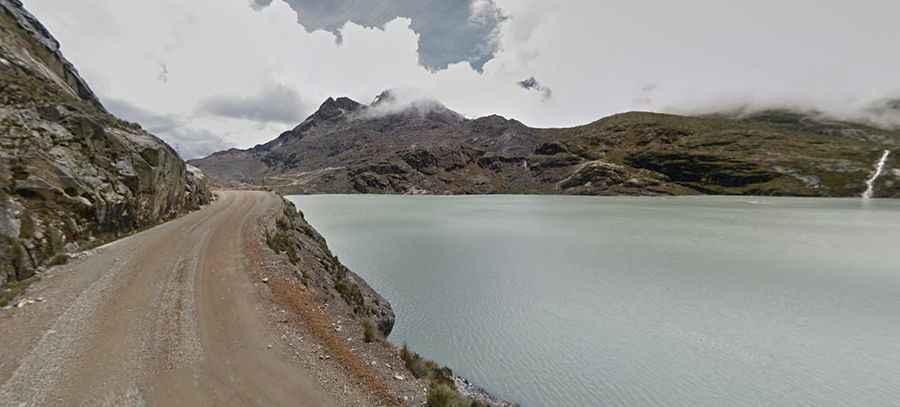
The 30-kilometer journey from Ingenio to Botijlaca is a relentless struggle against the elements. The road is entirely unpaved, consisting of a mix of loose ripio, sharp stones, and sections that turn into deep mud during the rainy season. As you climb toward Lago Zongo, the highest point at 4,776 meters, the track features dozens of sharp hairpin turns where the ground is often unstable. As seen in the valley, the road often clings to the edge of the lakes—especially around the dark, mineral-rich Laguna Milluni and the higher Jankho Khota—with no safety barriers. This leaves no room for error if you hit a patch of loose gravel or a deep rut carved by high-altitude meltwater.
What are the main hazards of the Zongo and Milluni lakes route?
The primary hazard is the extreme altitude combined with the narrowness of the track. At nearly 4,800 meters, your engine will lose approximately 45% of its power, making even slight inclines feel like vertical walls. The weather in the Cordillera Real is notoriously unpredictable; clouds can roll in within minutes, dropping visibility to zero and turning the track into a slick trap. You must also watch out for rockfalls from the towering peaks above and the heavy service vehicles that maintain the hydroelectric infrastructure between Milluni Chico and the main Zongo dam. On these narrow sections, finding a place to pass is a complex job that often requires reversing along unprotected cliff edges.
What mechanical prep is needed for the high Andean lakes?
Before heading into the Zongo Valley, you must verify your vehicle's mechanical integrity, specifically the cooling system and the state of your battery. The extreme cold at 4,700 meters can kill a weak battery instantly, and the sustained climbs in low gears put an enormous load on the radiator. You absolutely need a high-clearance 4x4 to handle the rocky steps and deep washouts near the shores of Lago Zongo and Jankho Khota. On the long descent back toward La Paz, do not ride your brakes; the weight of the vehicle will glaze your pads in minutes. Use engine braking in low-range gears (4LO) to keep your speed under control. It is a remote and lonely mission where self-sufficiency is mandatory—carry extra fuel, oxygen, and a full-sized spare, as help in these high valleys is hours, if not days, away.