Carretera Picada 108: Crossing the Wild Chaco to the Bolivian Border
Located in the heart of the Gran Chaco, Carretera Picada 108 is a grueling unpaved route linking the region of Mariscal Estigarribia with the Bolivian border. Stretching across the vast departments of Boquerón in Paraguay, this road is a legendary test of endurance for off-roaders, crossing the infamous Ruta Transchaco and penetrating one of the most remote wilderness areas in South America.
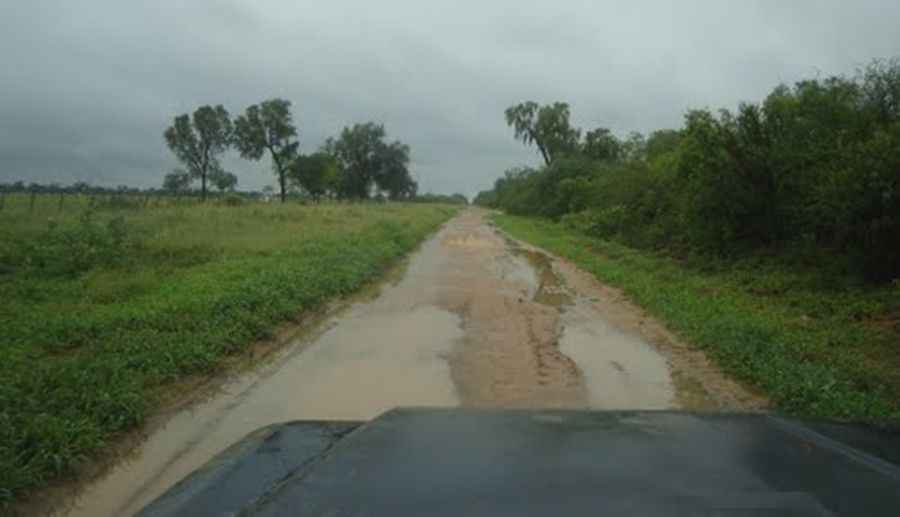
| Road facts: Picada 108 | |
|---|---|
| Location | Boquerón, Paraguay (Bolivian Border) |
| Length | 212 km (131 miles) |
| Surface | Gravel and Dirt (Picada) |
| Status | Impassable when wet |
| Vehicle Required | Prepared 4x4 Only |
Where is Carretera Picada 108 located?
The road serves as a vital but primitive link between Mariscal Estigarribia and Mayor Pablo Lagerenza, eventually reaching the border with Bolivia. The route traverses the dry, thorny scrubland of the Northern Chaco, a region known for its extreme temperatures and absolute isolation. This is not just a road; it is a "picada"—a straight, narrow corridor originally cut through the dense vegetation for military or oil exploration purposes, where the horizon seems never-ending.
Is Picada 108 passable for normal vehicles?
Absolutely not. The road surface is entirely gravel and fine dust (known locally as talcal), which hides deep ruts and sharp rocks. During the dry season, the dust can be blinding, but the real danger comes with the rain. During the wet season, Picada 108 becomes totally impassable. The clay-heavy soil transforms into a thick, sticky mud that can trap even the most prepared 4x4 vehicles for days. Fast-flowing creek crossings can appear out of nowhere, turning the road into a series of hazardous water obstacles that force immediate closures.
How long is the journey along Picada 108?
The total length of the road is 212 km (131 miles). While the distance might seem manageable on paper, the reality of the Chaco means that average speeds are incredibly low. You should expect a full day of driving—or more—depending on the state of the surface. There are no towns, gas stations, or workshops along this stretch. Every kilometer requires total concentration to avoid the "guadales" (hidden pockets of deep dust or mud) that can easily high-center a vehicle.
What supplies are needed for the Chaco crossing?
Due to its extreme isolation, self-sufficiency is mandatory. You must carry enough fuel for at least 400 km to account for high consumption in mud or sand, along with a minimum of 20 liters of water per person. Two full-size spare tires, a high-lift jack, and sand ladders are essential tools. Mobile phone coverage is non-existent; a satellite phone or a GPS messenger is the only way to call for help in an emergency. Always inform the local Gendarmerie or police in Mariscal Estigarribia of your travel plans before departing.
Is Picada 108 safe for solo travelers?
Traveling Picada 108 alone is highly discouraged. The combination of intense heat (often exceeding 40°C), lack of water, and the possibility of being stranded for days makes it a high-risk expedition. It is best to travel in a convoy of at least two vehicles. Additionally, being a border region, you should ensure all your papers are in order for the checkpoints near Mayor Pablo Lagerenza. Check the local weather forecast religiously; if rain is predicted, do not enter the Picada, as you risk being trapped in the "Green Hell" of the Chaco.
Pic: polvadera