How to drive through the 4,095m Paso Visviri?
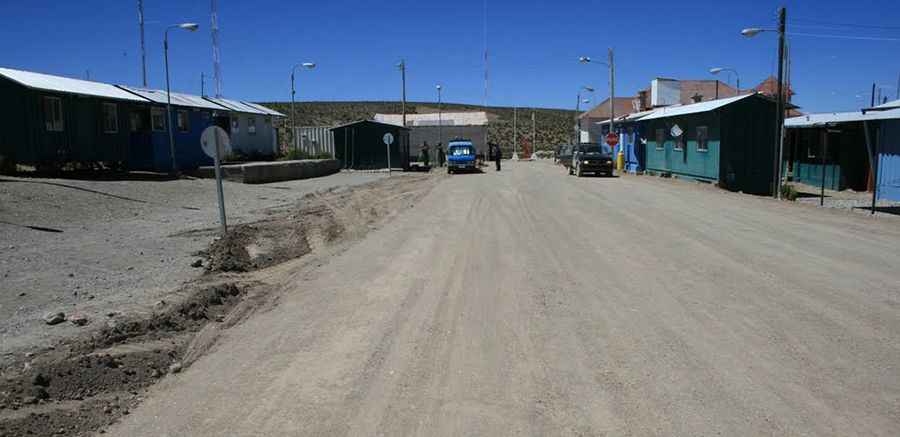
Paso Visviri is an international high-altitude mountain pass at an elevation of 4,095m (13,435ft) above sea level, situated on the border between Chile and Bolivia. The pass serves as a logistical link between the Chilean hamlet of Visviri, in the Arica and Parinacota Region, and the Bolivian town of Charaña. The 4.7 km transit is entirely unpaved, consisting of a gravel and dirt track that requires specialized mechanical preparation to overcome the extreme altitude and unpredictable surface conditions of the Altiplano.
| Road facts: Paso Visviri | |
|---|---|
| Location | Chile-Bolivia Border (Northern Altiplano) |
| Elevation | 4,095 m (13,435 ft) |
| Road Designations | A-93 (Chile) / Ruta 19 (Bolivia) |
| Length | 4.7 km (2.9 miles) |
| Surface | Unpaved / Gravel |
What are the technical driving hazards of the A-93 and Ruta 19?
The 4.7 km connection between Visviri and Charaña is a high-vibration environment due to the washboard (calamina) surface typical of the unpaved A-93 and Ruta 19. Logistically, this requires a vehicle with a reinforced suspension system and All-Terrain tires. In dry conditions, the primary technical challenge is the dust and loose gravel, which reduces lateral grip on curves. However, after rainfall—especially during the "Altiplano Winter"—the surface becomes extremely muddy and slippery. A 4WD configuration is a mandatory logistical requirement to prevent getting bogged down in the high-plasticity clay that forms on these tracks.
How does the 4,095m altitude impact vehicle and crew logistics?
At 4,095 meters, atmospheric oxygen is significantly lower than at sea level. Logistically, this has a double impact: first, on the engine’s power delivery, which drops by approximately 10% for every 1,000 meters of ascent in non-turbocharged vehicles. Second, the risk of Altitude Mountain Sickness (AMS) for the crew is high, as many people feel the effects starting at 2,500 meters. Technical safety protocols must include a slow ascent and carrying portable oxygen supplies. Drivers should also monitor the engine's cooling system, as the lower boiling point of water at this altitude increases the risk of pressurized system failure under the heavy load of the steep Altiplano inclines.
What are the border crossing logistics at Paso Visviri?
Paso Visviri is an active international border post. Logistically, the border is open from 8:00 am to 10:00 pm. Drivers must account for technical delays during customs inspections on both the Chilean and Bolivian sides. The road is isolated, with minimal support infrastructure between the two settlements. It is a logistical necessity to verify fuel levels and carry basic mechanical recovery gear, as there are no specialized repair workshops available along the high-elevation track. Furthermore, the route is used by heavy commercial trucks, requiring disciplined defensive driving on the narrow unpaved sectors where passing room is limited.
What is the winter operational status of Paso Visviri?
The operational status of Paso Visviri is dictated by the extreme weather patterns of the High Andes. While the pass is technically open year-round, logistically it can become impassable during the summer rain season (January-March) or heavy winter snowfalls (June-August). High-intensity UV radiation during the day and sub-zero temperatures at night accelerate the degradation of the unpaved surface. Technical preparation should include checking the integrity of the vehicle's heating system and ensuring the battery is in optimal condition, as cold-start failures are a frequent logistical emergency at 4,095 meters.
Pic: Octavio Aldea