How to drive the scenic Camino de Los Túneles in Córdoba Province?
Located in the Córdoba Province of central Argentina, Camino de Los Túneles (Road of the Tunnels) is a 25 km paved mountain road along Ruta Provincial 28 (RP28) that runs through five rock tunnels and across several bridges above the Quebrada de la Mermela.
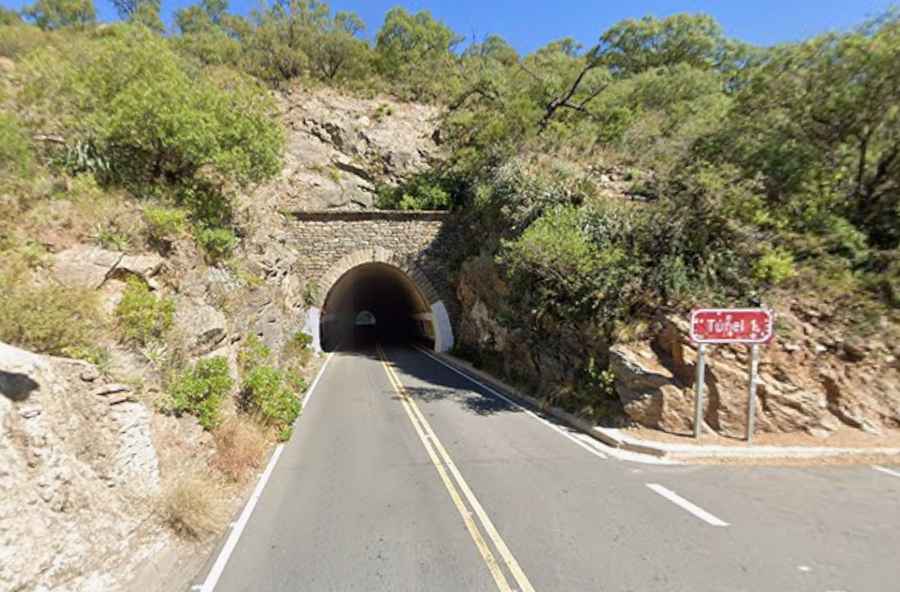
| Road facts: Camino de Los Túneles | |
|---|---|
| Location | Córdoba Province, Argentina |
| Road Name | Ruta Provincial 28 (RP28) |
| Length | 25.0 km (El Cadillo to Las Palmas) |
| Year Built | 1930 (paved in 2017) |
| Key Features | 5 rock tunnels, pigtail loop bridge, canyon viewpoints |
| Surface | Fully paved asphalt |
Where is Camino de Los Túneles located?
Camino de Los Túneles is located in the Córdoba Province in the geographical center of Argentina, set in the foothills of the Sierras Chicas along the Suquía River. Carried by Ruta Provincial 28 (RP28), the route cuts through the mountains overlooking the Quebrada de la Mermela gorge and the flat plains stretching toward La Rioja.
How long is Camino de Los Túneles?
The mountain section covers 25 km (15.5 miles), running west to east between El Cadillo and Las Palmas. To gain elevation quickly up the steep rock wall, the road uses a pigtail loop where a bridge carries the roadway directly back over itself.
When was Camino de Los Túneles built?
The mountain road was originally built in 1930, carving five tunnels straight through the rock face—the longest and best known being the Chancaní and Taninga tunnels. After decades as a rough dirt track, the entire 25 km route was fully paved in 2017.
Is Camino de Los Túneles paved?
Yes, the road is fully paved with smooth asphalt and is passable for standard passenger cars. Several small viewpoints line the cliff edge along the route, offering pull-offs above the gorge where condors frequently circle over the canyon floor.
What are the hazards of driving Camino de Los Túneles?
The asphalt shelf is narrow and runs directly alongside vertical drops of hundreds of meters, making it difficult for drivers prone to vertigo. Loose rocks frequently fall onto the roadway from the sheer cliff walls above, requiring drivers to stay alert when exiting the five unlit tunnels.