How difficult is the 4x4 road to Treasure Mountain in Colorado?
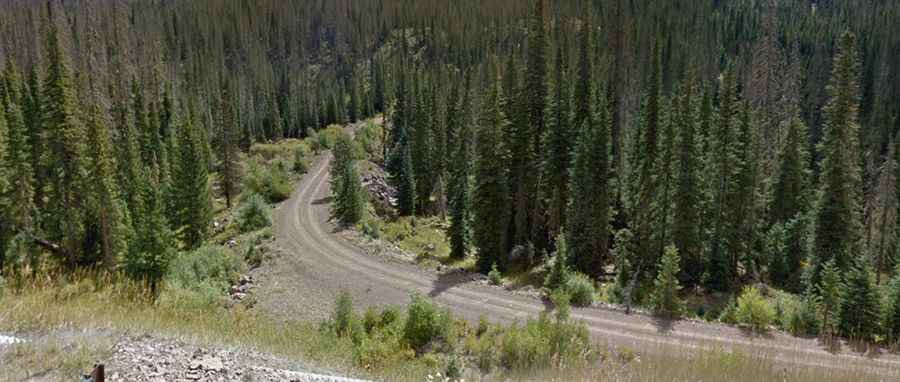
Treasure Mountain is a high mountain summit reaching an elevation of 3,380 meters (11,089 ft) above sea level, located in Mineral County, in the US state of Colorado. Situated in the San Juan Mountains, the road to the top (County Road 39 / Fall Creek Road) starts as a wide dirt road and ends as a narrow, rough track requiring a high-clearance 4x4 vehicle.
| Road facts: Treasure Mountain | |
|---|---|
| Location | Mineral County, Colorado (USA) |
| Elevation | 3,380 m (11,089 ft) |
| Length | 12 km (7.45 miles) |
| Elevation Gain | 441 m (1,446 ft) |
| Surface | Unpaved (Dirt and loose stone) |
How long is County Road 39 to Treasure Mountain?
The drive covers 12 kilometers (7.45 miles) starting from the paved US-160 highway, near Wolf Creek Pass. The first part along Fall Creek Road is a smooth, wide dirt path. However, the last 3.2 kilometers (2 miles) narrow down significantly into a rough track. Over the total distance, the climb gains 441 meters in vertical elevation, reaching 3,380 meters where the thin air causes a noticeable loss of engine power.
What happens when meeting oncoming traffic on Treasure Mountain?
The upper section of the road is single-lane with virtually no shoulders or turnout spots. If you meet a vehicle coming down, one of the two drivers will have to reverse along the narrow dirt shelf until finding a wide point. The road lacks guardrails, and the edge drops steeply into the valley, making reversing on loose gravel tricky.
Why is the final 2-mile push to the summit only for 4x4s?
While the lower sector of Fall Creek Road is manageable for standard cars, the final two miles feature embedded boulders, deep wheel ruts, and loose stone. Low-range gearing is necessary to maintain momentum up the steep ramps near the peak. Without proper ground clearance, lower-riding vehicles risk striking the oil pan or getting high-centered on the rock steps carved out by snowmelt.
Is the road to Treasure Mountain open in winter?
No. Snow buries the road by October or November, and unlike the nearby US-160 over Wolf Creek Pass, County Road 39 is not plowed. Snowdrifts block the track well into late spring or early summer. During the summer operating window, afternoon rainstorms can quickly turn the dry dirt into a slick mud track where tires lose traction easily.