The 57 deadliest road stretches in Georgia: A driver’s black list
Driving through Georgia is a game of patience and reflexes, especially once you hit the massive interchanges around Atlanta. The reality of the road here is dictated by heavy truck traffic, sudden lane changes, and a complete lack of space when things go wrong. If you want to stay out of the wrecking yard, you need to know exactly which sections of the asphalt are eating cars and lives at a higher rate than the rest.
| Rank | Road | City | Mile Point | Crashes | Fatalities | Length (mi) | Crashes/Mile |
|---|---|---|---|---|---|---|---|
| 1 | I-20 | Atlanta | 4.0 | 4 | 5 | 0.9 | 5.10 |
| 2 | Mike Padget Hwy | Augusta | 5.26 | 6 | 6 | 1.29 | 4.65 |
| 3 | I-75 | Kennesaw | 11.75 | 6 | 6 | 1.07 | 4.67 |
| 4 | Lee St SW | Atlanta | 1.6 | 5 | 6 | 1.17 | 4.27 |
| 5 | I-85 | Atlanta | 10.0 | 10 | 10 | 2.46 | 4.07 |
| 6 | Wesley Chapel Rd | Decatur | 0.8 | 5 | 7 | 1.42 | 3.52 |
| 7 | I-85 | Atlanta | 19.5 | 5 | 5 | 1.44 | 3.47 |
| 8 | MLK Jr Dr SW | Atlanta | 126.5 | 6 | 6 | 1.8 | 3.33 |
| 9 | Old National Pkwy | Atlanta | 7.1 | 12 | 12 | 3.73 | 3.22 |
| 10 | Houston Rd | Macon | 40.8 | 7 | 9 | 2.38 | 2.94 |
| 11 | I-75 | Atlanta | 51.5 | 5 | 5 | 1.85 | 2.70 |
| 12 | Metropolitan Pkwy SW | Atlanta | 8.0 | 8 | 8 | 2.98 | 2.68 |
| 13 | I-20 | Atlanta | 50.0 | 10 | 11 | 3.78 | 2.64 |
| 14 | Gordon Hwy | Augusta | 7.9 | 6 | 6 | 2.42 | 2.48 |
| 15 | Pio Nono Ave | Macon | 37.5 | 8 | 10 | 3.34 | 2.40 |
| 16 | I-85 | Atlanta | 98.5 | 10 | 10 | 4.22 | 2.37 |
| 17 | SR 14 Connector | Atlanta | 8.0 | 5 | 5 | 2.13 | 2.35 |
| 18 | Athens Hwy | Loganville | 1.0 | 5 | 5 | 2.29 | 2.18 |
| 19 | I-285 | Sandy Springs | 105.5 | 10 | 11 | 4.69 | 2.13 |
| 20 | I-515 | Savannah | 5.0 | 6 | 7 | 2.82 | 2.13 |
| 21 | Broadway | Macon | 49.5 | 5 | 7 | 2.46 | 2.03 |
| 22 | Athens Hwy | Gainesville | 60.5 | 5 | 5 | 2.48 | 2.02 |
| 23 | Cartersville Hwy SE | Rome | 148.5 | 6 | 6 | 3.06 | 1.96 |
| 24 | I-285 | Doraville | 12.0 | 12 | 13 | 6.12 | 1.96 |
| 25 | State Rte 20 | Covington | 7.0 | 7 | 8 | 3.67 | 1.91 |
| 26 | I-285 | East Point | 113.5 | 30 | 32 | 17.47 | 1.72 |
| 27 | I-75 | Forest Park | 66.5 | 10 | 11 | 5.9 | 1.69 |
| 28 | I-75 | McDonough | 5.0 | 6 | 6 | 3.68 | 1.63 |
| 29 | Lavista Rd | Decatur | 108.5 | 6 | 6 | 3.74 | 1.60 |
| 30 | Tara Blvd | Jonesboro | 93.5 | 15 | 15 | 10.19 | 1.47 |
| 31 | Moreland Ave SE | Atlanta | 2.1 | 9 | 11 | 6.31 | 1.43 |
| 32 | Abercorn St | Savannah | 104.5 | 8 | 8 | 5.96 | 1.34 |
| 33 | S Cobb Dr | Marietta | 3.4 | 6 | 7 | 4.47 | 1.34 |
| 34 | I-75 | Locust Grove | 2.1 | 8 | 8 | 6.22 | 1.29 |
| 35 | I-85 | West Point | 0.4 | 5 | 5 | 3.92 | 1.28 |
| 36 | Columbia Dr | Decatur | 28.5 | 5 | 5 | 4.05 | 1.24 |
| 37 | Stone Mountain Fwy | Tucker | 61.5 | 7 | 8 | 5.69 | 1.23 |
| 38 | Memorial Dr | Decatur | 8.5 | 5 | 5 | 4.08 | 1.23 |
| 39 | I-20 | Douglasville | 15.0 | 15 | 16 | 12.29 | 1.22 |
| 40 | I-75 | Dalton | 12.1 | 6 | 6 | 4.97 | 1.21 |
| 41 | Lawrenceville Hwy | Lilburn | 2.2 | 5 | 6 | 4.19 | 1.19 |
| 42 | I-75 | Cordele | 83.5 | 6 | 6 | 5.06 | 1.19 |
| 43 | I-95 | Savannah | 3.0 | 5 | 5 | 4.3 | 1.16 |
| 44 | I-75 | Stockbridge | 1.6 | 5 | 5 | 4.37 | 1.14 |
| 45 | Covington Hwy | Decatur | 8.0 | 8 | 8 | 7.07 | 1.13 |
| 46 | I-20 | Decatur | 1.1 | 12 | 12 | 10.61 | 1.13 |
| 47 | Riverside Dr | Macon | 103.5 | 6 | 6 | 5.39 | 1.11 |
| 48 | I-185 | Columbus | 123.5 | 6 | 8 | 5.57 | 1.08 |
| 49 | Joe Frank Harris Pkwy | Cartersville | 115.5 | 5 | 5 | 4.65 | 1.08 |
| 50 | I-285 | Decatur | 1.0 | 7 | 9 | 6.57 | 1.07 |
| 51 | Sylvester Rd | Albany | 110.5 | 6 | 6 | 5.83 | 1.03 |
| 52 | I-75 | Cartersville | 7.1 | 6 | 6 | 5.85 | 1.03 |
| 53 | S Fulton Pkwy | Atlanta | 101.5 | 7 | 7 | 6.92 | 1.01 |
| 54 | I-75 | Cartersville | 144.5 | 13 | 14 | 12.89 | 1.01 |
| 55 | SR 365 | Lulu | 6.0 | 6 | 6 | 6.15 | 0.98 |
| 56 | Villa Rica Hwy | Dallas | 51.5 | 6 | 7 | 7.04 | 0.77 |
| 57 | I-75 | Macon | 122.5 | 5 | 5 | 8.41 | 0.59 |
Why is the I-20 in Atlanta the most dangerous road in Georgia?
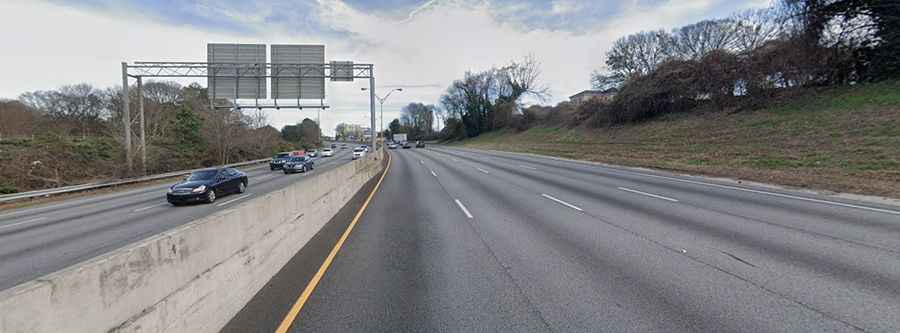
The I-20 through Atlanta takes the top spot because of the sheer speed and the tight way the lanes merge near the city center. It is not just about the number of cars; it is about how they all fight for the same bit of asphalt at 70 mph. When you drive this stretch, you are constantly dodging heavy trucks that have blind spots as big as a house. A minor tap or a sudden brake here starts a chain reaction that ends with cars piled up against the concrete barriers. There is no room to pull over and no time to think if someone cuts you off, which happens every few seconds.
What makes the I-75 through Kennesaw so lethal?
Heading north from Atlanta, the I-75 through Kennesaw is a trap for anyone who loses focus. This road has a high crash rate per mile because the traffic never truly thins out. You have people commuting, long-haul truckers pushing their limits, and locals all squeezed into a few lanes. The biggest danger here is the sudden stop. One moment you are cruising and the next you have to slam on the brakes because of a fender bender three miles ahead. If your tires are not in good shape or you are tailgating, you will end up as part of the wreckage. It is a high-stress trip where you have to watch the car three spots ahead of you just to stay safe.
How do Georgia’s rural roads like Mike Padget Hwy compare?
Away from the big city traffic, roads like Mike Padget Hwy in Augusta or the state routes near Macon show a different kind of danger. On these roads, the asphalt is often narrower and the shoulders are basically non-existent. If you put a wheel wrong and touch the grass or the mud, the car will pull hard and you can end up in a ditch or hitting a tree before you can even react. Without the concrete dividers of the interstates, head-on crashes are the main killer here. People drive fast on these long stretches, and if someone crosses the yellow line, there is nowhere for you to go. You have to keep your eyes on the road and forget about the radio or the phone.
Is the I-285 "Perimeter" really a death trap?
The I-285, known as the Perimeter, is a giant loop where the biggest danger is the massive volume of freight trucks. These trucks are trying to bypass the city, and they occupy almost every lane. For a normal car, being caught between two of these rigs is like being in a nutcracker. The exits and entries are fast and aggressive, and if you miss your turn, trying to change lanes at the last second is a suicide move. To drive the 285 safely, you have to pick your lane early and stay out of the way of the big haulers. It is a road that punishes anyone who hesitates or makes an unpredictable move.