Experience the Majesty of Pikes Peak: America's Scenic High Mountain Drive
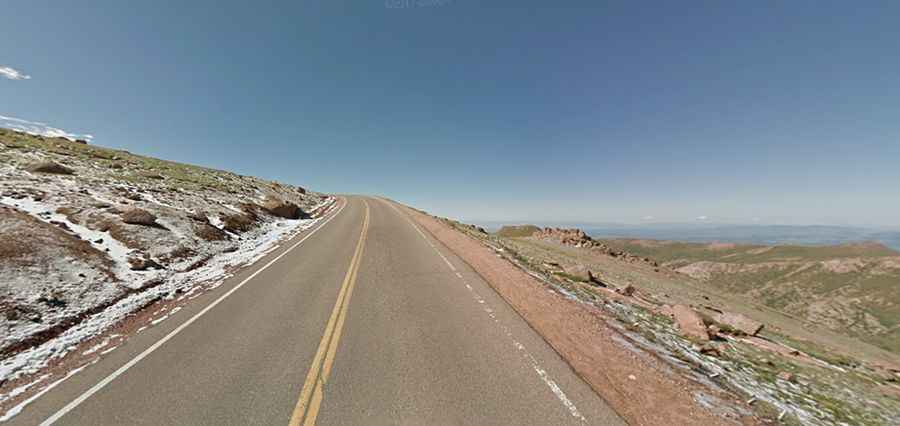
Pikes Peak, often cheesily referred to as “America's Mountain," is a high mountain peak at an elevation of 4,302m (14,115ft) above sea level, located in El Paso County, in the U.S. state of Colorado. Along the road to the summit, you’ll encounter some of the most breathtaking scenery in the world as you wind your way through an alpine wonderland of scenic beauty, mountain reservoirs, beyond timberline, overtaking the clouds… It's one of the highest roads in the USA.
Is the road to Pikes Peak paved?
Set high in the Rocky Mountains of Colorado, the road to the summit is entirely paved. It’s called Pikes Peak Highway and stands as one of the highest roads in Colorado.
How long is the road to Pikes Peak?
The toll road is 19 miles (31 km) long, running from Cascade, on the US-24 highway, to the summit.
Is the road to Pikes Peak open?
This road is at least partially open year-round, "weather permitting," i.e., open up to the altitude where snow removal becomes excessively difficult. However, it can be closed anytime when the access is not cleared of snow. If you have a history of severe cardiac or respiratory problems, we recommend that you do not make the ascent to the summit. Babies under 4 months of age should not make the ascent either.
Why is it called Pikes Peak?
Named originally "El Capitan" by Spanish settlers, the mountain underwent a renaming to Pike's Peak after Zebulon Pike, an explorer who led an expedition to the southern Colorado area in 1806. This iconic peak is designated as a National Historic Landmark.
Is the road to Pikes Peak steep?
The road to the summit is very steep. Starting at US-24, near Cascade, the ascent is 30.57 km (19 miles) long, featuring 156 turns. Over this distance, the elevation gain is 2,049 meters. The average gradient is 6.70%.
When was the Pikes Peak Highway built?
The road was built as a gravel climb in 1915 and financed by Spencer Penrose. It took 13 years to be made. The first 6 miles were paved in the 1950s.
Is the road to Pikes Peak scenic?
This winding road is perfect for scenic drives, offering visitors views of lakes, mountains, wildlife, and the surrounding area. There are several stops on the way to the top that are all worth your time (which is good because you need to stop and adjust to avoid altitude sickness). Try to make the trip on a clear day, so you will have a better view, and you may want a jacket for the summit, even in summer. Be prepared for the cold and wind! When you get above timberline, it’s like driving on Mars with a boulder-strewn, reddish-hued landscape. The driver is so busy navigating the very windy road that they don't get to see anything on the way. The view from the top is incredible, but there is limited oxygen up there, so you might start feeling a little sickly. The drive itself is pretty tame until the last stretch. You'll know you've reached it when you see the rangers checking the temp of the brakes of people coming down the mountain. Over a half-million people reach the summit house every year via the Pikes Peak Highway. Pikes Peak (originally Pike's Peak) is the most visited mountain in North America and the second most visited mountain in the world behind Japan's Mount Fuji. It forms a stunning backdrop for Colorado Springs and the Garden of the Gods.
How to drive the Pikes Peak Highway?
The speed limit is 25 mph unless otherwise posted. Uphill traffic has the right-of-way at all times. Watch for maintenance equipment working on the road. Whenever possible, use the turnouts provided to stop. If you must stop on the roadway, choose a straight section where your vehicle is clearly visible. If your engine begins to labor on steeper grades, shift to a lower gear to maintain speed and engine cooling. Shift your automatic transmission manually to stay in a lower gear. When you reach the summit, run your engine at fast idle for a few minutes to dissipate engine heat. Use your lowest gear to allow your engine to brake your vehicle. Don't ride your brakes; this will cause them to overheat and cause problems. If your engine overheats, run it at a fast idle. You may wish to run water on the radiator core. There are no gas stations along the highway. Be sure that you have at least a 1/2 tank of gas before you start your scenic drive.
How long does it take to drive the Pikes Peak Highway?
Pikes Peak Hillclimb is an annual automobile race in Colorado. The race covers 12.42 miles, 156 turns, and 4,720 vertical feet. The absolute record for the climb is 7:57.148, set by Romain Dumas in 2018 with the electric Volkswagen I.D. R. This run marked the first time a vehicle dropped below the eight-minute barrier on the 156-turn course. While traditional combustion engines lose up to 40% of their power as they climb toward the 4,302m finish line due to thin air, the electric motors maintained 100% of their 680 horsepower throughout the entire 4,720 vertical feet.