Driving the high altitude County Road 33 to Kendall Mountain
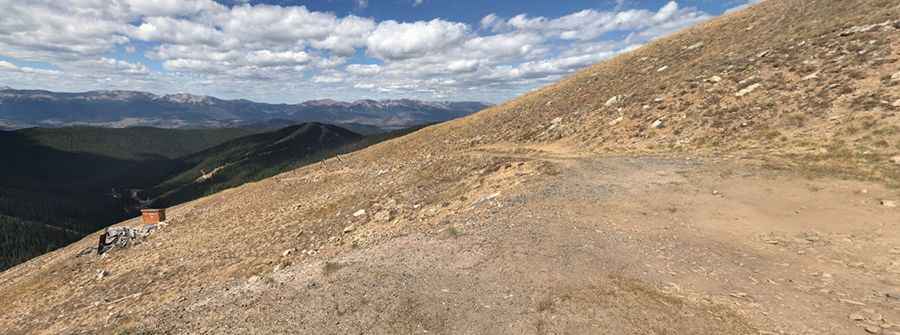
Kendall Mountain is a massive peak in San Juan County, Colorado, standing as one of the most technical challenges near Silverton. The road to the top, County Road 33 (Kendall Mountain Road), is a high-altitude grind that reaches a staggering 3,981 meters (13,061ft) above sea level. This is not a road for the faint of heart; it is a raw, boulder-lined shelf road where your tires are constantly fighting for traction on loose scree while hanging over vertical drops. It is important to note that the driveable track does not reach the actual summit peak but terminates at a high saddle on the mountain's western flank, leaving the final ascent to those on foot.
| Road facts: Kendall Mountain (CR 33) | |
|---|---|
| Location | San Juan County, Colorado, USA |
| Max Elevation | 3,981m (13,061ft) |
| Length | 7 miles (from Silverton) |
| Requirement | High-clearance 4WD Only |
How challenging is the County Road 33 to Kendall Mountain?
The 7-mile climb starting from Silverton is a persistent battle against gravity and rough terrain. County Road 33 is notorious for its "shelf" sections, where the track is carved directly into the steep mountainside with zero room for passing and no guardrails. As seen on the trail, the roadbed is littered with embedded boulders and loose rocks that can easily bash your oil pan if you don't have high clearance. This is a technical crawl where you need a low-range gearbox to maintain a steady pace. The turns are sharp and often require multi-point maneuvers on the edge of a precipice, making it one of the highest mountain roads in Colorado.
What are the main hazards on the Kendall Mountain Road?
The primary danger on Kendall Mountain is the extreme exposure and the weather. Above 12,000 feet, the zone is prone to heavy mist and sudden electrical storms that can turn the rocky surface into a slippery mess in seconds. The road is totally impassable from October to June due to deep snow and ice. Because there are virtually no passing places on the narrowest shelf sections, meeting another vehicle requires one driver to reverse down a steep, winding ledge—a maneuver that is high-stakes at this altitude. At around 12,800 feet, the saddle marks the end of the line for almost all vehicles; the final stretch to the actual summit is a hiking trail, as the road becomes too precarious and narrow even for narrow-track 4x4s.
What mechanical prep is needed for the Kendall Mountain climb?
Before leaving Silverton, you must verify that your cooling system is in perfect order. The sustained low-gear crawl to 13,000 feet puts an enormous thermal load on your engine while the thin air provides less cooling efficiency. Naturally aspirated engines will lose about 30% of their power, so ensure your 4WD system is engaging correctly before the steep stuff starts. Check your tire sidewalls for any cuts; the jagged San Juan rocks are unforgiving. On the descent, do not ride your brakes. The constant incline will boil your brake fluid; instead, stay in low range and let engine braking control your descent. Carry extra water and cold-weather gear, as a mechanical failure at 13,000 feet puts you in a high-alpine environment where temperatures plummet even in mid-summer.
Pic&video: Matt Snitchler