How to drive the unpaved road to Burro Pass in Utah?
Burro Pass is a high mountain pass located in Grand County, in the US state of Utah. South of the pass, Forest Road 0240 climbs through the La Sal Mountains to reach 3,197m (10,488ft) above sea level, ending at the Burro Pass Trailhead parking area.
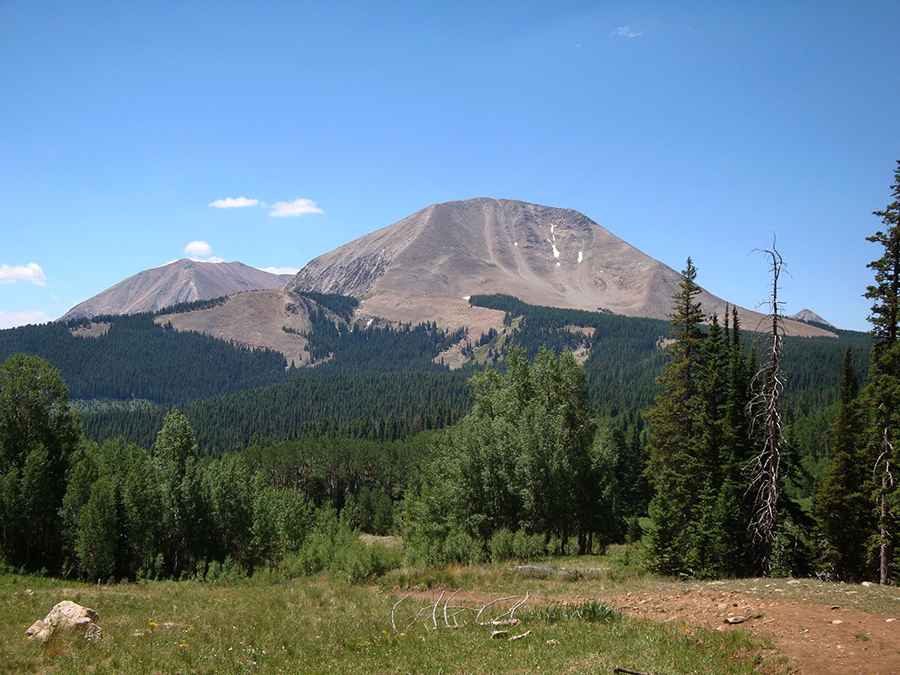
| Road facts: Burro Pass (FR 0240) | |
|---|---|
| Location | Grand County, Utah (USA) |
| Road Name | Forest Road 0240 |
| Length | 0.5 miles (0.80 km) from Geyser Pass Road |
| Driveable Terminus | Burro Pass Trailhead - 3,197 m (10,488 ft) |
| Geographical Pass Elevation | 3,412 m (11,194 ft) (Hiking / MTB only) |
| Average Gradient | 11.12% |
| Surface | 100% unpaved dirt and gravel |
| Vehicle Requirements | 4WD strongly recommended |
Where is Burro Pass located?
The pass is situated in eastern Utah, within the Manti-La Sal National Forest. Forest Road 0240 branches off Geyser Pass Road and leads toward the base of the pass.
Does the road go all the way to the top of Burro Pass?
No. Motorized travel ends at 3,197 meters (10,488 ft) at a small parking turnout for the Burro Pass Trailhead. The actual geographical pass sits higher up at 3,412 meters (11,194 ft), and the final 215 vertical meters can only be reached on foot or by mountain bike along the single-track trail.
How long is the road to Burro Pass Trailhead?
Starting from Geyser Pass Road, Forest Road 0240 is 0.5 miles (0.80 km) long. The short spur climbs 89 meters (295 ft) with a steep average gradient of 11.12% up to the trailhead parking area.
Is the road to Burro Pass unpaved?
Yes. Forest Road 0240 is entirely unpaved, consisting of a narrow gravel and dirt surface that requires careful tire placement over loose stones.
Is a 4x4 required to drive Forest Road 0240?
A 4-wheel drive vehicle is strongly recommended. Although short, the combination of loose dirt, an 11.12% incline, and high altitude requires low gears and good traction to reach the trailhead turnaround without spinning wheels.
Is the road to Burro Pass open year-round?
No. High in the La Sal Mountains, Forest Road 0240 is unplowed and completely blocked by deep snow and ice from late autumn through spring.
Pic: Rick J