How to drive County Road 175 over Cameron Mountain Pass in Colorado?
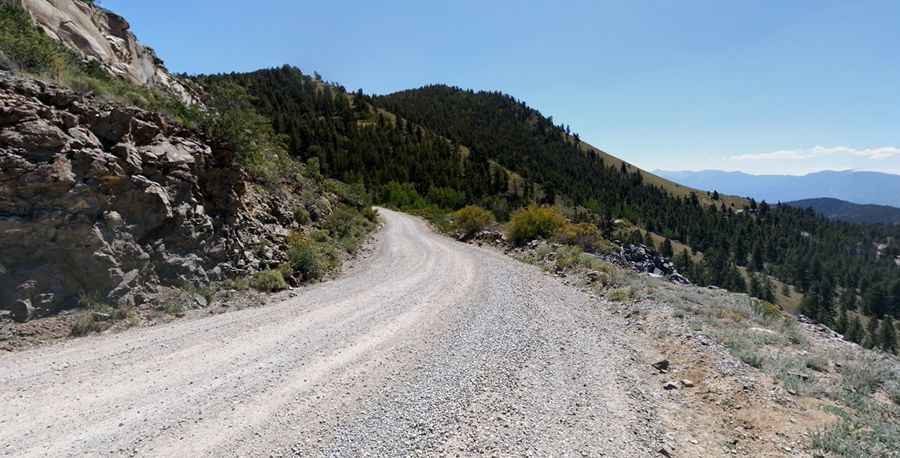
Cameron Mountain Pass is a mountain gap at an elevation of 3,030m (9,940ft) above sea level, located in Chaffee County, in the US state of Colorado. The pass is crossed by County Road 175, locally known as the Ute Trail, connecting the valley of Salida with the high-country interior.
| Road facts: Cameron Mountain Pass (CR 175) | |
|---|---|
| Location | Chaffee County, Colorado (USA) |
| Road Designation | County Road 175 (Ute Trail) |
| Elevation at Pass | 3,030 m (9,940 ft) |
| Length | 16.0 miles (25.7 km) from Salida |
| Surface | 100% unpaved (gravel, washboard dirt, embedded rock) |
| Vehicle Requirements | High-clearance vehicle recommended (4WD required for upper trail) |
Where is Cameron Mountain Pass located?
The pass is situated in central Colorado within Chaffee County. County Road 175 runs north from Salida for 16 miles (25.7 km), climbing up into the mountain terrain along the historic Ute Trail route.
Is County Road 175 to Cameron Mountain Pass paved?
No. The entire 16-mile route is completely unpaved. The surface transitions from packed gravel and washboard dirt at lower elevations near Salida into a rougher, rock-strewn dirt track as it nears the 3,030-meter summit.
Is a 4x4 required to drive the Ute Trail?
While the lower sections near Salida can be navigated by standard passenger cars in dry weather, high ground clearance is essential for the upper miles due to embedded rocks and deep ruts. A four-wheel drive vehicle is recommended to maintain traction over loose dirt and steep, rocky inclines.
Is County Road 175 open year-round?
No. Due to heavy snow accumulation near 10,000 feet, the upper pass sector is seasonal and typically closed to wheeled traffic from November through April. Summer storms can also create mud washouts and bring down loose rock onto the track.
How challenging is the descent back to Salida?
The 16-mile return drive involves a continuous loss of elevation on loose, unpaved surfaces. Low-range gear or manual gear selection must be used to provide engine braking, preventing foot brakes from overheating on sustained down-slopes.
Pic: Jonathan Bowers