Mike O'Callaghan–Pat Tillman Memorial Bridge: Driving the Hoover Dam Bypass
The Mike O'Callaghan–Pat Tillman Memorial Bridge is a massive concrete-arch bridge that spans the Colorado River, linking the states of Nevada and Arizona in the USA. Known as the Hoover Dam Bypass, the bridge carries U.S. Route 93 at a height of 270 meters (880 feet) above the river bed. Since its opening in 2010, it has served as the primary logistical corridor for heavy commercial traffic between Las Vegas and Phoenix, bypassing the narrow and winding original road over the Hoover Dam.
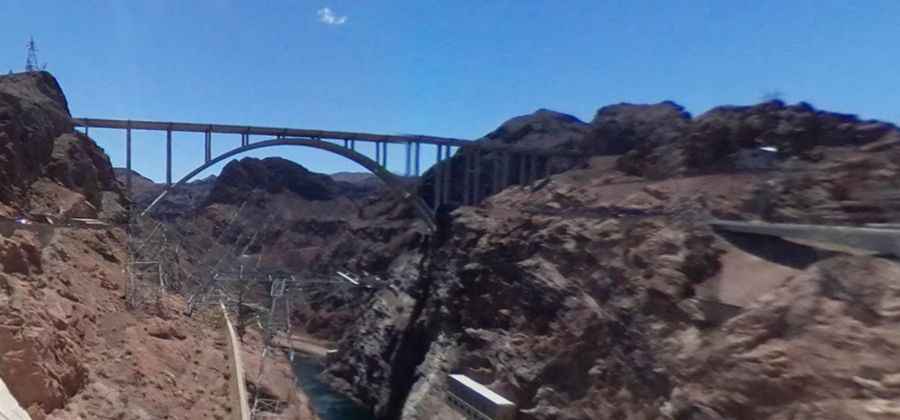
| Road facts: Mike O'Callaghan–Pat Tillman Memorial Bridge | |
|---|---|
| Location | Nevada-Arizona border (U.S. 93) |
| Height | 270 m (880 ft) above the river |
| Length | 579 m (1,900 ft) |
| Design | Twin-rib concrete arch |
Where is the Hoover Dam Bypass located?
The bridge is located in Black Canyon, approximately 48 kilometers southeast of Las Vegas. It carries four lanes of U.S. Route 93, a vital highway for interstate commerce. The structure sits about 460 meters downstream from the Hoover Dam. While the old route across the dam was restricted to light vehicles due to security and narrow clearance, this bridge was engineered to handle the constant flow of high-tonnage semi-trucks that move across the desert southwest.
What is the driving experience on the Tillman Bridge?
Driving across the bridge is a high-altitude experience where the primary factor is the crosswind. Because it is one of the most spectacular bridges in the world due to its height, the wind gusts funneling through the canyon can be severe. Drivers of high-profile vehicles, such as RVs and empty trailers, must maintain a firm grip on the steering wheel to compensate for sudden lateral movements. Despite the height, the road deck is designed with high concrete barriers that prevent any view of the river from a standard passenger car, keeping the driver's focus on the lanes.
How was the bridge constructed?
The structure is the highest concrete-arch bridge in the world. It incorporates 30,000 cubic yards of concrete and 16 million pounds of steel. The twin-rib arch was built using a complex system of temporary cables to hold the segments in place until they met in the center. This engineering reality allows the bridge to support the heavy loads and vibrations of thousands of vehicles daily while resisting the extreme thermal expansion caused by the Nevada desert heat, which can reach over 45°C in summer.
What are the hazards of the U.S. 93 section at Black Canyon?
Beyond the wind, the main hazard is the sudden transition from the wide, open desert highway to the bridge's confined environment. The speed limit is strictly enforced due to the volume of traffic and the logistical importance of the route. Pedestrian traffic is allowed on a protected walkway on the northern side, but motorists must remain alert for lane changes from tourists who may be distracted. Security is high; since it is a critical infrastructure point near the Hoover Dam, the area is under constant surveillance and stopping on the bridge is strictly prohibited.
Is the bridge safer than the old Hoover Dam road?
Physically and logistically, the bridge is significantly safer for long-haul driving. The old road featured hairpin turns and steep gradients that frequently caused brakes to overheat on heavy trucks. The new bridge provides a wide, straight, and relatively flat transit that eliminates the mechanical stress of the descent into the canyon. However, the sheer height and the potential for black ice during rare winter storms require caution, as any incident on the bridge can block this major interstate artery for hours.
Pic: Rob Verheijen