Driving the Red River Bridge on the Oklahoma and Texas border
The Red River Bridge is a low-clearance concrete structure spanning 0.48 km (0.3 miles) across the Prairie Dog Town Fork of the Red River, directly on the state line between Oklahoma and Texas. Carrying the paved N 1680 Road, the bridge links Harmon County in southwestern Oklahoma with Hardeman County in northern Texas. It is one of the most spectacular bridges in the world.
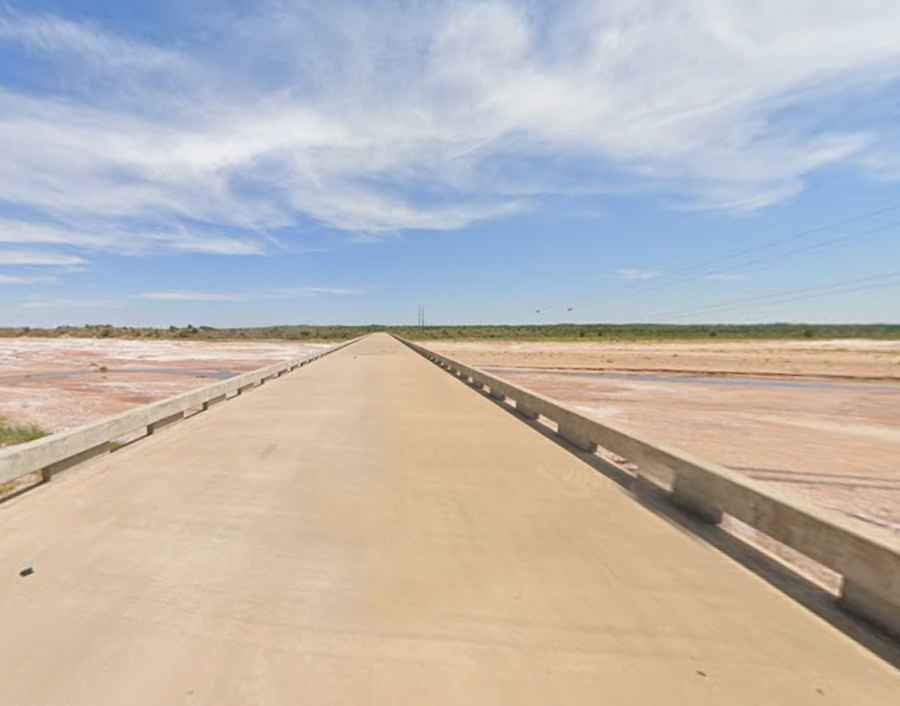
| Road facts: Red River Bridge (N 1680 Rd) | |
|---|---|
| Location | Oklahoma (Harmon Co.) / Texas (Hardeman Co.) border |
| Route Designation | N 1680 Road |
| Length | 0.48 km (0.3 miles) |
| Structure Type | Low-slung concrete deck over heavy piers (Replaced wooden structure) |
| Width | Narrow two-lane concrete deck |
| Surface | Fully paved asphalt approaches and concrete deck |
| Key Hazards | Flash flooding over low deck, minimal concrete side curbs, water and debris on road |
Where is the Red River Bridge located?
The bridge sits on N 1680 Road, a 29.77-kilometer (18.5-mile) paved route running north-south from Hollis, Oklahoma, down to Williams, Texas. The bridge crosses the wide, sandy bed of the Red River directly at the state line.
What type of bridge carries N 1680 Road across the Red River?
Originally a wooden plank bridge, the crossing has been updated with a low-slung, flat concrete deck set directly on top of heavy piers. The structure features low concrete curbs on the edges instead of standard high safety barriers, offering minimal protection along the flat open crossing.
Is the road to the Red River Bridge paved?
Yes. The entire length of N 1680 Road and the approaches on both the Oklahoma and Texas sides are fully paved with asphalt, leading seamlessly onto the concrete bridge deck.
What are the flooding hazards on the Red River Bridge?
Because the bridge deck sits extremely low over the wide riverbed, severe flash floods on the Red River can surge over the structure. Rising water deposits sand, silt, and river debris directly across the low-slung concrete deck, making the surface hazardous during intense rain events.