How to drive the wooden Lake Catatoga Road Bridge in Illinois?
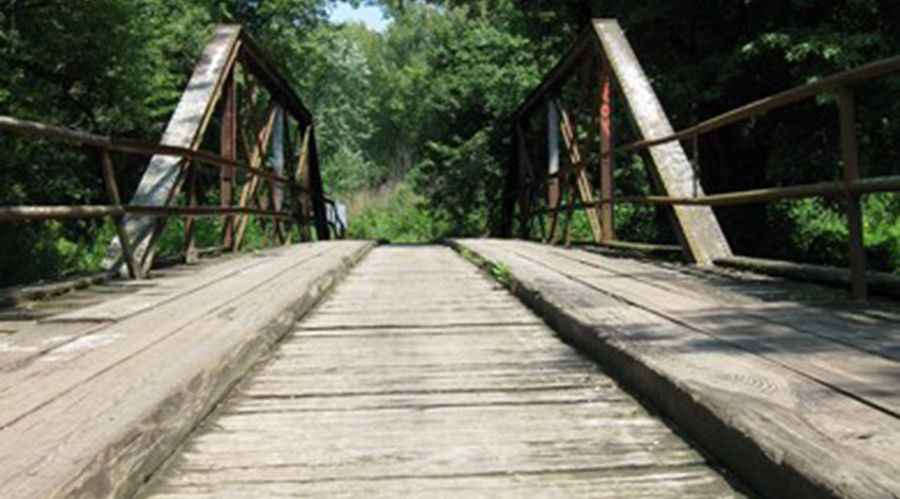
The Lake Catatoga Road Bridge is a specialized wooden structure located in Macoupin County, Illinois, USA. Situated within the private residential area of Lake Catatoga, this 22-meter bridge serves as a critical logistical link for local transit. Despite its short length, it is considered one of the most spectacular bridges in the world due to its primitive construction and strict weight constraints.
| Road facts: Lake Catatoga Road Bridge | |
|---|---|
| Location | Macoupin County, Illinois (USA) |
| Total Length | 22 meters (72 ft) |
| Weight Limit | 3 Tons (Strictly enforced) |
| Surface | Wooden planks on steel/wood trusses |
| Road | Lake Catatoga Road |
What is the technical structure of the Lake Catatoga Road Bridge?
The bridge is 22 meters long and features a high-risk technical design based on a wooden plank deck. Technically, the structure is a short-span truss bridge where the roadbed is composed of transverse timber boards. Logistically, the most challenging aspect is its extreme narrowness, which provides zero margin for error in vehicle positioning. Traversing the Lake Catatoga Road requires a slow, centered approach to distribute the load evenly across the timber joists.
What are the weight and vehicle limits for the bridge?
Technically, the Lake Catatoga Road Bridge has a strictly enforced weight limit of 3 tons. This restriction effectively bans most heavy SUVs, commercial vans, and trucks from the crossing. Safety protocols mandate that drivers verify their vehicle's gross weight before attempting the 22-meter transit. Driving over the planks creates a significant vibration and mechanical noise, indicating the bridge's flexible nature. Logistically, exceeding the 3-ton limit poses a severe risk of structural failure and total immobilization on the Lake Catatoga Road.
How does weather affect the wooden bridge logistics?
In Macoupin County, environmental factors directly impact the bridge's safety. Technically, the wooden plank surface becomes exceptionally slippery when wet or during the Illinois winter icing periods. During these episodes, the 22-meter transit requires high-traction tires, as the narrow guardrails offer minimal protection against lateral slips. Logistically, maintenance of the timber deck is a technical necessity to prevent wood rot from compromising the 3-ton load capacity. Drivers should exercise extreme caution after heavy rainfalls, as the water-saturated planks can alter the vehicle's braking distance on the narrow bridge entry.
Pic: em_mar_10