Boner Bridge is the oldest iron bridge in Indiana
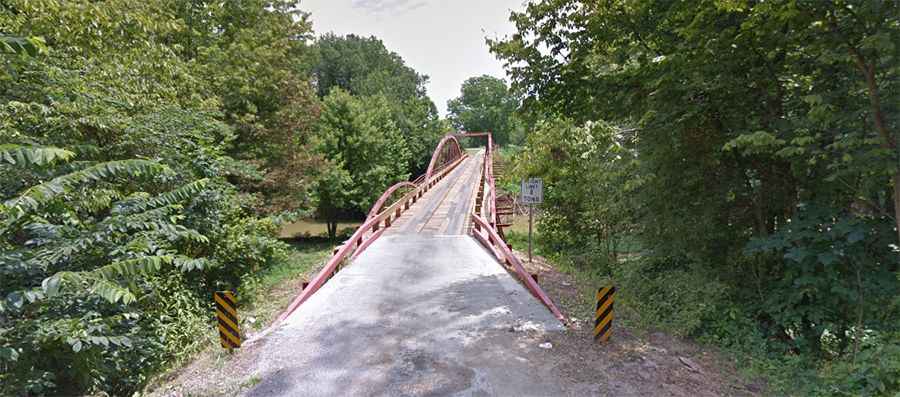
Boner Bridge (also known as Pyeatt's Mill Bridge or Historic Hatfield Bridge) is a historic wrought iron bowstring through truss bridge spanning 78.0 meters (256 ft) across Little Pigeon Creek in Southern Indiana, USA. Built in 1869 by the King Bridge Company, it carries Boner Road (Bridge Street) on the border between Warrick County and Spencer County. It's one of the most spectacular bridges in the world.
| Road facts: Boner Bridge (Hatfield Bridge) | |
|---|---|
| Location | Warrick / Spencer Counties, Indiana (USA) |
| Route Designation | Boner Road (Bridge Street) |
| Total Length | 78.0 m (256 ft) across 3 spans |
| Span Layout | Two 50 ft outer spans and one 160 ft center span |
| Structure Type | Wrought iron bowstring through truss on cast iron center piers |
| Build Date / Builder | 1869 by King Bridge Company |
| Weight Limit | 8 Tons (Strictly enforced) |
| Surface | Single-lane wooden plank deck |
Where is Boner Bridge located?
The bridge crosses Little Pigeon Creek in a rural area between Boonville and Hatfield, connecting Warrick and Spencer counties. It is the oldest iron bridge in Indiana that still stands in its original 1869 location.
What type of structure carries Boner Road?
The structure consists of three red-painted arching spans totaling 256 feet: two 50-foot approach spans and a 160-foot main center span. It is the longest wrought iron bowstring through truss bridge in Indiana, resting on cast iron piers under the center span that are the only remaining examples of their kind in the state.
Can you drive across Boner Bridge?
Yes. The bridge remains open to local light traffic, operating as a single-lane crossing. Vehicles must observe a strict 8-ton weight limit to avoid damaging the 1869 iron framing and timber deck.
What are the driving conditions on Boner Bridge?
The road deck consists of loose wood planking that groans and creaks under vehicle weight. The single-lane width offers zero clearance to pass oncoming traffic, requiring drivers to check for vehicles on the opposite bank before committing to the timber deck.