How to drive the wooden bridge over Harlequin Lake in Alaska?
The Harlequin Lake Bridge is a timber structure located within the Tongass National Forest in the U.S. state of Alaska. Part of the Forest Highway 10, this bridge is a critical logistical point on the route from Yakutat to the Dangerous River.
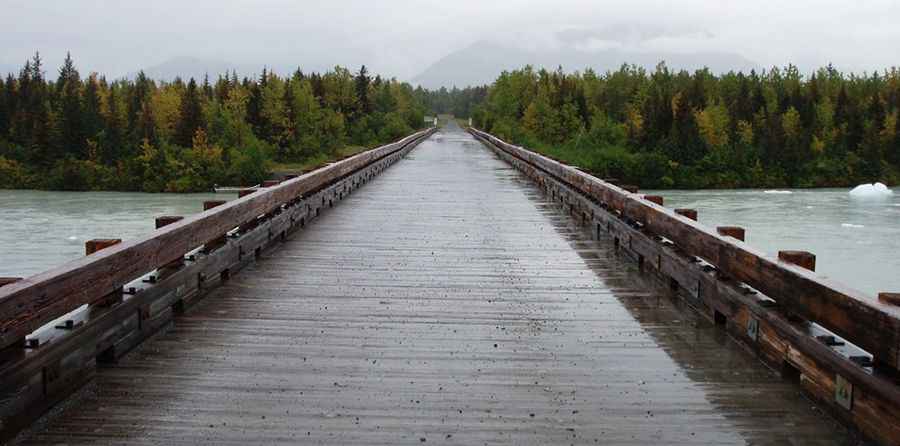
| Road facts: Harlequin Lake Bridge | |
|---|---|
| Location | Tongass National Forest, Alaska (USA) |
| Length | 371 ft (113 m) |
| Surface | Wood / Timber planks |
| River | Dangerous River |
How long is the Harlequin Lake Bridge?
The bridge measures 371 feet in length and is constructed entirely of wood. It spans the outlet where Harlequin Lake drains into the Dangerous River. The structure is part of an unpaved gravel corridor that requires heavy vehicle maintenance due to the constant humidity and the mechanical stress caused by high-tonnage logging and service trucks. It is ranked among the most spectacular bridges in the world due to its isolated location and technical design.
What are the driving hazards at Harlequin Lake Bridge?
The main physical hazard is the accumulation of ice against the bridge pilings. Icebergs frequently break off from the Yakutat Glacier at the head of the lake and float down the river current, putting direct lateral pressure on the timber supports. During periods of high snowmelt, the water level of the Dangerous River can rise to the level of the road deck, depositing silt and debris on the wooden planks. The surface is often slick with moss and moisture, significantly reducing tire traction for heavy 4x4 vehicles.
What is the surface of Forest Highway 10?
The road approach to the bridge is a rugged gravel track. The transition between the dirt roadbed and the wooden bridge deck is often uneven, with deep ruts that can catch the underbody of low-clearance vehicles. Maintenance is irregular, and the timber planks can become loose or develop gaps over time. Drivers must inspect the deck for missing hardware or split wood before crossing, as the extreme Alaskan weather cycles cause rapid deterioration of the timber.
Is the Harlequin Lake Bridge open year-round?
Access is strictly seasonal and depends on the snowpack of the Tongass National Forest. While the bridge is technically permanent, the Forest Highway 10 is often blocked by several feet of snow and ice from late autumn until early summer. During the spring thaw, the river current is at its strongest, carrying massive ice blocks that can make the crossing unstable. There are zero services, cell coverage, or emergency recovery options within a 50-mile radius of the bridge.
Pic: kayak_guru