How to stay safe on the Dan Ryan Expressway in Chicago
The Dan Ryan Expressway isn't just another highway. As one of the most heavily traveled urban stretches in the Midwest, it registers a disproportionate share of Chicago's 100,000+ annual traffic crashes. Treating this corridor as a routine commute rather than a high-risk system is a mistake.
Where is the Dan Ryan Expressway in Chicago?
Spanning roughly 18 km (11 miles) along Interstate 90/94, the Dan Ryan cuts through Chicago’s South Side from the Jane Byrne (Circle) Interchange downtown to the I-57 and Chicago Skyway split. It funnels a volatile mix of daily commuters, heavy commercial freight, airport traffic, and stadium crowds (heading to Bears games or Guaranteed Rate Field) into a complex local-and-express lane system. While designed to separate through-traffic from neighborhood exits, this layout rewards early preparation and severely punishes last-second merges.
Major ramps along the route include 18th Street, 31st Street, 35th Street, Garfield Boulevard, 47th Street, 63rd Street, 71st Street, 87th Street, and 95th Street. A recent hit-and-run near 95th Street highlighted the persistent dangers at these busy interchanges, especially for pedestrians who end up too close to active ramp traffic.
Due to these demanding interchange designs and massive daily traffic volumes, the Dan Ryan regularly amplifies the danger of everyday driving errors. When compressed into the tight bottlenecks and rapid merges of this high-speed I-90/94 corridor, the behaviors driving the most common causes of car accidents in Chicago—such as speeding, tailgating, and distracted driving—become exponentially more volatile. On a stretch of highway where heavy commercial freight operates right alongside local commuters, a single second of distraction can easily trigger a severe multi-vehicle collision.
Winter Hazards and Construction Closures
While the Dan Ryan stays open year-round to support massive daily traffic volumes, its environment changes drastically by season and hour. Temporary closures can stretch on for hours after major crashes or during overnight construction work. In winter, the paved surface can turn treacherous with black ice and slush spray, significantly cutting your braking distance. If you've ever hit a patch of black ice at 55 mph, you already know there's almost no recovery window.
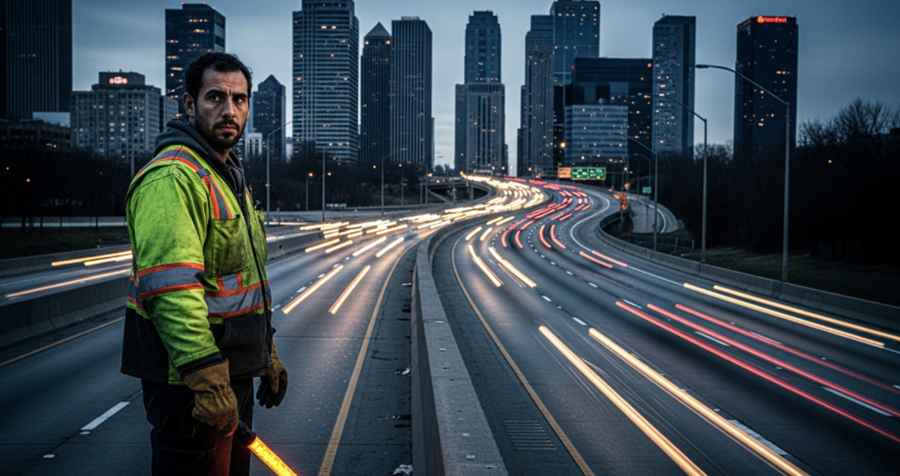
The expressway also undergoes frequent overnight lane reductions. Highway authorities schedule these closures during maintenance periods to protect road workers from passing vehicles, so expect orange cones and arrow boards after dark.
Why is the Dan Ryan Riskier Than It Looks?
The wide, multi-lane design of I-90/94 frequently encourages excessive speeding despite heavy vehicle volumes. Sound counterintuitive? It shouldn't. Wide lanes and long sight lines trick your brain into thinking you've got more room and more time than you actually do. Drivers face short decision windows at exits and splits, which forces frequent weaving between local and express lanes.
Large speed differences between aggressive operators and cautious commuters drastically reduce everyone's reaction time. Night driving compounds these risks by slashing visibility and exposing you to fatigued or impaired motorists.
Active work zones create sudden lane shifts and introduce stopped maintenance vehicles into what should be high-speed lanes. Reckless driving accounted for 84% of accident-related deaths in Chicago in 2023, making defensive driving absolutely critical on this route.
Speeding was a factor in nearly half of all fatal crashes in Illinois in 2023. Illinois also recorded 294 alcohol-related crash deaths, representing roughly 23% of the state's crash fatalities that year.
On top of that, Illinois documented more than 9,800 distracted-driving crashes in 2022, accounting for about 3.3% of all crashes statewide. Rear-end collisions also make up a substantial share of injury crashes in Illinois, often because drivers are following too closely in dense, stop-and-go traffic.
The Safest (and Most Dangerous) Times to Drive
While traffic volume drops late at night, average speeds climb drastically. This is illustrated by recent fatal incidents—including a rollover near 91st Street just after midnight and an outbound crash near 18th Street at 3:30 a.m. Both occurred in the pre-dawn hours, shutting down lanes and disrupting early Sunday morning traffic. Fatigue, alcohol impairment, and overnight construction lane reductions converge to make this the highest-risk driving window.
Mid-morning and early afternoon hours outside peak rush periods typically offer the most predictable traffic flow. You'll still want to actively avoid overnight high-speed periods, severe weather events, and known construction windows whenever possible.
To lower your risk, it helps to build a specific safety routine before hitting this corridor. Here's what that looks like in practice:
- Pre-check: Pull up live traffic and IDOT lane-closure alerts before starting the engine.
- Buffer: Double your standard following distance at night, in the rain, or near major interchanges.
- Anticipate: Ease off the gas the moment you see orange construction signage or a horizon of brake lights.
- Pull the Plug: Cancel the trip or choose public transit if you are fatigued, distracted, or impaired.
| Driving period | Typical benefit | Main risks | Best for |
|---|---|---|---|
| Early morning rush | Predictable commuter patterns | Heavy congestion, sudden braking, short merges | Experienced commuters |
| Mid-morning | More stable flow | Ongoing maintenance or delivery traffic | Visitors and cautious drivers |
| Afternoon rush | Full staffing and daylight | Dense traffic, lane competition, exit backups | Drivers familiar with exits |
| Late evening | Lighter traffic | Speeding, fatigue, impaired driving | Alert drivers with route familiarity |
| Overnight | Lowest volume | High speed differences, reduced visibility, work zones, severe crash risk | Best avoided unless necessary |
How should drivers handle work zones and lane closures on the Dan Ryan?
Work zones are common on major Chicago expressways and demand immediate speed reductions. Crashes near active highway vehicles frequently injure roadside workers, as the recent incident involving a parked IDOT truck near 37th Street made painfully clear.
Illinois's move-over law requires drivers to slow down and change lanes when approaching emergency or maintenance vehicles displaying flashing lights. Cones, attenuator trucks, and arrow boards all signal that road conditions will change abruptly ahead. If you see any of those, ease off the gas before you think you need to.
Expressway managers often close the express lanes independently from the local lanes. Never treat a partially blocked lane as a cue to squeeze through at speed. And yes, that means even if the car ahead of you just did exactly that.
Pre-merge preparation
Make sure your vehicle has sufficient fuel or charge level before you hit the on-ramp. Mount your phone and set your GPS route before putting the car in motion; mid-drive distractions on this road can cost you more than a missed exit.
Check current weather conditions and verify your tire pressure, since wet pavement severely affects braking. Decide well in advance whether you need the local or express lanes to reach your destination. Making last-second moves across the physical divider is incredibly dangerous on this stretch. Keep both hands free, keep your eyes up, and watch for pedestrians near ramps. So far, you've got your route planned and your car prepped; now, here's how to actually drive the thing.
What habits lower risk once you're on the road?
Hold a steady speed and leave significantly more following distance than you would on a suburban road. Ask any longtime Dan Ryan commuter, and they'll tell you the same thing: three seconds of following distance feels excessive until the moment it saves you. Signal early to communicate your intentions to drivers moving faster than the flow of traffic.
Avoid lingering in the blind spots of commercial trucks, which need wider lanes and longer stopping distances than you'd expect. Ignore aggressive drivers and let them pass without engaging. It's not worth the risk of escalation at 60 mph.
Don't chase missed exits; simply continue to the next interchange and reroute safely. Watch the behavior of several vehicles ahead of you, not just the single car directly in front of your bumper. That extra visual range gives you precious reaction time.
What should you do if your car breaks down or a crash happens on the Dan Ryan?
Move your vehicle to the right or left shoulder immediately if it's still drivable. Turn on your hazard lights and stay securely belted inside your vehicle until it's safe to exit. This might feel counterintuitive (your instinct is to get out and look), but it's the safer call.
Call 911 to report crashes, injuries, blocked lanes, or disabled vehicles sitting in travel lanes. Secondary crashes are a major hazard on urban expressways because approaching drivers often react late to stopped traffic. In a corridor where people are routinely doing 65 or 70, even a few seconds of delayed reaction can be devastating.
If you must exit your car, move as far as possible from active traffic and concrete barriers. Give arriving emergency and service vehicles ample space to work, and never stand directly between parked vehicles.
The Takeaway: Respect the Dan Ryan
Navigating the Dan Ryan is often unavoidable, as it serves as the city's primary north-south artery. It provides highly efficient access to downtown, major South Side neighborhoods, vital interchanges, and regional tollways. The primary payoff is urban convenience, not scenery.
The road stays manageable for drivers who prepare their route and actively monitor their surroundings. Treat it as a high-speed urban system that rewards preparation and punishes last-second decisions, and you'll be fine. Treat it casually, and the statistics speak for themselves.