Hot Springs Road: Driving the narrow desert wash in Big Bend
Located in the remote southeastern corner of Big Bend National Park, near the Mexican border, Hot Springs is a historic site in Brewster County, Texas. Reaching the remnants of this desert oasis involves driving a primitive road that drops into a rugged desert environment, where the Rio Grande's unpredictable nature dictates the state of the track.
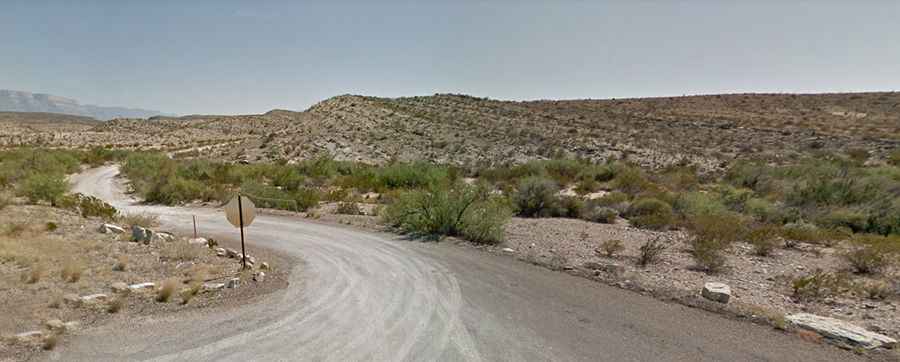
| Road facts: Hot Springs Road | |
|---|---|
| Location | Big Bend National Park, Texas, USA |
| Length | 2.57 km (1.6 miles) |
| Surface | Unpaved / Rough Wash |
| Vehicle Limit | Prohibited for RVs / Oversized vehicles |
| Hazard Level | Moderate (Steep drop-offs & One-way) |
Where is the road to Hot Springs?
The road starts from Park Road 12, descending rapidly toward the Rio Grande River near the settlement of Terlingua. The geography here is dominated by a narrow desert wash that eventually leads to the ruins of J.O. Langford's resort and the thermal bathhouse. This is a dead-end route that serves the Hot Springs Historic District, and because it sits at the bottom of a drainage system, the area is highly susceptible to flash flooding and rapid changes in road conditions.
Is the road to Hot Springs unpaved?
Yes, Hot Springs Road is completely unpaved and is maintained as a primitive dirt path. While the first section is relatively wide, the final stretch becomes extremely rough, narrow, and curvy. This last section features a steep drop-off on one side and is strictly one-way only. The surface is bumpy and filled with loose gravel and rocks that can easily damage a low-hanging chassis. Because of these tight dimensions, motor homes, trailers, and oversized vehicles are strictly prohibited. If you are driving a large van or a dually truck, do not attempt this road as there is no room to turn around once you hit the narrowest points.
How long is the road to Hot Springs?
The drive is short, only 2.57 km (1.6 miles), but it is slow going. You will be driving through a rough wash where the sand can be deep after heavy rains. The descent into the canyon requires constant focus, as the road surface is uneven and the one-way system means you must follow the track until the parking area near the ruins. Expect to spend about 10 to 15 minutes to cover these two kilometers, as the bumpy terrain and the technical nature of the final corners won't allow for anything faster than a crawling pace.
Can I drive a normal car to Hot Springs?
A high-clearance vehicle is strongly required. While some brave drivers attempt it in sedans during bone-dry conditions, the road is not designed for them. A standard car will likely scrape its underbody on the high centers of the wash or on the rocky bumps of the one-way section. Additionally, the road may be blocked by a barrier without notice if the park rangers deem the wash too dangerous due to mud or flood debris. Always check the current status at the Panther Junction Visitor Center before heading down to the river, and be prepared for total isolation as cell service is non-existent at the bottom of the canyon.