What are the most haunted roads of North Carolina?
Driving through North Carolina’s backcountry after dark presents a unique set of challenges, from dense fog to roads steeped in local folklore. Many of these routes are the site of historical accidents and unexplained phenomena that continue to attract motorists seeking a high-exposure driving experience. Whether these incidents are rooted in myth or environmental anomalies, driving these roads at night requires peak situational awareness and a reliable vehicle setup to manage the technical and psychological demands of the terrain.
| North Carolina Night Routes: Operational Data | |
|---|---|
| Gravity Hill (Richfield) | Topographical anomaly; cars appear to roll uphill in neutral |
| Helen’s Bridge (Asheville) | Technical mountain pass; frequent reports of mechanical failure |
| Lydia’s Bridge (Jamestown) | Historical accident site; high-risk during low-visibility rain |
| Payne Road (Rural Hall) | Isolated secondary road; complex geometry and low lighting |
What is the technical anomaly behind Gravity Hill in Richfield?
One of the most famous driving phenomena in the state occurs at Gravity Hill. Drivers report that after placing their vehicle in neutral at the base of the incline, the car begins to move uphill against gravity. While local legend attributes this to spirits, it is a masterclass in optical illusion caused by the surrounding horizon line. For a deeper analysis of these anomalies, check out our guide to the most famous gravity hills in the world, where the laws of physics appear to be challenged by the road's layout.
Why does Helen’s Bridge demand extreme vehicle readiness?
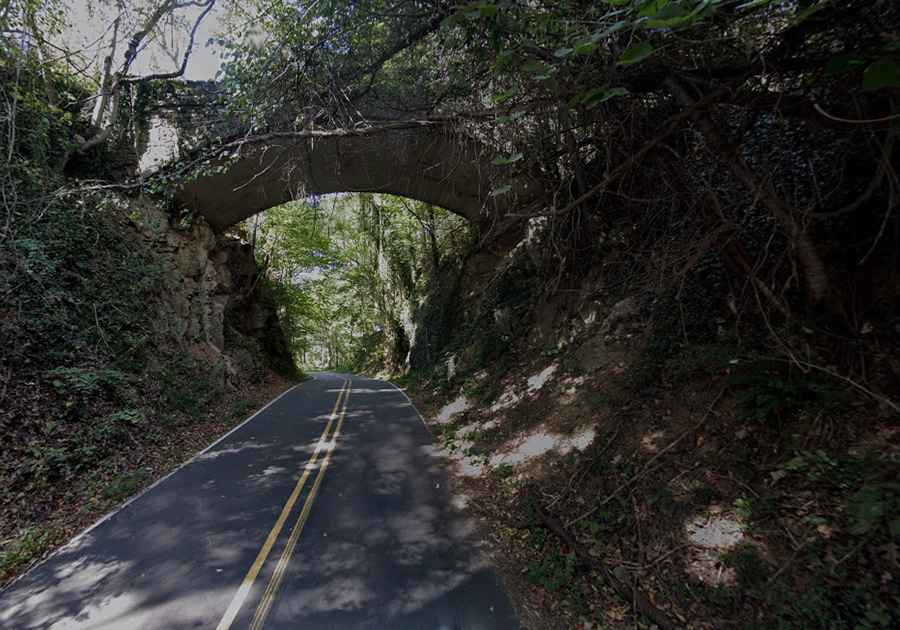
Located on Beaucatcher Mountain, Helen’s Bridge is a narrow structure where many motorists report sudden mechanical failures and electrical issues. Driving this mountain road at night is a technical test due to the steep gradients and the psychological pressure of local hauntings. Professional drivers ensure their lighting systems and battery health are optimal before traversing this bridge, as the dense forest canopy of Asheville significantly reduces ambient light levels.
How to manage low-visibility risks on Lydia’s Bridge?
The road passing through Lydia’s Bridge in Jamestown is notorious for "phantom" sightings during heavy rain. From a driving perspective, the primary hazard here is the combination of aged infrastructure and poor drainage. When driving this road in adverse weather, hydroplaning and reduced depth perception are the real dangers. Maintaining a controlled velocity and using high-output wipers is essential to navigate this bridge safely, regardless of the local legends surrounding historical accidents at the site.
What makes Payne Road a high-risk secondary route?
Payne Road in Rural Hall is an isolated stretch known for its dark history and lack of modern road safety features. Driving this road involves navigating sharp turns with minimal signage and no street lighting. The psychological impact of its "satanic" reputation often leads to driver distraction. Professional standards for this route include maintaining a strict focus on the road surface and being prepared for wildlife crossings, which are frequent in this heavily wooded area of North Carolina.
What are the hazards of night driving in Valle Crucis?
The area around St. John’s Episcopal Church in Valle Crucis is famous for the "Demon Dog" legend, where drivers claim to be chased by a fast-moving apparition. In reality, driving these roads at speed is dangerous due to the winding mountain topography and narrow shoulders. Attempting to "outrun" anything on these technical roads can lead to a loss of vehicle control. The key to safety in Valle Crucis is disciplined speed management and respecting the narrow boundaries of the mountain road network.
Conclusion: The Reality of North Carolina’s Haunted Roads
Whether you are investigating topographical anomalies or historical accident sites, driving North Carolina’s haunted roads requires respect for the environment. The legends surrounding these routes serve as a reminder that the road can be unforgiving, especially under the cover of darkness. By prioritizing vehicle maintenance and situational awareness, you can safely explore the state’s most eerie corridors. Monitor your telemetry, stay focused on the asphalt, and master the mysteries of the night.