Mueller Tunnel: The Blocked Pass of the Mount Lowe Fire Road
Mueller Tunnel is a mountain gallery located in Los Angeles County, in the US state of California. Cut into the steep rock walls of the San Gabriel Mountains, this historic pass sits on the unpaved Mount Lowe Fire Road, a rough dirt track heavily scarred by continuous rockfalls, debris slides, and intense forest fires.
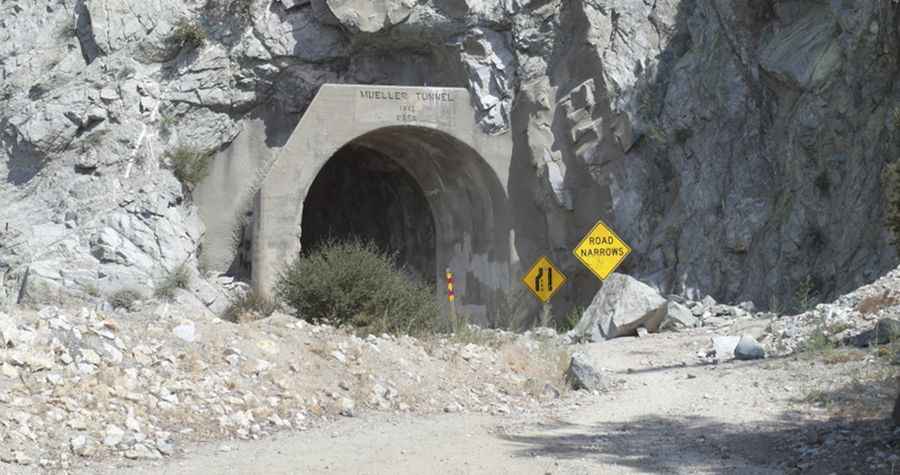
| Road facts: Mueller Tunnel | |
|---|---|
| Location | San Gabriel Mountains, Los Angeles County (California) |
| Route | Mount Lowe Fire Road (13.67 km / 8.5 miles) |
| Tunnel Length | 58.39 m (191.56 ft) |
| Surface | Unpaved dirt, rough gravel, and loose shale |
| Access Status | Blocked to cars; open to mountain bikes and hikers |
Where does the Mount Lowe Fire Road lead?
The tunnel is located high on the southern fold of San Gabriel Peak, roughly an hour north of Los Angeles. It sits along the Mount Lowe Fire Road, a 13.67 km (8.5 miles) unpaved dirt track that links the paved Brown Mountain Truck Trail with the paved Mount Wilson Red Box Road. The track is carved straight into the crumbling granite mountainside, leaving the riding surface constantly exposed to falling stones, deep ruts, and sweeping canyon winds.
Why are cars blocked from entering the Mueller Tunnel?
The track leading to the tunnel has disintegrated due to heavy geological shifts. In 2007, a massive structural collapse inside the tunnel buried the lane under tons of heavy granite slabs, requiring extensive repairs to clear the path. Today, the canyon slopes remain highly unstable. Massive boulders weighing several tons have rolled down from the peak and settled directly in front of the tunnel entrance, completely blocking the width of the lane for motorized vehicles. However, there is still plenty of room between the rocks for mountain bikes and hikers to weave through.
What are the main track hazards for mountain bikes on this route?
The climb is a sustained push on loose gravel and loose shale that tests tire traction. The unlit interior of the 58.39-meter (191.56 ft) tunnel is raw stone with no concrete lining, leaving the floor dark and covered in damp moisture from upper rock drainage. Riders must watch out for sharp stone debris that can slash tires instantly. The outer edge of the fire road drops vertically into the canyon floor with zero steel guardrails or fences, requiring total focus on the line during steep descents.
How does the weather affect the Mueller Tunnel track?
The entire mountain sector faces severe environmental erosion. Intense winter storms regularly trigger heavy mudslides and rockfalls that wash away the edges of the unpaved track, creating narrow choke points. During the dry summer months, the area is highly vulnerable to fast-moving wildfires that bake the rock face, cracking the stone and causing the tunnel walls to drop debris onto the track below.
Pic: PYoung90012