Picturesque Routes for the Ultimate Road-trip & Vacation in the Pocono Mountains
The Pocono Mountains in Northeastern Pennsylvania represent a complex topographical transition for drivers on the U.S. East Coast. This upland region is defined by a dense network of interstate corridors and historic state routes that navigate through deep forests, river gaps, and high-plateau terrain. For the strategic driver, reaching the Poconos requires balancing high-speed transit with technical mountain navigation, especially during the hazardous icing events of the winter season.
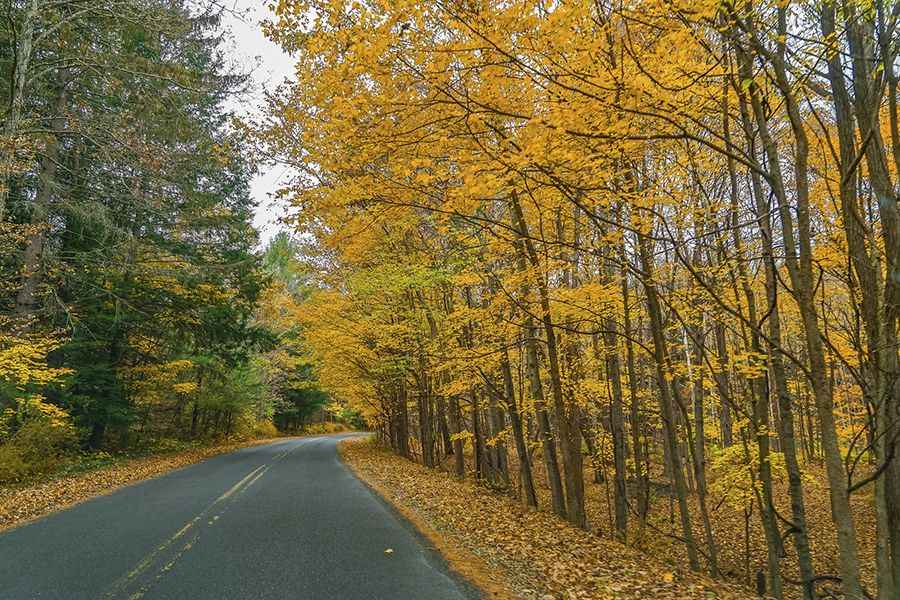
| Pocono Mountains: Route Risk Profiles | |
|---|---|
| Primary Arterial | Interstate 80 (Transcontinental Link) |
| Technical Grade | PA Route 903 (Two-lane undivided highway) |
| Environmental Hazard | Delaware Water Gap (Extreme crosswinds & fog) |
| Logistical Node | Stroudsburg (High-traffic interchange) |
1. US Route 6: The Historic Northern Tier
Known as the "Grand Army of the Republic Highway," US Route 6 is a 3,199-mile transcontinental link that crosses Pennsylvania's northern tier for 394 miles. Entering the Poconos near Honesdale and Milford, the road transitions from flat-land transit to undulating mountain geometry. The sector between Hawley and the Delaware Water Gap National Recreation Area is characterized by narrow lanes and significant elevation changes near Lake Wallenpaupack, a major hydrological feature constructed in 1926 that influences local micro-climates and road surface conditions.
2. US Route 209: The Vertical Spine
US 209 is a critical 211-mile corridor connecting the Susquehanna River to the Hudson Valley. In the Poconos, it serves as the primary spine through Stroudsburg and Jim Thorpe. This route is technically demanding due to its role as a high-volume transit point for both commercial trucks and tourists. Navigating the Jim Thorpe sector requires precision, as the road descends into deep river gorges with sharp turns and limited runoff zones, particularly near the Lehigh Valley zoo access points.
3. Interstate 80: The High-Velocity Crossing
Interstate 80 is the most prominent east-west arterial in the Poconos. The sector crossing the Delaware Water Gap Toll Bridge is a high-risk zone for high-profile vehicles due to extreme crosswinds funneling through the gap. Beyond the engineering feat of the bridge itself, the I-80 segments branching toward Mount Pocono and Tobyhanna face rapid weather shifts, where black ice and dense mountain fog are frequent seasonal hazards for long-distance drivers.
4. Pennsylvania Route 903: The "Highway to Adventure"
Stretching only 17.7 miles, PA 903 is a technical, two-lane undivided state highway that carves through Carbon and Monroe counties. Despite its short length, it is an essential link for reaching the Tunkhannock Township and Lake Harmony. The road features high-exposure bridges and dense forest canopy that limits visibility. It is a preferred route for those looking to avoid the heavy congestion of the interstates, but it demands constant vigilance due to the lack of central dividers and frequent wildlife crossings.
Conclusion: Tactical Navigation in the Highlands
The Pocono Mountains are more than a vacation destination; they are a study in Appalachian road engineering. Whether you are managing the transcontinental flow of I-80 or the narrow technical stretches of PA 903, the region rewards drivers who maintain high situational awareness. By monitoring local weather patterns—particularly the "mountain-effect" precipitation—drivers can safely navigate the complex infrastructure that connects the Poconos to the rest of the American Northeast.