Helpful Tips for Driving Safely Around Trucks in the USA
The trucking industry is the backbone of the American economy, with over 13 million trucks registered in the U.S. However, sharing the road with an 80,000-pound 18-wheeler requires more than just basic driving skills; it requires an understanding of heavy vehicle physics and official safety protocols.
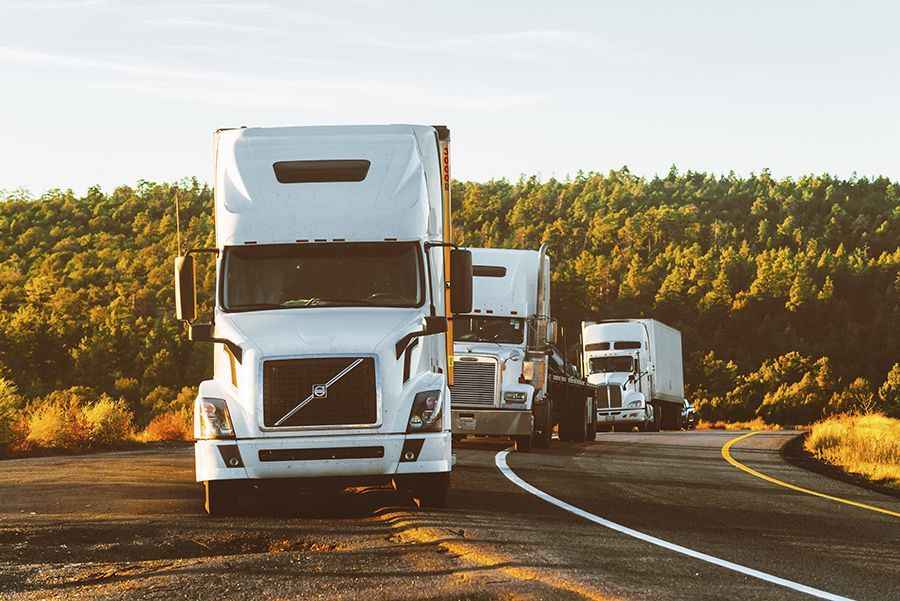
The "No-Zone" and Blind Spot Statistics
According to the NHTSA, a significant percentage of car-truck collisions occur in the "No-Zone." These are areas where the truck driver has limited or zero visibility. Unlike passenger cars, large trucks have massive blind spots on all four sides.
- The Right Side: This is the largest and most dangerous blind spot, extending across two lanes of traffic.
- The Rear: If you cannot see the truck’s side mirrors, the driver has no way of knowing you are behind them.
- The Front: A truck’s cab sits high, meaning the driver cannot see a small car merging within 20 feet (6 meters) of their front bumper.
Truck Safety by the Numbers (USA)
- Average Weight: 80,000 lbs (Class 8 Truck).
- Stopping Distance: Approx. 525 ft at 65 mph.
- Fatalities: Most truck-involved fatalities (70%+) are occupants of the smaller vehicle.
- Turn Radius: Can require up to 55 feet of clearance.
Braking Distance: The 40% Rule
Data from the FMCSA shows that a fully loaded tractor-trailer can take the length of two football fields to come to a complete stop when traveling at highway speeds.
- Emergency Buffer: A truck needs approximately 40% more distance than a standard car to stop.
- The 4-Second Rule: Always maintain at least a 4-second gap between your vehicle and the truck ahead to account for their slower reaction to hazards.
Handling Wide Turns and "Squeeze Play"
Trucks need significant space to maneuver. When a truck makes a right turn, it often swings wide to the left first. A common and fatal mistake, often called the "Squeeze Play," happens when a car tries to pass on the right while a truck is preparing to turn. Always wait behind the truck until the maneuver is completely finished.
Turbulence and "Bow Waves"
At high speeds, a large truck pushes a massive volume of air forward, creating a "bow wave" followed by a vacuum. When passing, be prepared for a sudden gust of wind that can push your car toward the shoulder or suck it toward the trailer. Keep a firm grip on the steering wheel and never linger beside a truck.