Trans-Labrador Highway: Driving the world’s most remote paved wilderness
The Trans-Labrador Highway (TLH) is one of the world's most epic and remote road trips. Stretching across the rugged wilderness of Newfoundland and Labrador in eastern Canada, this highway was once feared for its sharp gravel and car-destroying potholes. After decades of construction, the Trans-Labrador Highway is now completely paved. While the final seal was completed in 2022, it remains one of the world's most remote and challenging driving experiences, where the luxury of asphalt meets the raw danger of the Canadian wilderness.
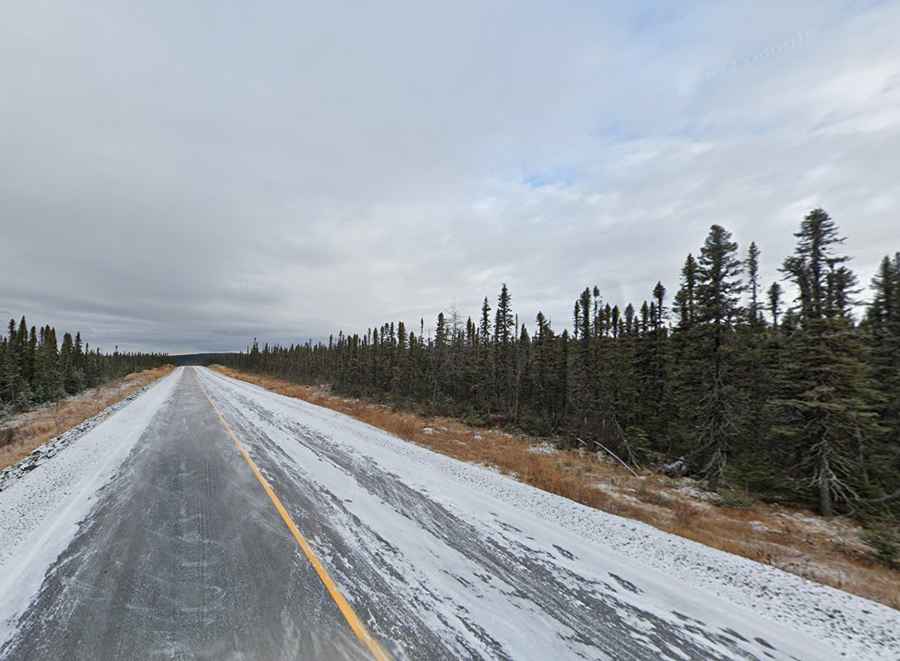
Running between the Québec border (near Labrador City) and the Atlantic coast at the Strait of Belle Isle, the road covers 1,149 km (714 miles) of unspoiled wilderness. Despite the new asphalt, it remains one of the loneliest roads on the planet, where you can drive for hours without seeing another soul.
| Road facts: Trans-Labrador Highway (Route 500 & 510) | |
|---|---|
| Length | 1,149 km (714 miles) |
| Surface | Paved (Completed July 2022) |
| Location | Labrador, Canada |
| Hazard Level | High (Wildlife, Remoteness, Extreme Weather) |
| Driving Time | ~22 hours (Non-stop) |
From Gravel to Asphalt: A Game-Changer
For decades, the Trans-Labrador Highway was synonymous with dust clouds, cracked windshields, and shredded tires. The final segment of paving was completed in July 2022 at Cartwright Junction, finally joining the two distinct parts of the highway (Route 500 and Route 510). While the gravel "grid roads" of the 1990s are gone, the road's remote nature hasn't changed. The paving allows for smoother driving, but it also increases average speeds in an area where moose collisions are a constant and deadly threat.
The Challenges of the Loneliest Road
Even with fresh pavement, the TLH remains a high-stakes drive. The hazards have simply shifted:
- Wildlife: Labrador is home to massive moose and caribou populations. A collision at highway speeds on a remote stretch can be fatal.
- No Cell Service: Most of the highway has zero mobile coverage. Satellite phones were historically recommended, and emergency kits are still mandatory.
- Fuel Planning: There are vast distances (hundreds of kilometers) between communities. Never pass a fuel station without topping up.
- Soft Shoulders: Off the paved surface, the embankments are steep and the shoulders can be soft, making it easy to roll a vehicle if you drift off the edge.
Winter Driving: A Different Beast
The Trans-Labrador Highway is maintained year-round, but winter is extreme. Between September and May, services are reduced and weather can turn in minutes. Severe snowstorms can close sections of the road for over a week, and ice makes the steep grades particularly dangerous. If you travel in winter, you must be prepared for sub-zero temperatures and carry full survival gear, including extra food, blankets, and a shovel.
What is the best time to drive the TLH?
The best window for driving is from mid-June to mid-September. During the summer solstice (June 21), the days are incredibly long, allowing you to cover more distance in daylight. However, be prepared for "hordes" of black flies and mosquitoes that emerge in June. By early September, the days shorten significantly, and the first snow can appear at any time.
The Ultimate Wilderness Experience
Driving the Trans-Labrador Highway is about freedom. It’s a route that takes you through pristine forests, past glacial lakes, and into remote villages that were only connected to the outside world a few decades ago. It remains one of the last frontiers for road trippers—a paved ribbon of civilization through one of the most untouched regions of North America.
Essential Gear for the Paved Wilderness
Even though you no longer need a heavy-duty 4x4 to survive the Trans-Labrador Highway, you shouldn't treat it like a city street. While the driving lanes are now fully paved, the road shoulders remain gravel. The transition from the smooth asphalt to the sharp stones at the edge is abrupt, making it easy to lose control or puncture a tire if you drift off the pavement. Here is what you must carry:
- Full-size Spare Tire & Plug Kit: While the road is paved, the shoulders are still made of the same sharp, jagged Labrador stone. If you pull over and catch a rock at the wrong angle, a simple puncture can become a nightmare.
- Extra Fuel: Distances between service stations are still massive (up to 400 km in some stretches). The "Paved" status doesn't mean there are more gas stations.
- Moose Bumper or Extreme Caution: Many locals use "moose bumpers" (heavy-duty grill guards). If your vehicle doesn't have one, avoid driving at night, dawn, or dusk when these 600 kg animals are most active on the road.
- Emergency Communication: Cell service is still non-existent for about 90% of the route. A satellite messenger (like a Garmin inReach) is still the best insurance policy you can buy.