Highway 401 is Canada's Busiest Road. It is Also the Leading Source of Windshield Damage for GTA Commuters
Every weekday morning, more vehicles merge onto Highway 401 through Toronto than travel on almost any other stretch of pavement in North America. Congestion trackers such as TomTom's traffic index have ranked the city among Canada's slowest commutes for several years running, and the 401 sits at the center of that reputation.
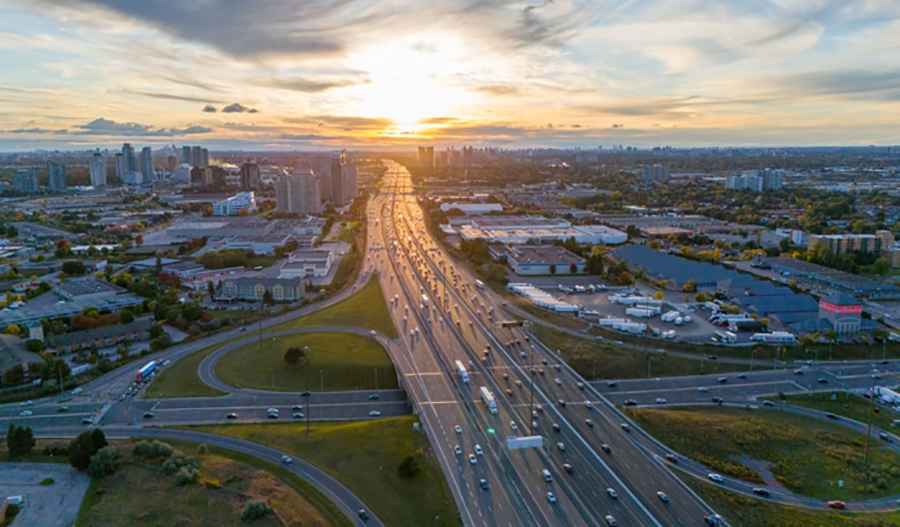
Less discussed is what all that volume does to a windshield. Somewhere behind the truck two lanes over, a pebble kicks loose, and Highway 401 windshield damage becomes the driver's problem for the rest of the week. Insurance data and local glass shops both point to Highway 401 as a common source of windshield damage for daily drivers.
The Busiest Stretch of Highway in North America
The Ministry of Transportation's own count puts the section between Renforth Drive and Highway 427 at 450,300 vehicles a day, the highest average recorded anywhere on the provincial network. That figure comes from the ministry's Provincial Highways Traffic Volumes report, and it is a large part of why the 401 gets described as the busiest highway in North America, ahead of freeways in Los Angeles and Atlanta that carry similar reputations. Width tells part of the story, too.
Through Mississauga, where the express and collector systems run side by side near the Highway 403 interchange, the 401 widens to eighteen lanes. Few North American freeways match that, and fewer still, like Houston's sprawling Katy Freeway, manage to go wider. Eighteen lanes sounds like it should solve congestion outright.
In practice it mostly means more surface area exposed to loose stone, more trucks running side by side instead of single file, and more chances for a chip to find a windshield on the ride home. A separate count from the interchange near Weston Road and Highway 400 put the figure at 442,900 vehicles a day, which shows the volume stays high across long stretches of the city rather than spiking at one pinch point and dropping off everywhere else.
Why So Many Windshields Take a Hit Here
It is the classic scenario long-time commuters already know by heart: a loaded transport truck two car lengths ahead, a flash of gravel, then a knock against the glass before the sound even registers. Most of the damage traces back to two things happening together. Trucks carry aggregate in their tire treads, picked up from gravel shoulders and construction zones, and fling it loose at highway speed.
Winter sanding adds another layer of loose material straight onto the driving surface, so the stone chip windshield highway problem can worsen once the first storm hits. None of this is exotic physics, just unfortunate arithmetic. Impact energy rises with the square of the closing speed, so the gap behind a loaded truck counts for more than how fast a driver happens to be going.
Two vehicles closing at over 200 kilometres an hour combined is rare here, not routine. Most drivers cannot stop the moment a stone leaves a tire. What they can control is what happens after. Getting stone damage looked at early keeps a coin sized chip from spreading into a crack that forces a full replacement, and shops along the corridor can usually turn an inspection around the same day.
Winter Makes the Corridor Rougher Still
Freeze-thaw cycling breaks down pavement from the inside, and Ontario's temperature swings between October and April give it plenty of chances to work. Water seeps into small cracks, freezes, expands, and loosens material that then sits on the surface until a tire or a plow sends it airborne.
The ministry's own winter operations page describes the mix of salt, sand, and pre-wetted brine used to keep the 401 passable, and while none of that is optional given how many vehicles depend on the highway, it also means more loose grit on the road for roughly half the year. Road debris windshield damage claims can rise through the winter months and ease once spring maintenance improves road conditions, before easing once spring crews clear the shoulders.
The same freeze-thaw cycle chews on lane markings and shoulders too, but windshields take the most direct hit simply because they face oncoming traffic rather than sitting parked. Anyone who has commuted the 401 through a full Ontario winter has probably noticed the pattern already, no claims data required.
Freight Keeps the Corridor Busy Around the Clock
The 401 is not only a commuter road. It carries a large share of Ontario's freight movement between Windsor, Toronto, and the Quebec border, anchoring a route that some maps and driving guides still treat as the southern spine of the Trans Canada Highway network stitching the country together coast to coast. Trucks hauling auto parts, produce, and manufactured goods run this corridor at every hour, which spreads the risk of a stone chip across the entire day rather than concentrating it in rush hour.
The highway also carries a large share of surface trade crossing the Windsor to Detroit border, which is part of why planners treat a slowdown here as a national concern rather than a local inconvenience. Among GTA commuter road hazards, stone damage rarely draws the attention that black ice or a sudden lane closure gets, even though it happens far more often and touches far more vehicles. A dented bumper is obvious to everyone in traffic. A quarter-sized chip low on the passenger side of the glass is easy to miss until it spreads, sometimes for weeks.
What Actually Gets Fixed and What Does Not
Ontario's insurance rules make the repair side simpler than most drivers expect. Most insurers waive the deductible for chip repair and treat it as a no-fault claim, though premiums aren't guaranteed to stay untouched in every case, so cost rarely factors into the decision to fix one quickly. A few things decide whether a shop repairs the glass or replaces it outright.
- A single chip smaller than roughly a loonie is usually repairable, while more than two chips or damage larger than that generally means a full replacement.
- Anything sitting directly in the driver's line of sight often can't be repaired, regardless of size.
Given how often this particular stretch already turns up in provincial collision data, treating a chip as routine maintenance rather than an afterthought is one of the few parts of driving the 401 that a commuter actually gets to control.