Driving the 4x4 maintenance road to Blackcomb Mountain in BC
Blackcomb Mountain is a high mountain peak at an elevation of 2,252m (7,388ft) above sea level, located in the Squamish-Lillooet Regional District of British Columbia. The access route is a grueling service track used for chairlift maintenance, ranking as one of the highest roads in Canada.
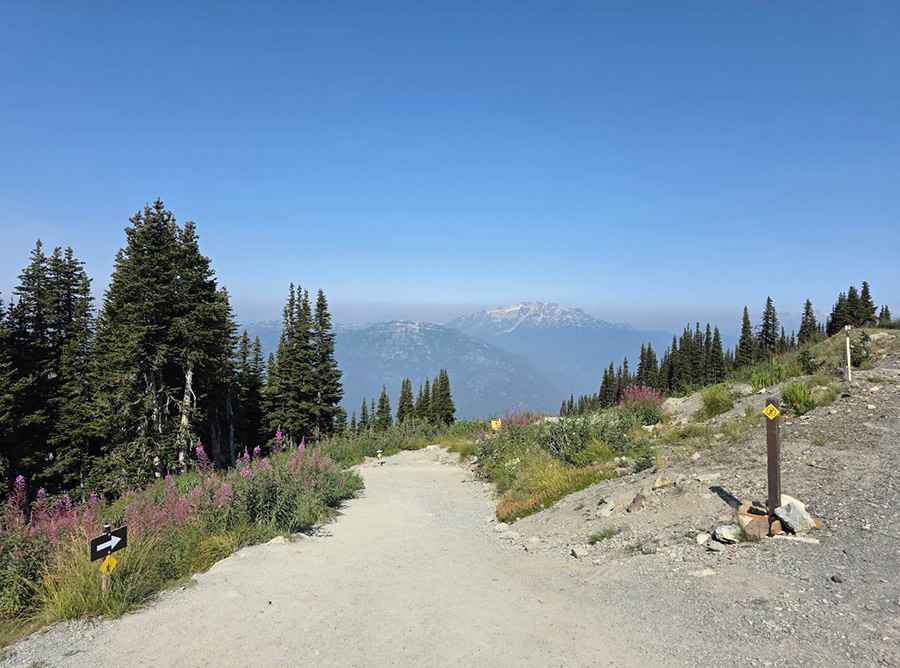
| Road facts: Blackcomb Mountain | |
|---|---|
| Location | Squamish-Lillooet, BC (Canada) |
| Elevation | 2,252 m (7,388 ft) |
| Surface | Unpaved / Loose Shale |
| Vehicle Required | High-clearance 4x4 Only |
Where is the road to Blackcomb Mountain?
The peak rises above Whistler Village, approximately 120 km north of Vancouver. Geographically, it is connected to Whistler Mountain within the Fitzsimmons Range. The road is a restricted industrial track used primarily for ski resort logistics and lift infrastructure upkeep. It is a technical climb that starts where the paved valley roads end, moving into the rugged terrain of Garibaldi Provincial Park.
What are the driving conditions on the Blackcomb summit track?
The road is entirely unpaved, consisting of abrasive loose shale and hard-packed dirt. It is a classic shelf road characterized by narrow passages and vertical drops with zero margin for error. A high-clearance 4x4 vehicle is mandatory; the extreme steepness requires high engine torque and specialized tires to maintain traction on the exposed upper slopes. The roadbed is rough and can easily damage the underbody of standard SUVs.
Is the road to Blackcomb Mountain open year-round?
No. The track is totally impassable for more than half the year. Set high in the Fitzsimmons Range, it remains buried under several meters of snow from October until late June. The best window for transit is between August and September, although heavy machinery traffic is common during this period. Drivers must use low-range gears to manage engine braking on the descent, as the sustained gradients will quickly overheat standard braking systems.
How dangerous is the weather on Blackcomb Mountain?
High-altitude conditions in the Garibaldi Ranges are unpredictable. Weather can shift in minutes, turning the narrow shelf sections into slippery hazards. Rapid temperature drops can lead to ice formation on the shale even in mid-summer. The lack of safety barriers and the technical nature of the loose surface mean that driving to the 2,252m summit requires professional off-road experience and a vehicle in peak mechanical condition.
Pic: Brauni