Piccolo Summit: The brutal 13% maintenance track in Whistler
Piccolo Summit is a high mountain peak at an elevation of 2,034 meters (6,673 ft) above sea level, located in the Fitzsimmons Range of British Columbia, Canada. The road to the summit is a raw, unpaved service track used for resort infrastructure maintenance, standing as one of the highest roads in Canada. The physical reality of this route involves managing a massive 1,586-meter elevation gain over a very short distance, where the extreme steepness and loose sub-alpine gravel test the vehicle's low-range gearing and cooling capacity to their absolute limits.
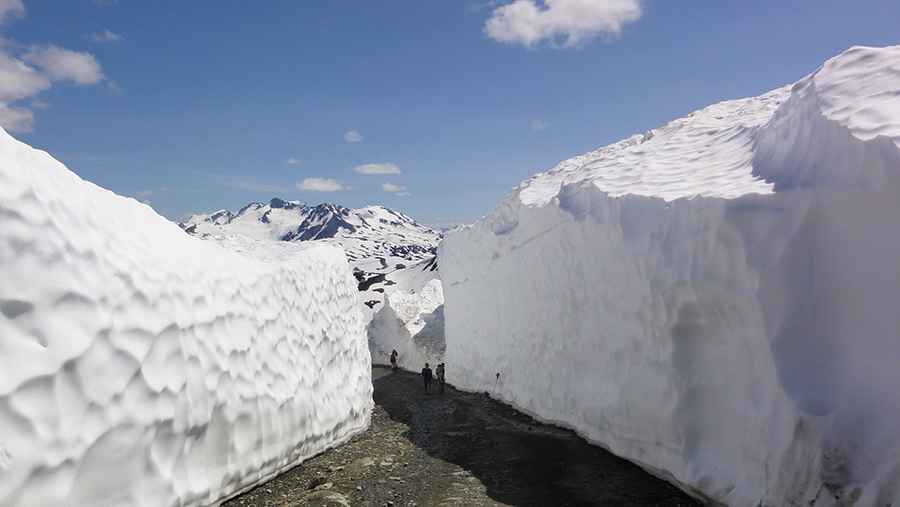
| Road facts: Piccolo Summit | |
|---|---|
| Location | British Columbia, Canada |
| Elevation | 2,034m (6,673ft) |
| Length | 11.6 km (7.2 miles) |
| Average Gradient | 13.67% |
How challenging is the 13.6% climb to Piccolo Summit?
The 11.6-kilometer ascent from Whistler Creek is a high-intensity mechanical operation. To scale 1,586 meters in such a short distance, the track maintains a staggering average gradient of 13.67%, similar to the technical demands found on the road to Whistler Mountain. The logistics of the drive are dominated by a narrow shelf track where the engine is under constant load. At this incline, the car’s weight shifts heavily to the rear, making traction on the loose gravel a constant struggle. You must use low-range gears and keep a steady throttle to prevent the wheels from spinning out on the sharp rocky outcrops that define the Fitzsimmons Range.
What are the hazards on the unpaved chairlift access road?
The primary hazard on the Piccolo Summit track is the extreme verticality combined with unpredictable alpine weather. The road is a narrow ledge with dangerous unprotected drops and zero safety barriers. In summer, sudden storms can wash out parts of the track, creating deep ruts that will bottom out any vehicle without high ground clearance. The physical reality of the descent is even more critical; relying on the brakes for a 1,586m drop at 13% will boil the fluid and glaze the pads in minutes. You must ride the engine gears to hold the vehicle back. Additionally, you share the track with heavy resort machinery that always has the right of way in these narrow sectors.
What is the logistical reality of the Fitzsimmons Range tracks?
Reaching the summit at 2,034 meters requires a vehicle prepared for an industrial-alpine environment. The logistics are dictated by the resort operations; the road is often closed to prevent soil erosion, and access is strictly controlled. There are zero facilities or turn-around spots on the steeper sections, meaning you are committed to the 13% ramps once you start. The thin air at the summit reduces engine power, making the final climb toward the lift stations a thermal torture test for the radiator and the cooling fan, which must work at maximum capacity despite the low forward speed of the car.
What mechanical prep is needed for the 2,034m Piccolo climb?
Before heading up from the valley, verify that your cooling system is flushed and the fan is operational; a low-speed, high-rev climb at 13% is a recipe for an overheated motor. Check your brake fluid and pad thickness, as the descent is a relentless grind on the calipers. Your tires must be heavy-duty All-Terrain to handle the sharp gravel and rocky surface without puncturing. Carry extra water, a full-sized spare, and recovery gear, as the isolation in the Garibaldi ranges is total once you leave the main resort areas. In this part of British Columbia, your vehicle's mechanical integrity is the only buffer against the harsh reality of the high-altitude maintenance tracks.
Pic: Colin