Magnetic Hill in Moncton: Canada’s Classic Gravity Illusion
Magnetic Hill is a world-famous gravity hill located in Moncton, New Brunswick. Situated at the base of Lutes Mountain, this paved section of road is known for a powerful optical illusion where vehicles in neutral appear to roll uphill against the force of gravity.
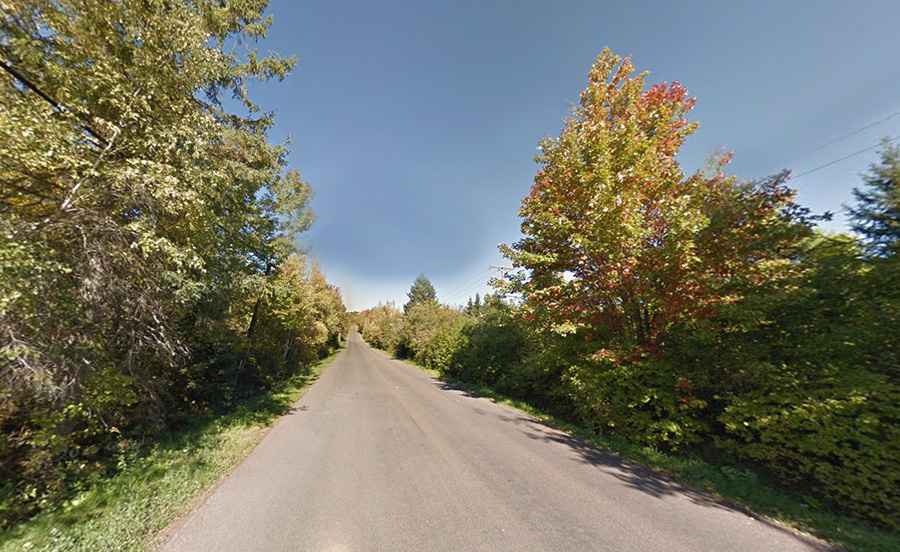
| Road facts: Magnetic Hill | |
|---|---|
| Location | Moncton, New Brunswick (Canada) |
| Length | ~1 km (0.62 miles) |
| Surface | Paved |
| Type | Gravity Hill / Optical Illusion |
Where is Moncton's Magnetic Hill?
The hill is located just off the Trans-Canada Highway, at the northwestern edge of Moncton. The specific site is a 1 km stretch of paved road near the intersection of Mountain Road and Magnetic Hill Road. The surrounding topography of the Petitcodiac River Valley provides the visual horizon that facilitates the illusion.
How to drive Magnetic Hill?
To experience the effect, drivers must follow a specific sequence. You drive to the bottom of the hill, place the vehicle in neutral, and release the brakes. Despite the eyes perceiving an upward incline toward the starting point, the car will begin to roll backward, seemingly "uphill." In reality, the road is a gentle downhill slope, but the obscured horizon and the angle of the surrounding trees trick the brain into misinterpreting the gradient.
Is the road to Magnetic Hill paved?
Yes, the entire section is fully paved and maintained for high-volume tourist traffic. Unlike many rural gravity hills, this is a controlled site where the asphalt is smooth and the lane markings are clear. The road is accessible to all vehicle types, from standard cars to heavy tour buses, all of which react the same way to the slope when the transmission is in neutral.
What is the history of Magnetic Hill?
The phenomenon was first documented in the 1930s as local drivers noticed their vehicles behaving strangely on this particular stretch of road. It was originally a provincial bypass, but the "magnetic" reputation grew so large that the road was eventually turned into a dedicated attraction. While the name implies a magnetic force pulling the metal of the cars, it is purely a topographical illusion caused by the lack of a true flat horizon. It remains one of the most famous gravity hills in the world.