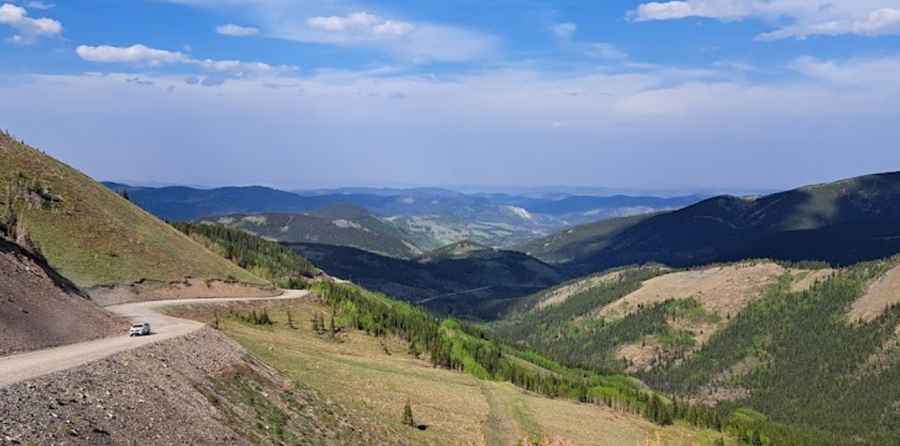
Driving the high-altitude lookout road to Hailstone Butte in Alberta
Hailstone Butte is a high mountain peak reaching an elevation of 2,326m (7,631ft) above sea level, located in the Kananaskis region of Alberta, Canada. Situated within the Plateau Mountain Ecological Reserve, the summit is home to an active fire lookout and is accessed via one of the highest roads in the country.
| Road facts: Hailstone Butte (Kananaskis) | |
|---|---|
| Location | Alberta, Canada |
| Elevation | 2,326 m (7,631 ft) |
| Surface | Gravel / Unpaved |
| Primary Hazard | Extreme crosswinds and logging trucks |
Where is the road to Hailstone Butte located?
The road to Hailstone Butte is located in the southern part of the Canadian Rockies, specifically in the Highwood region of Kananaskis. The drive starts from Highway 22 and follows a rugged, unpaved service track locally known as "the hump." Logistically, this route is a primary access point for fire lookout personnel and forestry management. Drivers must remain alert for heavy logging trucks that frequent this sector, as the narrow gravel road offers limited passing opportunities on blind corners.
Is the road to Hailstone Butte unpaved and dangerous?
The track to Hailstone Butte is totally unpaved and subject to rapid environmental degradation. As you gain elevation toward the 2,326m summit, the road conditions worsen, featuring severe washboard surfaces, fallen rocks, and loose scree. Technically, the 4x4 logistics of the climb involve navigating steep hairpin turns where the surface lacks stabilization. The peak is notorious for extreme wind speeds; historic structures at the summit have been destroyed by winter gales, meaning high-profile vehicles should exercise extreme caution due to severe lateral wind pressure on the exposed ridges.
Is the road to Hailstone Butte open in winter?
Due to its high elevation in the Canadian Rockies, the road to Hailstone Butte is completely impassable during the winter months. A seasonal closure is typically enforced from December 1 to April 30. Logistically, even during the summer, the summit is prone to sudden blizzards and rapid thermal shifts. Technically, the final ascent requires a vehicle in optimal mechanical condition, as the combination of high-altitude engine power loss and the sustained torque needed for the steep hairpins puts significant stress on the drivetrain. Watch for mountain sheep on the roadbed, as they often congregate on the gravel sections for salt.
Pic: Irwan Marroc