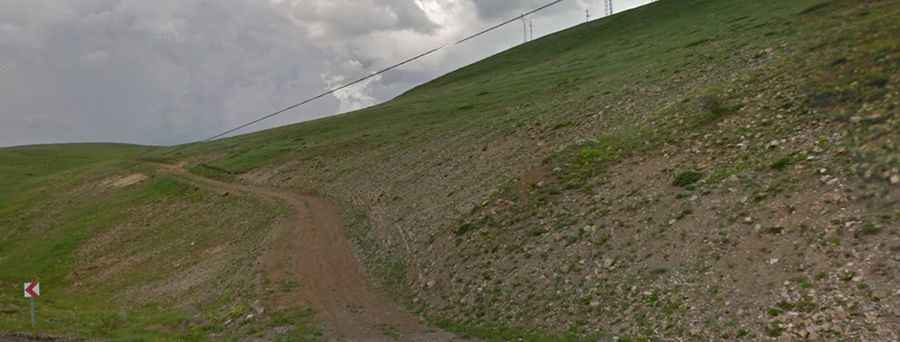
How to drive the steep gravel road to Kavakdağı Tepesi?
Located in the Erzurum Province of Eastern Anatolia, the ascent to Kavakdağı Tepesi is a high-altitude technical challenge that rewards the driver with a summit reaching 2,428 meters (7,965 ft). While the distance from the main D925 road is relatively short, the environment is unforgiving. This is a military-grade gravel track where the thin air and steep gradients demand a high-torque 4x4 vehicle. Navigating these roads requires constant monitoring of the terrain, as the lack of pavement and the exposure to extreme Anatolian weather conditions turn this short climb into a high-stakes logistical operation. Precision steering is mandatory to manage the loose surface and the sharp elevation changes near the peak.
| Road facts: Kavakdağı Tepesi | |
|---|---|
| Location | Erzurum Province, Turkey (Eastern Anatolia) |
| Elevation | 2,428 m (7,965 ft) |
| Length | 3.1 km (from Gölyurt Geçidi) |
| Max Gradient | 12% in specific sections |
| Surface | Unpaved / Rough gravel |
Why is a 4x4 vehicle essential for the Kavakdağı Tepesi road?
Starting from the Gölyurt Geçidi on the D925 highway, the road to Kavakdağı Tepesi gains 78 meters in just 3.1 kilometers. Although the average gradient is a manageable 2.51%, several sections spike to a 12% incline on loose gravel. Standard vehicles will struggle with traction on these roads, especially when the track becomes narrow and features sharp hairpin turns. The use of a high-clearance 4x4 is not a recommendation but a safety requirement; the rocky substrate can easily damage the undercarriage of a lower car, and the steep slopes require low-range gearing to maintain a steady, controlled ascent without spinning the tires.
How does the high altitude of Kavakdağı Tepesi affect road accessibility?
At nearly 2,500 meters, the Kavakdağı Tepesi summit is subject to extreme seasonal changes. These roads are frequently blocked by heavy snowfall during the winter months, and because this is a secondary peak access, snow clearance is not a priority for local authorities. Even in late spring, patches of ice or mud from snowmelt can make the gravel surface dangerously slick. Before attempting the climb, an audit of the current weather reports for the Erzurum region is essential. If the peak is shrouded in clouds or if precipitation is imminent, the risk of losing visual contact with the track increases exponentially, making the descent highly hazardous.
What are the technical challenges of the Kavakdağı Tepesi descent?
Descending from Kavakdağı Tepesi requires as much technical skill as the climb. The steep 12% sections on unpaved ground can lead to brake overheating if not managed correctly. Utilizing engine braking is the most effective logistical strategy to maintain control on these roads. The sharp turns require wide approaches to avoid the soft edges of the track, where the gravel is less compacted. Maintaining a slow, consistent pace is the only way to ensure that the vehicle remains stable on the uneven surface. Safety in these high Anatolian peaks is built on patience and mechanical respect for the vehicle's limits.
Conclusion
The road to Kavakdağı Tepesi is a short but intense masterclass in high-altitude off-road driving. It proves that a track doesn't need to be long to be challenging. Success on these roads is defined by the quality of your equipment and your ability to read the terrain. By ensuring you have a capable 4x4 and choosing the right weather window, you can conquer one of Erzurum’s most isolated viewpoints. Always verify your vehicle’s condition before leaving the D925 and focus on the road. The summit is a reward for those who prioritize safety and logistical precision over speed.