Road to Limni Gölü: Driving the 9.31% Unpaved Track in Turkey
Located on the boundary between the Gümüşhane and Trabzon provinces in northeastern Turkey, Limni Gölü is a high mountain lake at an elevation of 2,407m (7,896ft) above sea level. The route to the lake is a technical mountain track that crosses the Pontic Mountains, providing access to the high-altitude alpine plateau.
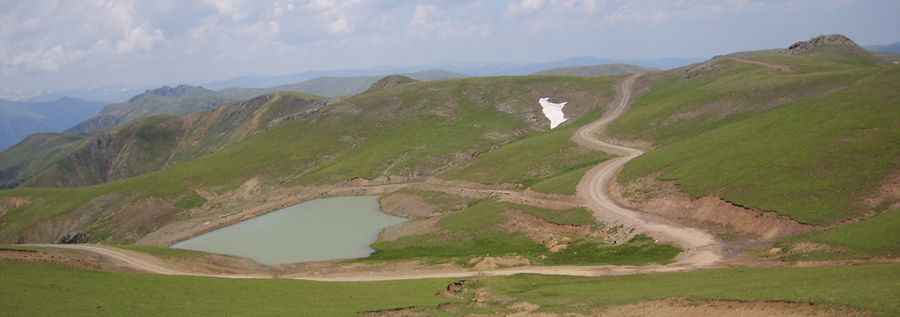
| Road facts: Limni Gölü | |
|---|---|
| Location | Gümüşhane / Trabzon, Turkey |
| Elevation Gain | 1,109 m |
| Length | 11.9 km (7.39 miles) |
| Average Gradient | 9.31% |
| Surface | Unpaved / Dirt and Gravel |
How is the road to Limni Gölü?
The ascent to Limni Gölü starts from the paved D885 highway. The road is 11.9 km (7.39 miles) long and is entirely unpaved. Over this distance, the track overcomes a significant elevation gain of 1,109 meters, resulting in a sustained average gradient of 9.31%. The surface is composed of compacted dirt and loose gravel, which can become unstable after heavy rain or during the spring thaw. Due to the steep inclines and the nature of the terrain, a 4WD vehicle is highly recommended to ensure constant traction.
How many hairpin turns are on the Limni Gölü track?
The route features 10 sharp hairpin turns concentrated in the sections where the topography is most aggressive. These switchbacks are narrow and lack safety barriers or guardrails, requiring precise steering and controlled speed. The 9.31% average gradient means that several internal ramps exceed 12%, where the loose surface can cause wheel spin in 2WD vehicles. The track follows the mountain ridges, exposing the vehicle to significant drop-offs along the unpaved edges.
Is the road to Limni Gölü open in winter?
The road is typically impassable from October to June. At an altitude of 2,407m, the Pontic Mountains receive heavy snowfall, and the track is not cleared for transit during the winter months. Even in early summer, large snowdrifts can block the 10 hairpins. During the summer, fog is a frequent hazard in this region near the Black Sea, reducing visibility on the unfenced track to near zero. Drivers must check the local weather forecast and the vehicle's mechanical readiness before leaving the D885.
What is the driving strategy for the Limni Gölü ascent?
Managing the 1,109m vertical gain requires the use of low gears to maintain engine torque and prevent overheating. On the return descent, engine braking is mandatory to avoid brake fade on the 9.31% average slope. It is necessary to monitor tire pressure and ensure the cooling system is in optimal condition before starting the 11.9 km climb. Since there are no refueling or emergency services at the lake, vehicles must be self-sufficient and equipped with recovery gear for unpaved surfaces.
Pic: Sinan Şahin