Osman Gazi Bridge: Driving the High-Wind Suspension Span in Turkey
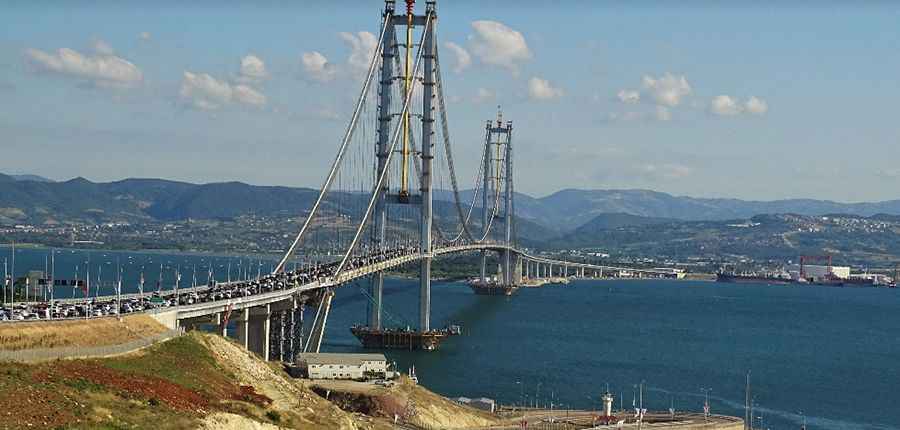
The Osman Gazi Bridge is a major steel suspension bridge spanning the Gulf of Izmit at the eastern end of the Sea of Marmara, Turkey. The structure carries the O-5 highway (part of the E881 Road), linking the city of Gebze with the Yalova Province. It’s one of the most spectacular bridges in the world.
| Road facts: Osman Gazi Bridge | |
|---|---|
| Location | Gulf of Izmit, Marmara Region, Turkey |
| Total Length | 2,682 m (8,799 ft) |
| Main Span | 1,550 m (5,085 ft) |
| Lanes | 6 lanes (3 in each direction) |
| Year Opened | 2016 |
When was the Osman Gazi Bridge built?
Construction of the bridge began in 2010 and the structure officially opened to vehicle traffic in July 2016. During the assembly phase on March 21, 2015, a temporary catwalk snapped at its bolted joint on the south tower, falling directly into the gulf waters below. The incident delayed the final tensioning of the main suspension cables but did not alter the structural design of the pylons.
What is the driving profile of the Osman Gazi Bridge?
The bridge has a total deck length of 2,682 meters, with a central suspension span of 1,550 meters over the water, ranking it among the longest suspension spans globally. The asphalt deck accommodates six lanes of traffic, plus two narrow maintenance shoulders. Vehicles transition directly from the land highway approaches onto the elevated steel box girders at high speeds.
How do earthquakes affect the Osman Gazi Bridge?
The structure is built across an active seismic zone near the North Anatolian Fault. To handle sudden ground shifts, the bridge has a network of 400 digital sensors embedded in the towers, deck joints, and cables. These sensors monitor structural movement and ground vibrations in real time. If the system detects ground displacement or oscillations that exceed safe limits, automated toll barriers close the highway entrances immediately.
What are the weather hazards on the Osman Gazi Bridge?
The open waters of the Gulf of Izmit generate high-velocity crosswinds that strike the side profiles of moving cars. Wind gusts can destabilize high-sided commercial vehicles and empty trucks traveling at the maximum highway speed. During winter storms, heavy sea mist drops visibility across the six lanes, and control crews reduce the legal speed limit using electronic overhead signs to prevent high-speed rear-end collisions.
Pic: Sabri Keleş