Driving the steep unpaved road to Mount Hasan (Hasan Dağı) in Turkey
Mount Hasan (Hasan Dağı) is a massive extinct stratovolcano reaching an elevation of 1,974m (6,476ft) above sea level. Located in the Aksaray Province of central Turkey, the road to the summit area is a high-altitude climb that offers some of the most dramatic volcanic landscapes in Anatolia, characterized by its deep red soil and stark peak.
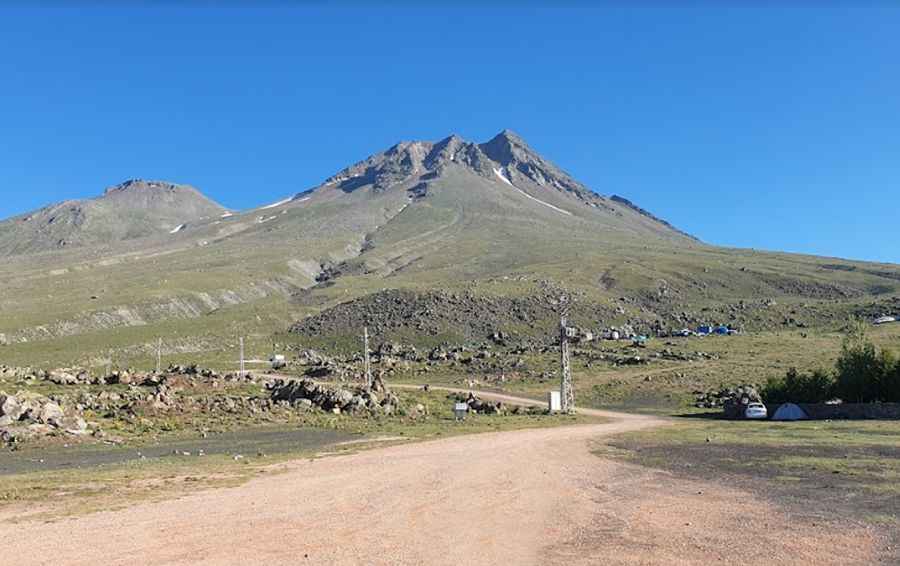
| Road facts: Mount Hasan (Hasan Dağı) | |
|---|---|
| Location | Aksaray Province, Central Turkey |
| Length | 7.5 km (4.6 miles) |
| Max Elevation | 1,974 m (6,476 ft) |
| Average Gradient | 7.70% |
| Surface | Unpaved, volcanic gravel/ash |
How challenging is the drive to Mount Hasan?
The track leading up the slopes of Mount Hasan is entirely unpaved and demands full concentration. While it is technically driveable for most passenger vehicles in dry conditions, the real challenge lies in the 14 sharp hairpin turns that wind up the volcanic flank. As the road gains altitude, the surface becomes increasingly loose, with volcanic ash and red gravel that can cause front-wheel-drive cars to lose traction. The track is narrow in several sections, and meeting an oncoming vehicle—especially local trucks or paragliding shuttle vans—requires careful maneuvering near the edge of the slope.
Where does the road to Mount Hasan start?
The ascent begins in the village of Helvadere. From the village to the summit area near the Hotel Karbeyaz, the road climbs 578 meters over a distance of 7.5 km (4.66 miles). The average gradient is a steady 7.70%, but some interior curves of the hairpins are significantly steeper. The route leads toward a mountain hotel and a popular paragliding launch site. For drivers, the reward is a breathtaking view of the Anatolian plateau and the twin peaks of the volcano, which dominate the skyline between Aksaray and Niğde.
What are the main hazards on the Mount Hasan road?
The volcanic soil is the primary hazard. After heavy rain or early snowmelt, the track can turn into a slippery mess of mud and ash, making it impassable for vehicles without 4WD. Even in dry weather, the dust can obscure deep ruts or sharp rocks that are common on high-altitude Turkish mountain tracks. There are no guardrails, and the steep drops on the side of the 14 hairpins are unforgiving. At nearly 2,000 meters, the weather can change rapidly; sudden thunderstorms or thick fog can turn a simple mountain drive into a high-stakes struggle for visibility.
When is the best time to visit Hasan Dağı?
Due to its high elevation in central Turkey, the road is typically closed by snow from late November until April. The best window for driving is from late spring to early autumn. If you plan to reach the paragliding site at the top, ensure your cooling system is in good condition, as the slow, steep climb in the summer heat of Aksaray can easily lead to engine overheating. Always check your tire pressure before heading up to ensure maximum grip on the volcanic gravel.
Pic: Mehmet Çelik