Road to Pas-de-Maimbré: Driving the 17.71% Service Track in Valais
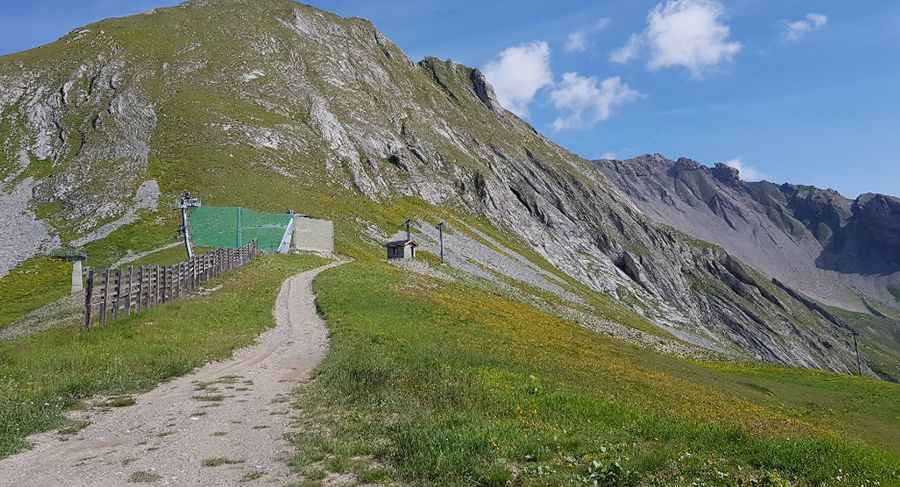
Pas-de-Maimbré is a high mountain peak at an elevation of 2,362 meters (7,749 ft) above sea level, located in the Valais Alps, in Switzerland. The access road to the summit area is a steep, unpaved service track used strictly for the maintenance of the Anzère gondola station and the telecommunication tower situated at the crest.
| Road facts: Pas-de-Maimbré | |
|---|---|
| Location | Valais, Swiss Alps, Switzerland |
| Elevation | 2,362 m (7,749 ft) |
| Length | 3.5 km (2.17 miles) from Anzère |
| Average Gradient | 17.71% |
| Max Gradient | 20% |
| Surface | Unpaved (Loose stones and rocky dirt) |
How steep is the track from Anzère to Pas-de-Maimbré?
The 3.5 km track climbs 622 vertical meters almost directly up the mountain face, starting from Route d'Anzère. This results in a brutal average gradient of 17.71%, with sustained ramps that reach 20% on the unbanked hairpins. The surface is completely unpaved, consisting of shifting shale fragments and loose rocks that require a true 4x4 vehicle with a low-range transfer case to crawl up without digging the tires into the dirt banks.
What are the driving hazards on the Pas-de-Maimbré ski track?
The combination of extreme 20% slopes and a loose stone base means tires easily lose lateral grip, especially on the exposed mountain switchbacks. The path is narrow—just wide enough for a single maintenance vehicle—and lacks any steel guardrails or stone boundaries to stop a vehicle from sliding off the edge. High-altitude summer thunderstorms quickly wash away the soil, leaving deep ruts and exposed rock shelves that can smash low oil pans or puncture tire sidewalls.
When does winter snow close the Pas-de-Maimbré road?
The track is completely impassable for most of the year because the route is integrated into the active ski pistes of the Anzère resort. Heavy snow accumulation blocks the path from October until late June, and no snowplow maintenance is carried out for wheeled traffic. During the brief summer opening, the track remains a primitive access line with zero roadside services, fuel stations, or mechanical aid, ending in a tight, dead-end clearing next to the mountain restaurant and lift machinery.
Pic: Joe Halter