Driving the steep chairlift access road to Hörnli in Arosa
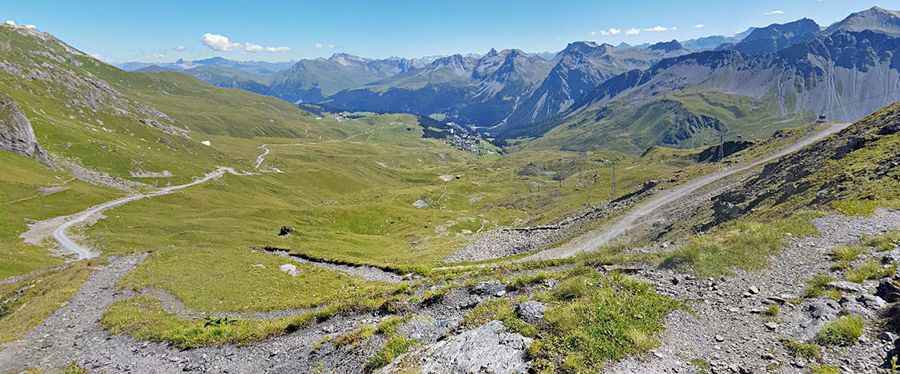
Hörnli is a high mountain peak that towers over the Alpine resort of Arosa in the Swiss canton of Graubünden. Reaching an elevation of 2,514 meters, the track to the summit is a raw mountain path used primarily for chairlift maintenance. This is one of the steepest drives you can find in the region, cutting through the high-altitude terrain of the Plessur Alps. The road is only accessible for a very short window in late summer, usually around the end of August, once the last of the winter snow has finally melted off the higher rocky sections.
| Road facts: Hörnli | |
|---|---|
| Location | Graubünden, Switzerland |
| Elevation | 2.514m (8,248ft) |
| Length | 4.7 km (2.9 miles) |
| Average Gradient | 14.97% |
How challenging is the drive to Hörnli?
The numbers on this track are staggering. Starting from Arosa, you face a 4.7-kilometer climb with a vertical gain of 683 meters. This puts the average gradient at a punishing 14.97%, but that is just the average. There are sections where the slope kicks up much higher, forcing you to use low-range gears just to keep the vehicle moving. The ground is made of loose stones and scree that will make your wheels spin if you don't have perfect throttle control. In the upper sections, the trail becomes even more rocky and narrow, leaving no room for error or second chances if you lose traction.
What are the mechanical risks of the Hörnli track?
A climb this steep is a death sentence for a weak clutch or a cooling system that isn't 100% healthy. At over 2,500 meters, the engine is already struggling with the thin air, losing a significant amount of power. When you combine that with a 15% incline and a loose surface, the mechanical load is extreme. You have to monitor the temperature gauge constantly; if you are crawling up in low gear at low speed, there is very little airflow through the radiator to keep the block from overheating. On the way down, the descent is just as dangerous, as the brakes can fade and glaze over within minutes if you don't use heavy engine braking to control the weight of the vehicle.
What is the terrain like on the road to Hörnli?
The path is a typical service road for ski infrastructure, meaning it wasn't designed with comfort in mind. The lower sections are packed dirt, but as you climb higher, you are driving over sharp Alpine rocks that can easily slice a tire sidewall. There are no safety barriers, and the drop-offs into the Schanfigg Valley are vertical. Because it is a chairlift access road, you might encounter maintenance machinery or furgonetes belonging to the lift company, and finding a place to pass on these narrow ramps is a complex job. The weather is a major factor; even in August, a sudden storm can turn the dirt into a slick mess and drop the visibility to zero, making it impossible to see where the track ends and the mountain begins.
Pic: N D