Driving the Road 28 through Wolfgang Pass in the Swiss Alps
The Wolfgang Pass is a high mountain corridor at an elevation of 1,631m (5,351ft) above sea level, located in the Graubünden canton of eastern Switzerland. Following the Road 28 (Prättigauerstrasse), the pass is a primary logistical link between the Alpine resorts of Davos and Klosters-Serneus.
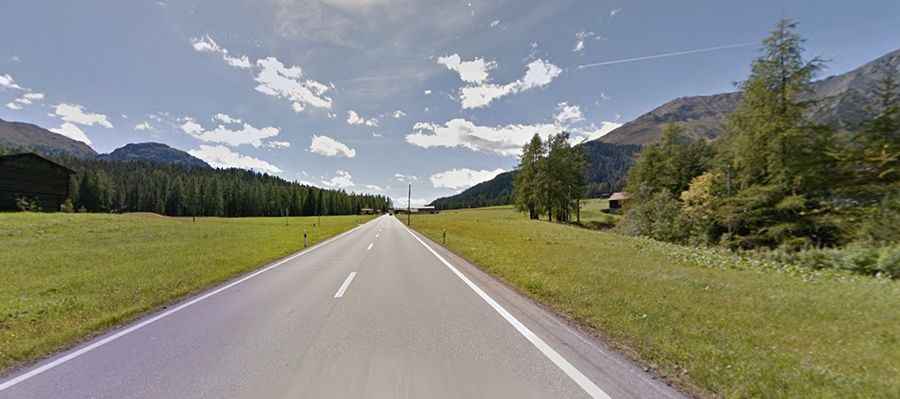
| Road facts: Wolfgang Pass (Road 28) | |
|---|---|
| Location | Graubünden, Switzerland |
| Elevation | 1,631 m (5,351 ft) |
| Length | 8.6 km (5.34 miles) |
| Max Gradient | 12% |
| Surface | Fully Paved (Asphalt) |
How challenging is the Road 28 through Wolfgang Pass?
Technically, the 8.6 km (5.34 miles) transit through Wolfgang Pass is a high-capacity paved route, but it presents specific logistical challenges due to its 12% maximum gradient. The road climbs steadily from Davos (1,560m) to the summit, requiring efficient gear management for heavy vehicles and buses. Logistically, the Road 28 is a major transit artery, meaning drivers must account for high traffic density and the Rhaetian Railway line that runs parallel to the road, occasionally affecting visibility and intersection logistics near the summit station.
What are the driving conditions on Wolfgang Pass in winter?
The Wolfgang Pass remains open year-round, serving as a vital logistical connection for the Davos region. Technically, the road is equipped with advanced snow-clearing infrastructure, but it can be subject to short-term closures during extreme Alpine blizzards. Logistically, winter tires and snow chains are mandatory when conditions deteriorate, as the 12% ramps can quickly become low-traction zones. The north ramp from Klosters is particularly prone to ice formation in shaded sectors, demanding high-precision braking and steady torque to maintain stability on the asphalt.
Is the Wolfgang Pass suitable for heavy transit?
As a primary Swiss Alpine road, the Road 28 is engineered for standard heavy transit, but the 8.6 km stretch requires constant monitoring of brake temperatures during the descent. Technically, the paved surface is in optimal condition, yet the high-altitude environment (over 1,600m) can lead to rapid shifts in road surface temperature, affecting tire grip. Logistically, the pass is often used as a diversion route when other higher passes are blocked, leading to sudden spikes in vehicle volume that complicate the 12% gradient climbs between Davos and Klosters.