Facing the most challenging drives of Mallorca
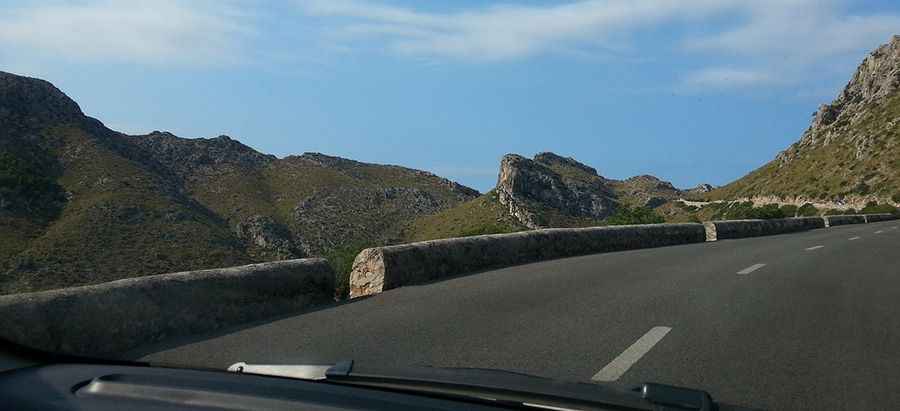
The mountain roads of Mallorca, specifically the MA-10 and the MA-2141, are technical routes that put heavy stress on a vehicle's mechanical systems. These are not standard coastal drives; the Serra de Tramuntana is a terrain of narrow asphalt, constant gear changes, and steep drops where any mechanical failure is critical.
| Road facts: Mallorca Mountain Passes | |
|---|---|
| Primary Road | MA-10 (Serra de Tramuntana) |
| Technical Route | MA-2141 (Sa Calobra) |
| Length (MA-10) | ~51 km (31 miles) |
| Max Gradient | Up to 7% (Sa Calobra) |
How demanding is the MA-10 for the vehicle?
The MA-10 road is an asphalted climb of 51 km that crosses the highest points of the island. This road is a grind for the steering system and the engine's cooling circuit due to the relentless sequence of hairpin turns and tunnels. The asphalt is often narrow, making it difficult for two cars to pass without one having to stop or back up near the edge. On the sections near the reservoirs, the humidity can leave a film on the road that reduces tire grip, especially when the temperature drops at altitude.
What are the mechanical risks on the Sa Calobra road?
The Sa Calobra road (MA-2141) is a 12 km descent with a 7% average gradient that ends at sea level. It features a 360-degree tie-knot bridge and constant loops that will cook your brakes if you don't use the engine to slow down. On rainy days, the limestone dust on the asphalt turns into a slick paste, making the hairpins extremely dangerous. If the tires are not in top condition, the car will understeer toward the unprotected rock faces or the drops on the narrowest bends.
Is it necessary to use a 4x4 in the Mallorca mountains?
While the main roads are paved, a 4x4 or a vehicle with a high-torque engine is better for the steep interior ramps and the under-maintained secondary tracks. In winter, rain and occasional snow in the higher passes of the Tramuntana make traction a major issue. Before entering these sectors, you must check your brake pads and fluid; a 51 km mission of constant braking on the MA-10 will quickly expose any weakness in the hydraulic system.
What hazards are hidden on the cliff edges?
The rock faces in Mallorca are often not netted, meaning rockfalls are a real possibility after heavy rain. Large stones can block the driving lane behind a blind curve, forcing emergency maneuvers on narrow asphalt where there are no guardrails. At night, the lack of lighting and the sharp drops make the MA-10 a test of nerves. If you get stuck with a mechanical failure, assistance can be hours away because of the difficulty of moving recovery trucks through the tight hairpins of the mountain.