Road to Pico de Turbón: Driving the 12.90% Track in Ribagorza
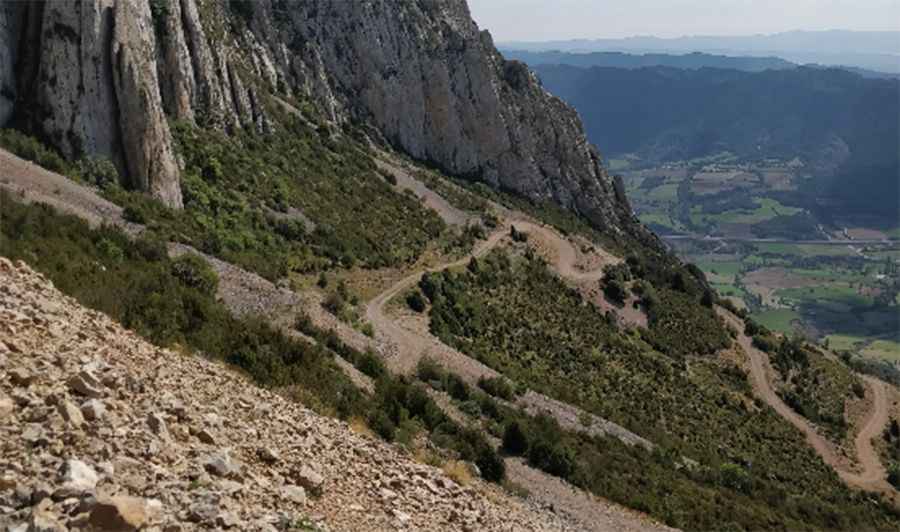
Located in the Ribagorza county, within the province of Huesca, Pico de Turbón is a mountain peak at an elevation of 2,052m (6,732ft) above sea level. Situated in the Aragonese Pre-Pyrenees, the road is an unpaved mountain track that provides access to the Refugio del Turbón and the upper limestone massifs of the range.
| Road facts: Pico de Turbón | |
|---|---|
| Location | Ribagorza, Huesca, Aragon, Spain |
| Elevation Gain | 839 m |
| Length | 6.5 km (4.03 miles) |
| Average Gradient | 12.90% |
| Surface | Unpaved / Rock and Gravel |
How is the road to Pico de Turbón?
The ascent to Pico de Turbón starts from the village of Serrate. The road is 6.5 km (4.03 miles) long and consists entirely of an unpaved track. Over this short distance, the route overcomes an elevation gain of 839 meters, resulting in a sustained average gradient of 12.90%. The track features 21 hairpin turns to navigate the steep southern face of the mountain. The surface is composed of loose limestone gravel and rocky steps, making a high-clearance 4x4 vehicle an absolute requirement for the climb.
What are the driving hazards on the Turbón track?
The primary hazards on the road to Pico de Turbón include extreme gradients and the lack of safety barriers. The 12.90% average slope means several sections exceed 15%, where tire traction on loose stones is limited. The 21 switchbacks are narrow, requiring precise maneuvering and, in some cases, multi-point turns for long-wheelbase vehicles. During the summer, the limestone reflects heat, increasing the thermal stress on the vehicle's cooling system. The track is exposed to vertical drops, and the surface can become unstable after the frequent summer thunderstorms common in the Pyrenees.
Is the road to Pico de Turbón open in winter?
The road is typically impassable from October to June. Due to its 2,052m altitude, snow accumulation is heavy and the track is not maintained for winter transit. Early season meltwater often creates deep ruts and washouts on the 12.90% ramps, necessitating a careful inspection of the ground before proceeding. There are no services or mechanical support beyond Serrate; drivers must be self-sufficient and carry recovery equipment to manage the technical unpaved sections leading to the Refugio del Turbón.
What is the driving strategy for the 21 hairpins?
Driving the 6.5 km route requires constant use of low-range gearing to maintain torque on the steep limestone inclines. On the descent, engine braking is mandatory to prevent brake fade. The 21 hairpin turns require low speed to avoid tire damage from sharp rocks. It is necessary to monitor weather conditions before starting the ascent, as clouds can roll in rapidly, reducing visibility on the unfenced mountain edges. Always ensure the vehicle is in peak mechanical condition, specifically checking the braking and cooling systems for the 839m vertical drop.
Pic: Ines Hirt