Driving the dirt track to Mirador de Juan León in Cazorla
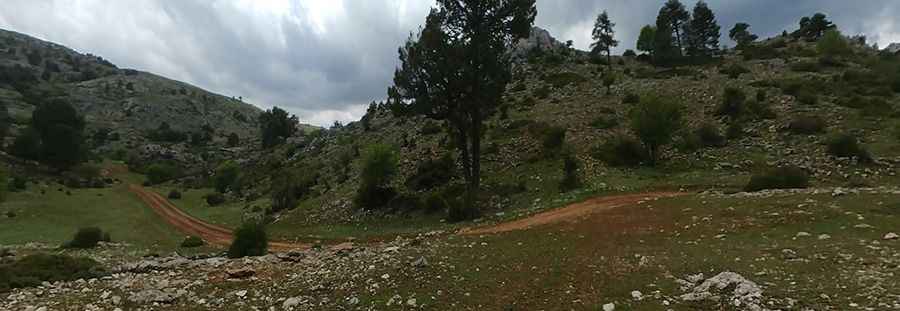
The road to Mirador de Juan León is a rugged mountain track that cuts through the heart of the Sierras de Cazorla, Segura and Las Villas Natural Park. Reaching an elevation of 1,733 meters, this is one of the highest points you can drive to in the province of Jaén, in Spain. The track is entirely unpaved, with hard-packed dirt and loose limestone rocks that will challenge the suspension of any vehicle. This is deep Andalusia, where the heat and the dust make every kilometer feel much longer for both the driver and the machine.
| Road facts: Mirador de Juan León | |
|---|---|
| Location | Jaén, Andalusia, Spain |
| Elevation | 1.733m (5,685ft) |
| Length | 5.5 km (3.4 miles) |
| Vehicle Required | 4x4 or High Clearance |
What is the road condition to Mirador de Juan León?
Starting from Fuente Segura, the 5.5-kilometer climb is a constant battle against the terrain. The track is narrow and exposed to the elements, meaning that after a heavy storm, you can find deep ruts and washouts that make the path impassable for standard cars. You need a vehicle with high clearance to avoid clipping the oil pan on the larger rocks that often roll onto the track. While a 4x4 is not always required in dry conditions, having low-range gears is a massive advantage for controlling the vehicle on the steeper sections without burning the clutch.
How steep is the drive to Mirador de Juan León?
The climb is steady but persistent, with an average gradient of 5.4%. However, don't let that number fool you; there are several ramps where the slope increases significantly, and the loose surface makes it easy for the wheels to spin if you lose momentum. The elevation gain is nearly 300 meters in a very short distance. Your cooling system needs to be in good shape, as the slow speed combined with the high summer temperatures in Jaén can easily cause the engine to overheat as you grind your way up to the summit.
What should you check before driving to Mirador de Juan León?
Before you leave the asphalt behind, check your tire pressure and the state of your spare wheel. The limestone rocks in this part of Spain are sharp and can easily slice through a sidewall if you are running street tires at high pressure. Once you reach the top, the road ends at a natural balcony with no safety barriers, so you need to be extremely careful where you park. The wind at 1,700 meters can be fierce, making it difficult to keep the doors from slamming or to see the edge of the track if the dust starts to fly.
Pic: Gonzalo Veco