How to drive the 31-hairpin 4x4 track to Cerro Almirez in Almería?
Cerro Almirez is a mountain summit at an elevation of 2,350m (7,709ft) above sea level, located in the Almería sector of Sierra Nevada National Park in Andalusia, in Spain. The route to the top is an unpaved forest track carved into crumbling slate and shale.
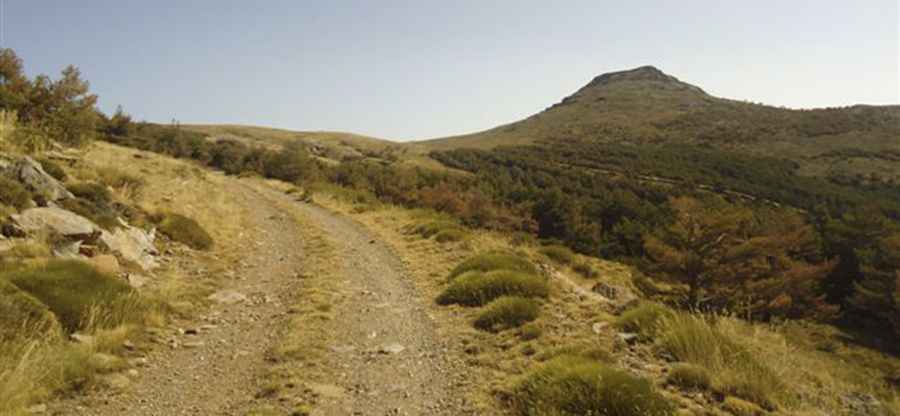
| Road facts: Cerro Almirez | |
|---|---|
| Location | Paterna del Río, Almería, Andalusia (Spain) |
| Elevation at Summit | 2,350 m (7,709 ft) |
| Length | 23.2 km (14.4 miles) from Paterna del Río |
| Hairpin Turns | 31 switchbacks |
| Surface | 100% unpaved (loose slate, shale, dirt) |
| Vehicle Requirements | High-clearance 4x4 with low range mandatory |
Where is Cerro Almirez located?
The mountain sits in the eastern massif of Sierra Nevada, above the Alpujarra Almeriense. The track starts near Paterna del Río and climbs 23.2 km (14.4 miles) up the southern slopes toward the summit ridge.
Is the road to Cerro Almirez paved?
No. The entire 23.2 km route is unpaved, consisting of loose shale, sharp slate, and dirt. The track features 31 tight hairpin turns and narrow shelf sections carved into the mountainside without guardrails.
Is a 4x4 required to drive to Cerro Almirez?
Yes. A high-clearance 4x4 with a low-range gearbox is mandatory. The combination of steep inclines, loose slate, and 31 sharp switchbacks requires low gears to maintain traction and prevent engine overheating during the slow, high-altitude ascent.
How challenging is driving the track to Cerro Almirez?
The climb is demanding due to the loose shale surface, steep gradients, and severe isolation. The track is single-lane, meaning encountering oncoming traffic on switchbacks requires long, precise reverses on loose edges. On the 23 km descent, low-range engine braking must be used continuously to prevent brake fluid boiling and brake fade.
Is the road to Cerro Almirez open in winter?
No. From late autumn through late spring, the upper track is buried under deep snow and ice, making it impassable. Summer rainstorms can also carve deep ruts and cause washouts along the slate slopes.
Pic: http://www.juntadeandalucia.es/medioambiente/servtc5/ventana/paginas/transnevada/etapaCuatroVeranoTransnevada.jsp