How is the drive to Puerto de San Rafael in Teruel?
Puerto de San Rafael (also known as Alto de San Rafael) is a mountain pass at an elevation of 1,560 meters (5,118 ft) above sea level in the Iberian System, located within the Province of Teruel, Aragon, in Spain. Traversed by the paved A-228 road, the route links Allepuz with Mora de Rubielos across the Sierra de Gúdar range.
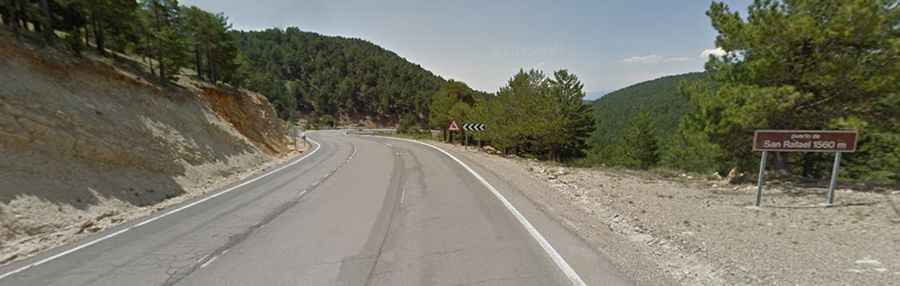
| Road facts: Puerto de San Rafael (A-228) | |
|---|---|
| Location | Allepuz to Mora de Rubielos, Teruel, Aragon (Spain) |
| Elevation | 1,560 m (5,118 ft) |
| Road Name | A-228 |
| Length | 33.6 km (20.8 miles) |
| Max Gradient | 9.3% |
| Surface | Paved asphalt (Worn with patches) |
Where is the A-228 road through Puerto de San Rafael located?
The A-228 connects the Maestrazgo area with the Gúdar-Javalambre region. The 33.6-kilometer mountain pass section climbs from Allepuz, crosses the 1,560-meter summit, and descends southward toward Mora de Rubielos.
What are the asphalt and driving conditions on Puerto de San Rafael?
The 33.6-kilometer route is fully paved, but the asphalt surface is aged, features multiple patches, and lacks clear lane edge markings in several sectors. The climb includes sustained incline ramps hitting up to a 9.3% gradient, with narrow sections where timber trucks and agricultural vehicles share the roadbed.
What hazards exist on the Puerto de San Rafael pass?
Sub-zero winter temperatures cause black ice to form under tree shade, particularly on northern exposure curves. The route lacks guardrails on several outer slopes, while roe deer and wild boars frequently step onto the asphalt during dawn and dusk.
Is the A-228 over Puerto de San Rafael open in winter?
The road stays open year-round, but winter storms regularly bring snow and freezing conditions to the 1,560-meter summit. Snowplows clear the route, though salt trucks and winter tires are required during severe cold snaps.