How steep is Muro de Valdepeñas de Jaén?
The Muro de Valdepeñas de Jaén is one of the most extreme and famous asphalt ramps in Spanish road cycling, made popular by its appearances in La Vuelta a España.
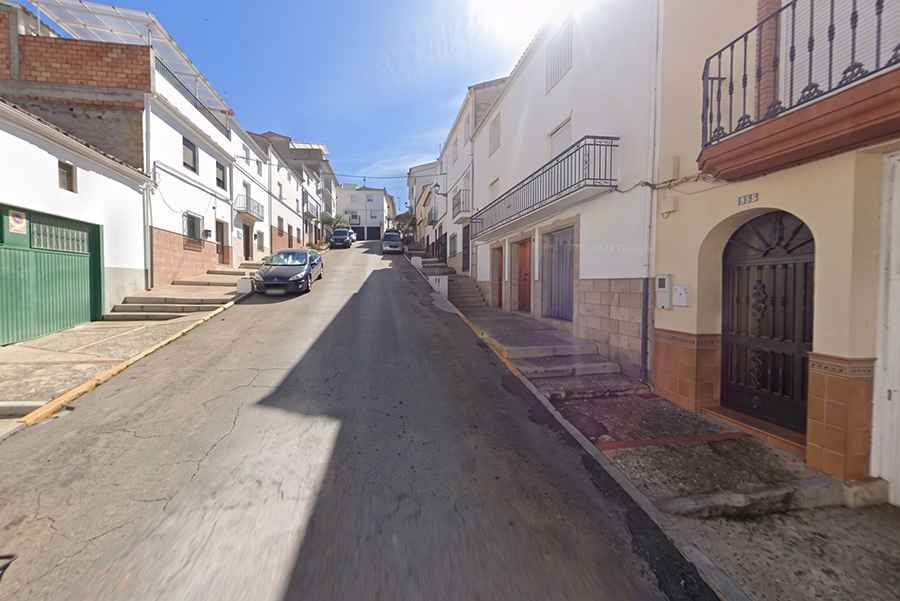
| Road facts: Muro de Valdepeñas de Jaén | |
|---|---|
| Location | Valdepeñas de Jaén, Jaén, Andalusia (Spain) |
| Summit Elevation | ~920 m (~3,018 ft) |
| Extreme Section Length | ~1.0 km (~0.62 miles) inside town center |
| Elevation Gain | ~130 vertical meters |
| Average Gradient | 13% - 15% in the urban section |
| Maximum Gradient | 24% to 28% (steepest ramp on Calle de Farjas) |
| Surface | Urban asphalt and grooved concrete on the steepest ramp |
Where is Muro de Valdepeñas de Jaén?
The wall, popularly known as the Muro de Las Pedrizas, is located in the town of Valdepeñas de Jaén, in the province of Jaén, Andalusia, in the southern part of the country.
Is Muro de Valdepeñas de Jaén paved?
The climb goes through the narrow streets of the town, passing along Calle de Farjas before reaching Calle Chaparral. The steepest section is paved with grooved concrete to allow traction for local vehicles, as conventional asphalt does not offer enough grip on such an incline.
How to drive the Muro de Valdepeñas de Jaén?
Low-power or heavily loaded vehicles struggle to restart if they stop halfway up the ramp. On a bicycle, losing rear-wheel traction is the main danger if the surface is wet or has loose sand.
Why is Muro de Valdepeñas de Jaén famous?
It has been used as an explosive finish (wall) in several editions of La Vuelta a España (2010, 2011, 2013, 2014, 2021), where cyclists have to fit specific gear ratios (such as 34 chainrings and 30/32 sprockets) so they don't stall on the central ramp.
Where does the steep part start?
Right upon entering the town center from the A-6050 road, crossing the Vadillo River and heading straight up into Calle de Farjas.
Is there space to pass oncoming traffic?
No. The street is a narrow single lane between house facades, with no shoulders or escape areas.