LV-4001 Road: Driving the 18 hairpins to Montant de Tost
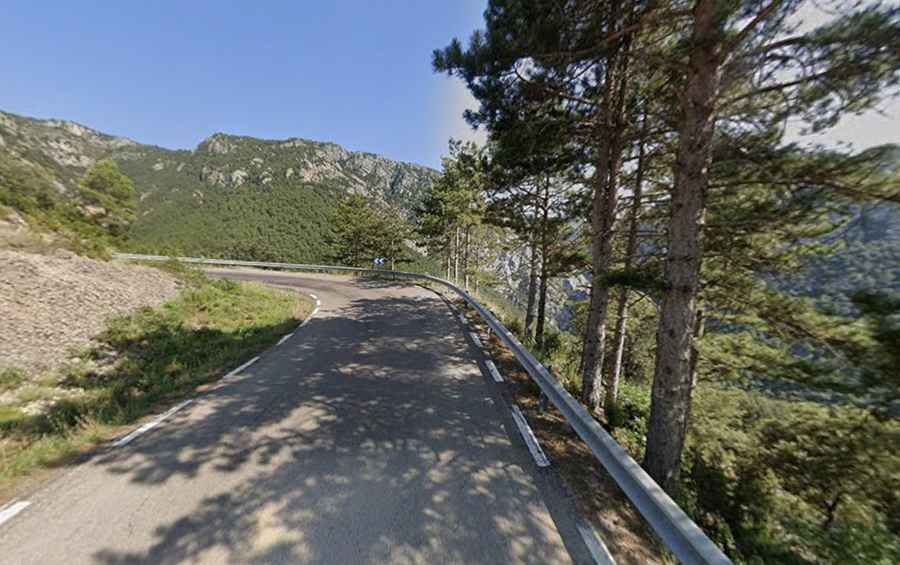
The LV-4001 is a steep mountain road located in the Alt Urgell comarca, within the Lleida province of Catalonia, in Spain. Locally nicknamed the Catalan Stelvio due to its hairpin turns, this asphalt road connects the C-14 highway near Organyà with the isolated village of Montant de Tost via 18 consecutive hairpin turns.
| Road facts: LV-4001 (Montant de Tost) | |
|---|---|
| Location | Alt Urgell, Lleida, Catalonia (Spain) |
| Road Number | LV-4001 |
| Length | 8.7 km (5.4 miles) |
| Elevation Gain | 625 meters |
| Max Gradient | 10% |
| Hairpins | 18 "paelles" |
Where does the LV-4001 road start?
The route begins at the Hostal Nou junction on the main C-14 road, just south of Organyà. From the intersection, the track turns east into the narrow Barranc de la Vansa canyon. The narrow paved road has no central white line, following the raw contours of the cliffs and passing through several unlined tunnels blasted directly into the dark limestone rocks. This is the only motorized access road into the high valley of Montant de Tost.
Is the road to Montant de Tost difficult to drive?
The 8.7 km climb features a tight profile where the 18 hairpin loops, known locally as paelles, require shifting into first and second gear due to their narrow radius. The pavement is frequently covered in loose gravel, rock fragments, and dry pine needles that reduce tire traction on the 10% gradients. Encountering oncoming local traffic or utility vans forces one vehicle to reverse along the unprotected edge to utilize the few narrow passing shoulders.
What are the hazards when driving the LV-4001 hairpins?
The primary perils are the deep vertical drops without guardrails and frequent rockfalls from the overhanging canyon walls. Shaded sectors inside the gorge remain damp and slick long after rain, and the dark unlined tunnels require drivers to use horns before entering to clear oncoming vehicles. On the descent back toward the C-14 highway, heavy engine braking is necessary to avoid rapid brake fade from the constant cornering friction.
What is the road condition past Montant de Tost village?
The asphalt ends dead past the settlement of Montant de Tost. Beyond the houses, the route degrades into a rough single-track path with broken stone sections and collapsed margins that demand high ground clearance. Mobile phone reception drops completely inside the deeper folds of the canyon, making self-recovery mandatory in case of mechanical failure.